
Contents
- 🌠 Introduction to Star Charts
- 📈 History of Star Charts
- 🔍 Understanding Star Chart Components
- 📍 Navigation with Star Charts
- 🌌 Types of Star Charts
- 📊 Astronomical Catalogs vs Star Charts
- 🔭 Tools Using Star Charts
- 🚀 Modern Applications of Star Charts
- 🤔 Limitations and Challenges
- 🌟 Future of Star Charts
- 📚 Conclusion
- Frequently Asked Questions
- Related Topics
Overview
Star charts have been a cornerstone of human understanding of the universe, from ancient civilizations like the Babylonians and Greeks to modern digital renditions. The earliest known star charts date back to around 1600 BCE, with the 'Mul.Apin' tablet, while the ancient Greek astronomer Hipparchus is credited with creating one of the first comprehensive star catalogs around 150 BCE. The development of star charts has been marked by significant milestones, including the introduction of the astrolabe in the Middle Ages and the publication of Johann Bayer's 'Uranometria' in 1603, which assigned Greek letters to bright stars. Today, star charts are used not only for navigation and astronomical research but also for cultural and educational purposes, with many online platforms offering interactive and immersive experiences. The cultural resonance of star charts is evident in their influence on art, literature, and even film, with the night sky serving as a timeless and universal symbol of human curiosity and exploration. As technology continues to advance, the future of star charts will likely involve increased precision, accessibility, and interactivity, potentially democratizing access to astronomical knowledge and inspiring new generations of stargazers and scientists.
🌠 Introduction to Star Charts
Star charts have been a vital tool for astronomers and navigators for centuries, providing a visual representation of the night sky. They are used to identify and locate Constellations, Stars, Nebulae, Galaxies, and Planets. The use of star charts dates back to ancient civilizations, with evidence of their existence found in the works of Astronomers such as Hipparchus and Ptolemy. Star charts have played a significant role in Human Navigation, enabling people to traverse the globe and explore new territories. For instance, the ancient Greeks used star charts to navigate the Mediterranean, while European explorers used them to chart new trade routes.
📈 History of Star Charts
The history of star charts is a long and fascinating one, with early examples dating back to ancient Mesopotamia and Egypt. These early star charts were often simple diagrams, showing the relative positions of Constellations and other celestial objects. As Astronomy evolved, so did the complexity and accuracy of star charts, with the introduction of new Astronomical Instruments and techniques. The development of the Astrolabe and Planisphere revolutionized the field of astronomy, enabling more precise measurements and calculations. The work of Astronomers such as Tycho Brahe and Johannes Kepler further refined the art of star chart creation.
🔍 Understanding Star Chart Components
A star chart typically consists of a grid system, with Right Ascension and Declination coordinates used to locate celestial objects. The chart also includes information on the Magnitude and Spectral Type of stars, as well as the positions of Planets and other objects. Understanding the components of a star chart is essential for using them effectively, and requires a basic knowledge of Astronomical Coordinates and Celestial Mechanics. By studying star charts, astronomers can gain insights into the Structure of the Universe and the Evolution of Stars. For example, the Hertzsprung-Russell Diagram is a type of star chart that shows the relationship between a star's luminosity and surface temperature.
🌌 Types of Star Charts
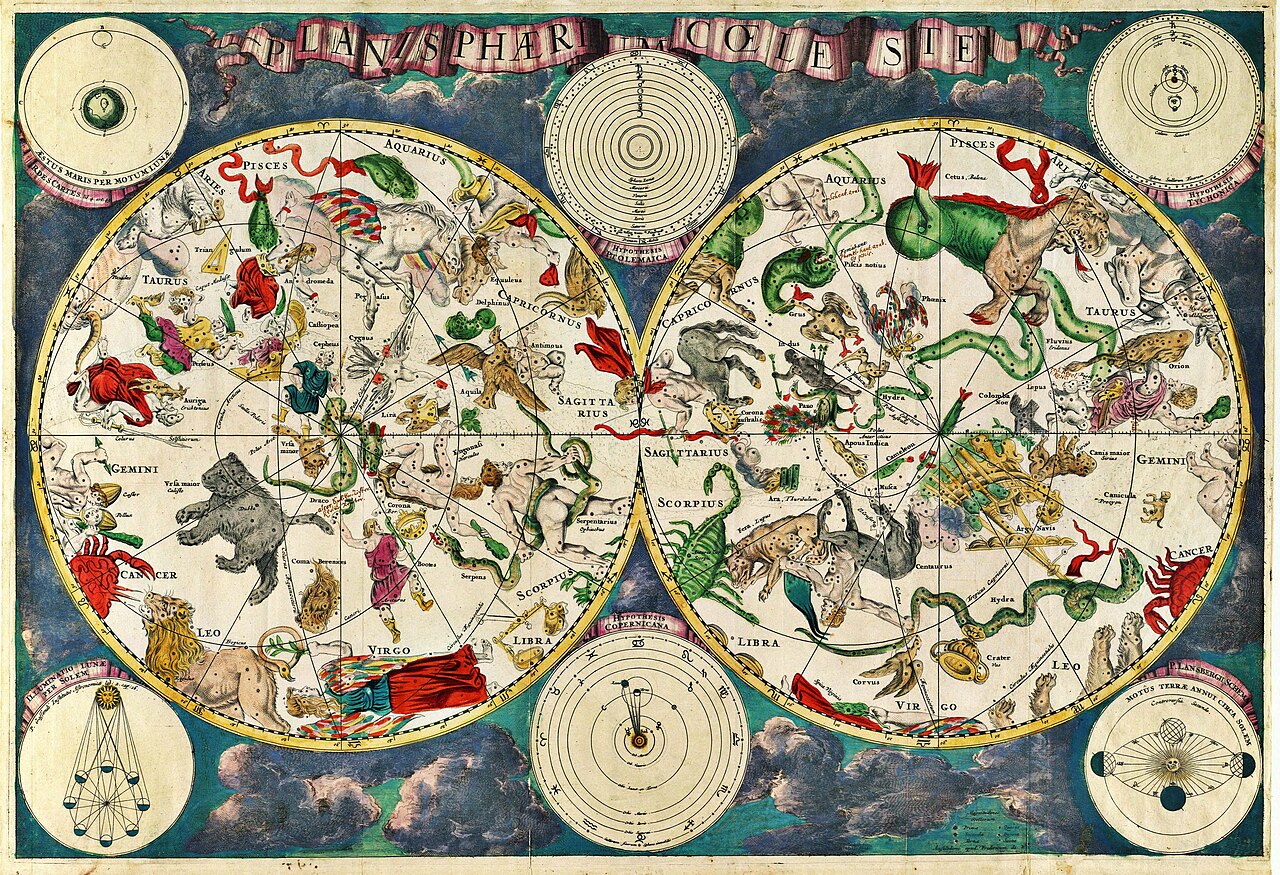
There are several types of star charts, each with its own unique characteristics and uses. Planispheres are a type of star chart that shows the night sky for a specific location and time, while Astrolabes are used to measure the position of celestial objects. Celestial Globes are another type of star chart, showing the relative positions of celestial objects on a spherical surface. The choice of star chart depends on the specific application and the level of detail required. For example, a Planisphere is useful for identifying Constellations in the night sky, while a Celestial Globe is useful for studying the Structure of the Universe. Star charts can also be used to study the Properties of Stars and the Behavior of Galaxies.
📊 Astronomical Catalogs vs Star Charts
Astronomical catalogs and star charts are often confused, but they serve distinct purposes. An Astronomical Catalog is a listing or tabulation of astronomical objects for a particular purpose, such as a Star Catalog or a Galaxy Catalog. Star charts, on the other hand, provide a visual representation of the night sky, showing the relative positions of celestial objects. While astronomical catalogs provide detailed information on individual objects, star charts provide a broader context and enable the identification of patterns and relationships. For instance, the Henry Draper Catalog is a star catalog that provides detailed information on the Spectral Type and Magnitude of stars.
🔭 Tools Using Star Charts
Several tools use star charts, including the Astrolabe and Planisphere. The astrolabe is an ancient instrument used to measure the position of celestial objects, while the planisphere is a type of star chart that shows the night sky for a specific location and time. Other tools, such as Telescopes and Binoculars, also rely on star charts to locate and identify celestial objects. The development of new technologies, such as Computer Software and Mobile Apps, has made it easier to create and use star charts, and has expanded their applications beyond traditional astronomy. For example, the Sky Safari app uses star charts to provide a virtual tour of the night sky.
🚀 Modern Applications of Star Charts
Star charts continue to play a vital role in modern astronomy, with applications in Space Exploration, Astrophysics, and Cosmology. The use of star charts enables astronomers to study the Structure of the Universe, the Evolution of Stars, and the Behavior of Galaxies. The development of new technologies, such as Space Telescopes and Radio Telescopes, has expanded the range of applications for star charts, and has enabled the study of celestial objects in greater detail. For instance, the Hubble Space Telescope uses star charts to study the Formation of Galaxies and the Evolution of Stars.
🤔 Limitations and Challenges
Despite their importance, star charts are not without limitations and challenges. The creation of accurate star charts requires a deep understanding of Astronomical Coordinates and Celestial Mechanics, as well as access to high-quality Astronomical Data. The interpretation of star charts also requires a good understanding of Astronomical Phenomena, such as Stellar Evolution and Galactic Rotation. Furthermore, the increasing light pollution in urban areas has made it more difficult to observe the night sky, and has reduced the effectiveness of star charts for navigation. However, the development of new technologies, such as Light Pollution Filters, has helped to mitigate this problem.
🌟 Future of Star Charts
The future of star charts is exciting and dynamic, with new technologies and applications emerging all the time. The development of Virtual Reality and Augmented Reality technologies is enabling the creation of immersive and interactive star charts, which can be used to educate and inspire new generations of astronomers and space enthusiasts. The use of Artificial Intelligence and Machine Learning algorithms is also enabling the automated analysis of large datasets, and the discovery of new patterns and relationships in the universe. For instance, the Google Sky platform uses machine learning algorithms to identify Constellations and other celestial objects in the night sky.
📚 Conclusion
In conclusion, star charts are a vital tool for astronomers and navigators, providing a visual representation of the night sky and enabling the identification and location of celestial objects. From ancient civilizations to modern space exploration, star charts have played a significant role in our understanding of the universe, and will continue to do so in the future. By studying star charts, we can gain insights into the Structure of the Universe, the Evolution of Stars, and the Behavior of Galaxies. As we continue to explore and understand the universe, the importance of star charts will only continue to grow.
Key Facts
- Year
- 1603
- Origin
- Ancient Mesopotamia and Greece
- Category
- Astronomy
- Type
- Concept
Frequently Asked Questions
What is a star chart?
A star chart is a celestial map of the night sky with astronomical objects laid out on a grid system. It is used to identify and locate constellations, stars, nebulae, galaxies, and planets. Star charts have been used for human navigation since ancient times, and continue to play a vital role in modern astronomy.
How are star charts created?
Star charts are created using a combination of astronomical data and computer software. The process involves mapping the positions of celestial objects onto a grid system, and then adjusting the chart to account for the effects of Precession and Nutation. The resulting chart provides a visual representation of the night sky, showing the relative positions of celestial objects.
What are the different types of star charts?
There are several types of star charts, including planispheres, astrolabes, and celestial globes. Each type of chart has its own unique characteristics and uses, and the choice of chart depends on the specific application and the level of detail required. For example, a planisphere is useful for identifying constellations in the night sky, while a celestial globe is useful for studying the structure of the universe.
How are star charts used in navigation?
Star charts are used in navigation to identify the position of celestial objects and to determine the user's location. By using a star chart to identify the constellations and other celestial objects visible in the night sky, navigators can determine their latitude and longitude, and chart their course. The use of star charts for navigation requires a good understanding of astronomical coordinates and the ability to identify celestial objects.
What are the limitations of star charts?
Star charts are not without limitations and challenges. The creation of accurate star charts requires a deep understanding of astronomical coordinates and celestial mechanics, as well as access to high-quality astronomical data. The interpretation of star charts also requires a good understanding of astronomical phenomena, such as stellar evolution and galactic rotation. Furthermore, the increasing light pollution in urban areas has made it more difficult to observe the night sky, and has reduced the effectiveness of star charts for navigation.
What is the future of star charts?
The future of star charts is exciting and dynamic, with new technologies and applications emerging all the time. The development of virtual reality and augmented reality technologies is enabling the creation of immersive and interactive star charts, which can be used to educate and inspire new generations of astronomers and space enthusiasts. The use of artificial intelligence and machine learning algorithms is also enabling the automated analysis of large datasets, and the discovery of new patterns and relationships in the universe.
How are star charts used in space exploration?
Star charts are used in space exploration to navigate and orient spacecraft. By using a star chart to identify the position of celestial objects, spacecraft can determine their location and trajectory, and make adjustments as needed. The use of star charts in space exploration requires a deep understanding of astronomical coordinates and celestial mechanics, as well as access to high-quality astronomical data.