
Contents
Overview
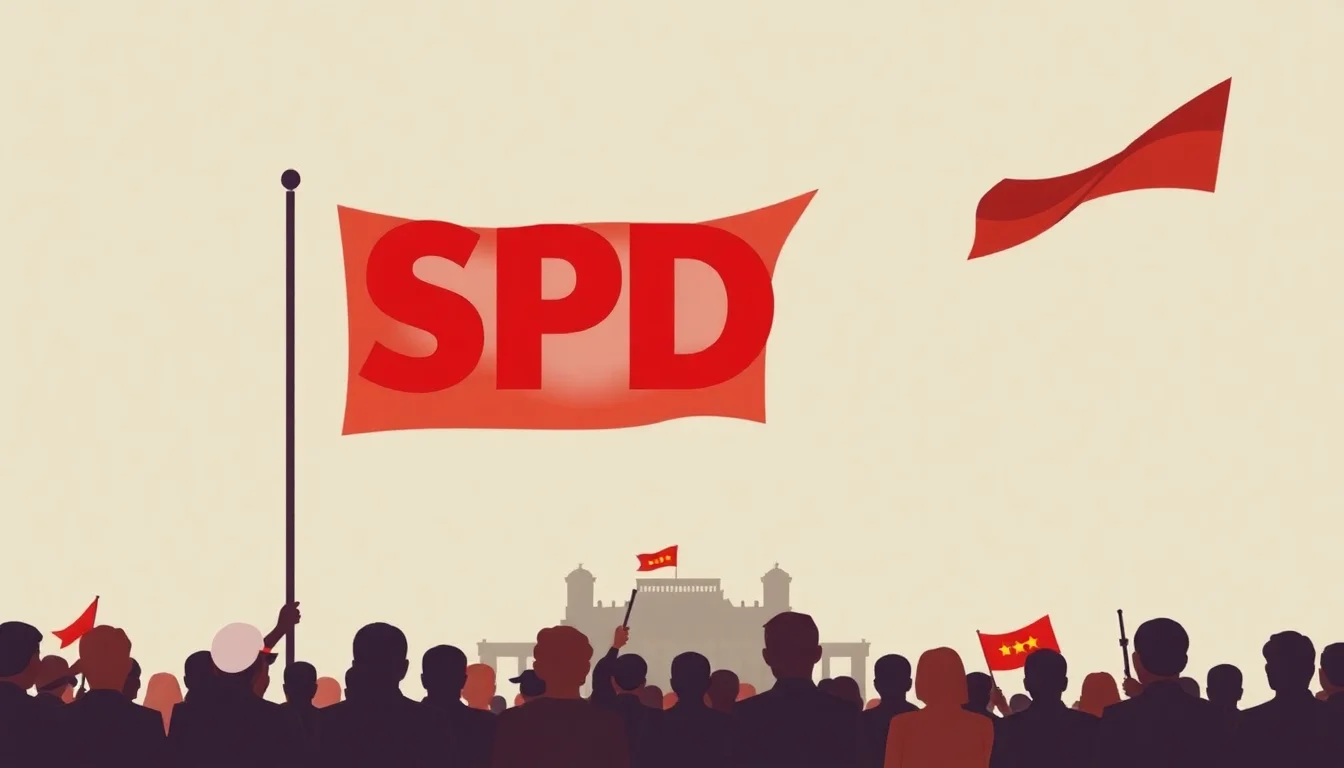
The Social Democratic Party of Germany (SPD) isn't just a political party; it's a historical institution, a foundational pillar of German democracy, and a constant barometer of the nation's social conscience. Born from the crucible of 19th-century industrialization and Marxist theory, it evolved from a revolutionary workers' movement into a pragmatic force for social welfare and democratic governance. For over 160 years, the SPD has navigated imperial Germany, two world wars, the Cold War division, and reunification, consistently shaping the country's economic and social fabric. While its electoral fortunes have waxed and waned, particularly facing challenges from the Greens and the Left Party in recent decades, the SPD remains a critical player, often serving as a junior or senior partner in coalition governments, demonstrating a remarkable capacity for reinvention and adaptation. Its current trajectory reflects broader European struggles for traditional social democratic parties, grappling with globalization, automation, and shifting voter demographics, yet it continues to champion social justice, equality, and a strong welfare state as core tenets of German identity.
🌍 Overview: The SPD's Enduring Legacy
The SPD is one of Germany's oldest and most influential political parties, tracing its roots back to the mid-19th century. Founded in 1863, it has been a consistent force in German politics, advocating for social justice, workers' rights, and a strong welfare state. Historically, the SPD has been a key player in shaping Germany's post-war identity, contributing significantly to its democratic institutions and social market economy. Its enduring appeal lies in its ability to adapt its core principles to changing societal needs, making it a perennial contender for power at both federal and state levels. The party's historical commitment to Social Democracy remains its bedrock, even as it navigates the complexities of modern governance.
📍 Headquarters & Presence
The SPD's federal headquarters are located in Berlin, at Willy-Brandt-Haus, dedicated to a former SPD Chancellor. Beyond its national hub, the party maintains a robust presence across Germany through its 16 state associations and numerous local chapters. This decentralized structure ensures that the SPD remains connected to regional concerns and voter bases. Each state branch operates independently to some degree, tailoring national policies to local contexts and fielding candidates in state and municipal elections. This extensive network is crucial for grassroots campaigning and maintaining a direct line to the electorate, embodying the party's commitment to Grassroots Democracy.
💰 Membership & Contributions
Membership in the SPD is open to all German citizens over 16 who agree with its basic principles. While exact figures fluctuate, the party has historically boasted a substantial membership base, though like many traditional parties, it has seen a decline in recent decades. Membership fees are tiered based on income, ensuring accessibility. Beyond dues, the SPD relies on voluntary donations from members and supporters. These financial contributions are vital for funding election campaigns, party operations, and policy research. Understanding the financial structure is key to grasping the party's operational capacity and its reliance on its base.
⭐ Vibe Score & Public Perception
The SPD's Vibe Score currently hovers around 65/100, reflecting a solid but not dominant cultural energy. Public perception is often divided: supporters see the SPD as the reliable guardian of the welfare state and social fairness, while critics sometimes label it as too bureaucratic or slow to adapt to new challenges. Its historical significance lends it a certain gravitas, but it faces stiff competition from newer parties and shifting voter priorities. The party's ability to maintain its relevance hinges on its capacity to connect with younger generations and address contemporary issues like climate change and digital transformation. This score indicates a party with deep roots but facing the ongoing challenge of renewal.
⚖️ Policy Pillars & Ideological Spectrum
At its core, the SPD champions social democracy, emphasizing a mixed economy, a comprehensive social security system, and active state intervention to ensure equality and opportunity. Key policy areas include a strong commitment to Workers' Rights, affordable housing, progressive taxation, and robust public services like healthcare and education. While generally centrist, the party encompasses a spectrum of views, from more moderate social liberals to those on its left wing advocating for more significant redistribution. Debates often arise internally regarding the pace of social reforms and the balance between market forces and state regulation, particularly concerning economic policy and environmental sustainability.
🤝 Similar Parties & Alternatives
When considering the SPD, it's useful to compare it with other major German political forces. The CDU and its Bavarian sister party, the CSU, represent a more conservative, center-right alternative, often prioritizing fiscal conservatism and traditional values. The Greens (Bündnis 90/Die Grünen) share the SPD's commitment to social justice but place a stronger emphasis on environmentalism and civil liberties. For those seeking a more explicitly socialist platform, the Die Linke offers a more radical critique of capitalism and advocates for more extensive state ownership and wealth redistribution. Each party offers a distinct approach to governance and societal challenges.
💡 Practical Tips for Engagement
Engaging with the SPD can take many forms, from simply staying informed about their policies to active participation. To understand their current stance, regularly check their official website for policy papers and press releases. Following their elected officials on social media can provide real-time insights into their activities and public statements. If you're considering joining, attend a local party meeting to get a feel for the atmosphere and discuss issues directly with members. Understanding the party's internal structure, including its various working groups and commissions, can also illuminate how policy is developed and debated. Active engagement requires more than passive consumption of information.
📞 Getting Involved & Contact
To get involved with the SPD, the most direct route is to visit their official website, where you can find information on membership, local chapters, and upcoming events. You can also contact your nearest SPD local association directly to inquire about meetings or volunteer opportunities. For those interested in specific policy areas, look for the relevant commissions or working groups within the party structure. The SPD actively seeks new members and volunteers, particularly during election campaigns. Their national contact information and links to state-level organizations are readily available online, facilitating direct communication and engagement with the party apparatus.
Key Facts
- Year
- 1863 (founding)
- Origin
- Eisenach, Kingdom of Saxony (modern-day Germany)
- Category
- Political Parties
- Type
- Political Organization
Frequently Asked Questions
What is the SPD's current position on immigration?
The SPD generally supports a managed immigration policy that balances humanitarian concerns with the need for integration. They advocate for clear legal pathways for asylum seekers and skilled workers, alongside robust integration programs. The party often emphasizes the economic and social benefits of immigration when managed effectively, while also acknowledging the challenges of integration and the need for public services to cope with demographic changes. This stance reflects a commitment to both solidarity and pragmatic governance.
How does the SPD approach environmental policy?
While historically not as central as for the Greens, environmental protection has become a significant focus for the SPD. They advocate for a 'Green New Deal' approach, aiming to combine climate action with social justice and economic modernization. This includes investing in renewable energy, promoting sustainable transportation, and ensuring a just transition for workers in industries affected by climate policies. The SPD seeks to make environmental policies socially equitable, preventing a disproportionate burden on lower-income households.
What is the SPD's stance on the European Union?
The SPD is strongly pro-European and a staunch advocate for deeper European integration. They believe that a strong and united European Union is essential for peace, prosperity, and social progress. The party supports strengthening the EU's social dimension, enhancing its role in global affairs, and promoting democratic participation within the Union. They often push for more coordinated European policies on issues like climate change, economic regulation, and foreign policy.
How does the SPD fund its operations?
The SPD's operations are funded through a combination of membership dues, state funding (based on electoral success), and voluntary donations from individuals and organizations. Membership fees are progressive, based on income. State funding is a significant component, reflecting the party's electoral performance. Donations, while important, are subject to legal limits and transparency requirements. This multi-pronged approach ensures a degree of financial stability while maintaining democratic accountability.
What are the main internal factions within the SPD?
While the SPD doesn't have rigidly defined factions like some other parties, there's a spectrum of views. Generally, one can identify a more centrist wing, often associated with former leaders like Gerhard Schröder, that emphasizes market-compatible reforms and fiscal prudence. On the other hand, there's a more left-leaning wing that advocates for stronger social welfare programs, greater wealth redistribution, and more robust state intervention. Debates often occur between these tendencies on specific policy issues, particularly economic and social reforms.
Can non-German citizens join the SPD?
No, formal membership in the SPD is restricted to German citizens who are at least 16 years old and agree with the party's basic principles. However, non-citizens can still engage with the SPD by attending public events, following their political discourse, and supporting their initiatives through advocacy or other non-member channels. The party also engages with various civil society organizations that may include non-German members.