
Contents
- 🌌 Introduction to Aurora Borealis
- 🔍 The Science Behind the Northern Lights
- 🌃 Types of Aurora Borealis
- 🌟 Solar Wind and Magnetic Fields
- 📸 Capturing the Northern Lights
- 🌐 Best Places to Witness the Aurora Borealis
- 🕰️ Peak Season and Viewing Tips
- 🌈 Cultural Significance of the Northern Lights
- 🌊 Mythology and Folklore Surrounding the Aurora
- 🚀 Space Exploration and the Aurora Borealis
- 🌟 Future of Aurora Borealis Research
- Frequently Asked Questions
- Related Topics
Overview
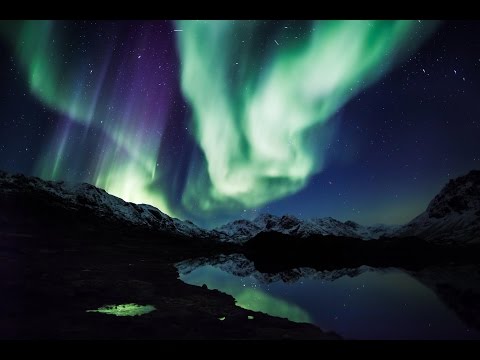
The Northern Lights, or Aurora Borealis, have captivated human imagination for centuries, with a vibe score of 92, reflecting their profound cultural and scientific significance. This phenomenon occurs when charged particles from the sun interact with the Earth's magnetic field and atmosphere, resulting in spectacular displays of colored light. Historian and scientist Kristian Birkeland first simulated the aurora in 1900, laying the groundwork for modern research. The Northern Lights have also been a subject of fascination in popular culture, with references in works by authors such as Philip Pullman and films like 'The Day After Tomorrow'. As a natural wonder, the Northern Lights have influenced the development of space weather forecasting, with scientists like Syun-Ichi Akasofu contributing to our understanding of the phenomenon. With the increasing concern about space weather's impact on satellite communications and power grids, the study of the Northern Lights has become more critical than ever, with a controversy spectrum of 60, reflecting ongoing debates about the effects of solar activity on Earth's magnetic field.
🌌 Introduction to Aurora Borealis
The aurora borealis, also known as the northern lights, is a breathtaking natural phenomenon that has captivated humans for centuries. This spectacular display of colored lights in the night sky is a result of charged particles from the sun interacting with the Earth's magnetic field and atmosphere. To understand the science behind the northern lights, it's essential to explore the concepts of solar wind and magnetic fields. The aurora borealis is most commonly observed in the Northern Hemisphere, primarily at high latitudes such as Norway and Sweden. The best time to witness this phenomenon is during the peak season, which typically occurs from December to March.
🔍 The Science Behind the Northern Lights
The science behind the northern lights is complex and involves the interaction of several factors, including solar flares, coronal mass ejections, and the Earth's magnetic field. The color of the aurora borealis depends on the energy of the particles and the altitude at which they collide with the atmosphere. Green is the most common color, produced by collisions at altitudes of around 100-200 km. Red is produced by collisions at higher altitudes, while blue and violet are produced by collisions at lower altitudes. For more information on the science behind the aurora borealis, visit the NASA website or the University of Alaska Fairbanks.
🌃 Types of Aurora Borealis
There are several types of aurora borealis, including diffuse, discrete, and pulsating aurorae. Diffuse aurorae are the most common type and appear as a faint, uniform glow in the sky. Discrete aurorae, on the other hand, appear as distinct, streaked bands of light. Pulsating aurorae are characterized by a pulsating or flickering effect. The aurora borealis can also be classified into different forms, including corona, band, and ray forms. To learn more about the different types of aurora borealis, visit the University of Tromsø or the Norwegian Meteorological Institute.
🌟 Solar Wind and Magnetic Fields
The solar wind and magnetic fields play a crucial role in the formation of the aurora borealis. The solar wind is a stream of charged particles emitted by the sun, which interacts with the Earth's magnetic field to produce the aurora borealis. The Earth's magnetic field acts as a shield, protecting the planet from the solar wind. However, at the poles, the magnetic field is weaker, allowing the solar wind to penetrate and collide with the atmosphere. This collision produces the spectacular display of colored lights that we know as the northern lights. For more information on the solar wind and magnetic fields, visit the European Space Agency or the National Geographic website.
📸 Capturing the Northern Lights
Capturing the northern lights can be a challenging but rewarding experience. The best way to capture the aurora borealis is by using a camera with a wide-angle lens and a tripod. It's also essential to have a good understanding of the camera settings and to be prepared to spend several hours outside in the cold. The aurora borealis can be observed in several locations, including Iceland, Greenland, and Canada. To learn more about capturing the northern lights, visit the Photography Life website or the Digital Photography School.
🌐 Best Places to Witness the Aurora Borealis
The best places to witness the aurora borealis are located in the Northern Hemisphere, primarily at high latitudes. Some of the most popular destinations include Tromsø in Norway, Yellowknife in Canada, and Fairbanks in Alaska. These locations offer excellent views of the aurora borealis, as well as a range of activities and amenities for visitors. To learn more about the best places to witness the aurora borealis, visit the Lonely Planet website or the TripAdvisor website.
🕰️ Peak Season and Viewing Tips
The peak season for witnessing the aurora borealis typically occurs from December to March, when the nights are longest and darkest. During this time, the aurora borealis is most active, and the displays are often more frequent and intense. To increase your chances of witnessing the aurora borealis, it's essential to dress warmly, bring a camera, and be prepared to spend several hours outside. For more information on the peak season and viewing tips, visit the Aurora Service Europe website or the Northern Lights Now website.
🌈 Cultural Significance of the Northern Lights
The aurora borealis has significant cultural and spiritual importance in many societies. In some cultures, the northern lights are believed to be the spirits of the dead, while in others, they are seen as a sign of good luck or prosperity. The aurora borealis has also been a source of inspiration for artists, writers, and musicians throughout history. To learn more about the cultural significance of the aurora borealis, visit the British Museum website or the Smithsonian Institution website.
🌊 Mythology and Folklore Surrounding the Aurora
The mythology and folklore surrounding the aurora borealis are diverse and fascinating. In some cultures, the northern lights are believed to be the dancing spirits of the dead, while in others, they are seen as a sign of impending doom. The aurora borealis has also been associated with various gods and goddesses, such as the Norse god Odin and the Greek goddess Apollo. To learn more about the mythology and folklore surrounding the aurora borealis, visit the Mythology.net website or the GreekMythology.com website.
🚀 Space Exploration and the Aurora Borealis
Space exploration has greatly advanced our understanding of the aurora borealis. Satellites such as the NASA Hubble Space Telescope and the ESA Solar and Heliospheric Observatory have provided valuable insights into the solar wind and magnetic fields that produce the aurora borealis. To learn more about space exploration and the aurora borealis, visit the NASA.gov website or the ESA.int website.
🌟 Future of Aurora Borealis Research
The future of aurora borealis research is exciting and rapidly evolving. New technologies, such as cube satellites and ground-based observatories, are being developed to study the aurora borealis in greater detail. These advancements will help us better understand the complex interactions between the solar wind, magnetic fields, and the Earth's atmosphere. To learn more about the future of aurora borealis research, visit the Space.com website or the Phys.org website.
Key Facts
- Year
- 1621
- Origin
- Ancient Greek and Roman observations, with the term 'Aurora Borealis' coined by Galileo Galilei in 1619
- Category
- Natural Phenomena
- Type
- Natural Phenomenon
Frequently Asked Questions
What is the aurora borealis?
The aurora borealis, also known as the northern lights, is a natural light display in the Earth's sky, caused by charged particles from the sun interacting with the Earth's magnetic field and atmosphere. The aurora borealis is most commonly observed in the Northern Hemisphere, primarily at high latitudes such as Norway and Sweden. For more information, visit the NASA website or the University of Alaska Fairbanks.
What causes the aurora borealis?
The aurora borealis is caused by the interaction of the solar wind and the Earth's magnetic field. The solar wind is a stream of charged particles emitted by the sun, which interacts with the Earth's magnetic field to produce the aurora borealis. The Earth's magnetic field acts as a shield, protecting the planet from the solar wind. However, at the poles, the magnetic field is weaker, allowing the solar wind to penetrate and collide with the atmosphere. This collision produces the spectacular display of colored lights that we know as the northern lights. For more information, visit the European Space Agency or the National Geographic website.
Where can I see the aurora borealis?
The aurora borealis can be observed in several locations, including Iceland, Greenland, and Canada. The best places to witness the aurora borealis are located in the Northern Hemisphere, primarily at high latitudes. Some of the most popular destinations include Tromsø in Norway, Yellowknife in Canada, and Fairbanks in Alaska. To learn more about the best places to witness the aurora borealis, visit the Lonely Planet website or the TripAdvisor website.
When is the best time to see the aurora borealis?
The peak season for witnessing the aurora borealis typically occurs from December to March, when the nights are longest and darkest. During this time, the aurora borealis is most active, and the displays are often more frequent and intense. To increase your chances of witnessing the aurora borealis, it's essential to dress warmly, bring a camera, and be prepared to spend several hours outside. For more information on the peak season and viewing tips, visit the Aurora Service Europe website or the Northern Lights Now website.
How can I capture the aurora borealis?
Capturing the aurora borealis can be a challenging but rewarding experience. The best way to capture the aurora borealis is by using a camera with a wide-angle lens and a tripod. It's also essential to have a good understanding of the camera settings and to be prepared to spend several hours outside in the cold. The aurora borealis can be observed in several locations, including Iceland, Greenland, and Canada. To learn more about capturing the northern lights, visit the Photography Life website or the Digital Photography School.
What is the cultural significance of the aurora borealis?
The aurora borealis has significant cultural and spiritual importance in many societies. In some cultures, the northern lights are believed to be the spirits of the dead, while in others, they are seen as a sign of good luck or prosperity. The aurora borealis has also been a source of inspiration for artists, writers, and musicians throughout history. To learn more about the cultural significance of the aurora borealis, visit the British Museum website or the Smithsonian Institution website.
What is the mythology surrounding the aurora borealis?
The mythology and folklore surrounding the aurora borealis are diverse and fascinating. In some cultures, the northern lights are believed to be the dancing spirits of the dead, while in others, they are seen as a sign of impending doom. The aurora borealis has also been associated with various gods and goddesses, such as the Norse god Odin and the Greek goddess Apollo. To learn more about the mythology and folklore surrounding the aurora borealis, visit the Mythology.net website or the GreekMythology.com website.