
Contents
Overview
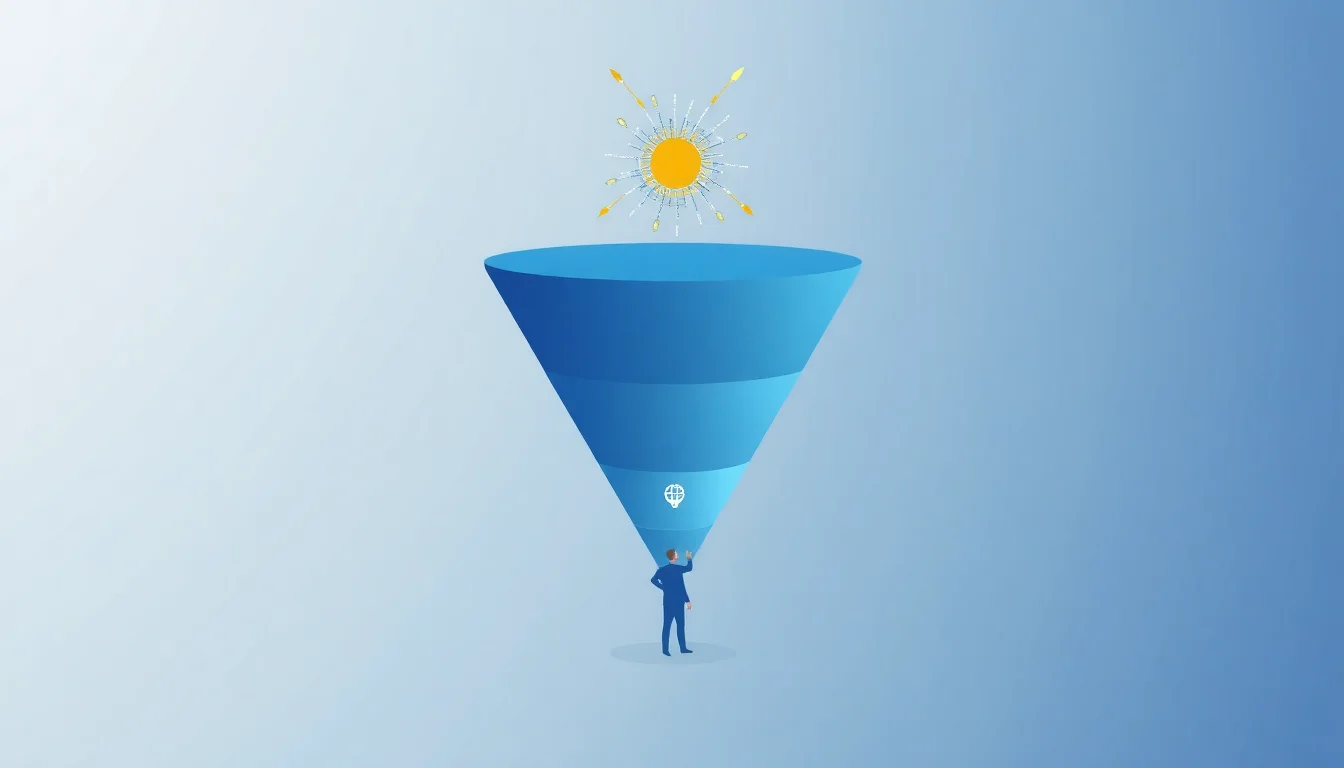
The innovation funnel is a conceptual model that maps the journey of an idea from its nascent conception to its successful implementation and market adoption. Think of it as a structured pathway designed to filter and refine a multitude of raw ideas into a select few that possess the potential for significant impact. It's not a rigid, one-size-fits-all process, but rather a flexible framework that helps organizations manage the inherent uncertainty and resource allocation challenges in new product development. The core principle is to cast a wide net at the top (ideation) and progressively narrow down the focus as ideas mature through validation, development, and scaling, ensuring that only the most promising concepts receive substantial investment. This systematic approach aims to maximize the return on innovation efforts by minimizing wasted resources on unviable ideas.
🎯 Who Needs This Framework?
This framework is indispensable for any entity seeking to cultivate a culture of continuous improvement and strategic growth. It's particularly vital for startups needing to validate their core offering, established corporations looking to diversify or refresh their product lines, and even non-profit organizations aiming to develop more effective programs. Product managers, R&D departments, innovation labs, and strategic planning teams will find the funnel a critical tool for organizing their innovation pipeline. Anyone involved in generating, evaluating, or implementing new ideas can benefit from understanding and applying its principles to bring more impactful innovations to life.
🚀 The Stages: From Idea to Impact
The typical innovation funnel comprises several distinct stages, though the exact nomenclature can vary. It begins with Ideation, where a broad range of concepts are generated, often through brainstorming or market analysis. This is followed by Screening/Filtering, where initial feasibility and strategic alignment are assessed. Promising ideas then move to Concept Development & Testing, involving detailed definition and validation with potential users. Next is Business Analysis & Prototyping, where financial viability is scrutinized and early-stage prototypes are built. The Development & Testing phase focuses on creating a market-ready product or service, followed by Market Testing to gauge real-world reception. Finally, Commercialization/Scaling involves full-scale launch and ongoing growth, marking the successful passage through the funnel. Each stage acts as a gate, requiring specific criteria to be met before proceeding.
🤔 Common Pitfalls & How to Avoid Them
Navigating the innovation funnel is fraught with potential missteps. A common error is premature scaling, where an idea is pushed to market before adequate validation, leading to costly failures. Conversely, killing good ideas too early due to overly stringent initial filters can stifle creativity. Another pitfall is the lack of clear metrics at each stage, making objective evaluation difficult. Organizations often struggle with internal resistance to change or a lack of cross-functional collaboration, hindering progress. To avoid these, rigorous validation at each step, clear decision-making criteria, and fostering an environment that encourages experimentation and learning are paramount. Understanding the psychology of innovation is as crucial as the process itself.
📊 Measuring Funnel Health
Measuring the health of an innovation funnel requires a suite of key performance indicators (KPIs) tailored to each stage. At the top, metrics like the number of ideas generated and the diversity of sources are important. As ideas progress, focus shifts to conversion rates between stages (e.g., percentage of screened ideas moving to concept development), time to market, and resource allocation efficiency. For later stages, prototype success rates, customer validation scores, and ultimately, revenue generated or market share gained from new innovations are critical. A healthy funnel exhibits a predictable decline in the number of ideas while maintaining high conversion rates and a strong return on investment for those that reach the end. Analyzing these innovation metrics provides actionable insights for improvement.
🔄 Iteration and Optimization
The innovation funnel is not a static entity; it thrives on continuous iteration and optimization. Organizations must regularly review their funnel's performance, identifying bottlenecks and areas for improvement. This might involve refining ideation techniques, adjusting screening criteria, enhancing validation methodologies, or streamlining development processes. Implementing agile methodologies within the funnel stages, particularly in development and testing, allows for rapid feedback loops and adaptation. Furthermore, fostering a culture of learning from both successes and failures is key. Post-launch analysis of commercialized innovations should feed back into the ideation stage, informing future opportunities and refining the entire process for greater effectiveness over time.
🌐 Global Adoption & Variations
The concept of the innovation funnel, while originating in Western business contexts, has seen widespread global adoption and adaptation. Many multinational corporations have implemented variations of the funnel, often integrating it with their existing strategic planning processes. Different industries may emphasize specific stages; for instance, pharmaceutical companies have highly structured, multi-year funnels due to extensive regulatory requirements. Emerging markets often adapt the funnel to local conditions, focusing on frugal innovation and rapid iteration. The core principles, however, remain universal: structured idea management, rigorous evaluation, and a commitment to bringing valuable new concepts to fruition. The digital age has also introduced new tools and platforms that facilitate funnel management, from idea submission portals to collaborative prototyping software.
⭐ Vibepedia Vibe Score & Controversy
The Vibepedia Vibe Score for the Innovation Funnel is a robust 85/100, reflecting its widespread recognition and practical utility across diverse organizational types. Its cultural resonance is high, as the concept is deeply embedded in discussions around business growth and competitive advantage. The Controversy Spectrum is moderate, primarily revolving around the rigidity of the model versus the need for flexibility, and debates on the optimal metrics for each stage. Some argue that overly structured funnels can stifle truly disruptive, out-of-the-box thinking, while others champion its systematic approach to managing risk and resources. The primary tension lies between the desire for structured, predictable innovation and the often chaotic, serendipitous nature of breakthrough ideas. The debate often centers on whether the funnel is a necessary constraint or an impediment to radical innovation.
Key Facts
- Year
- 1939
- Origin
- The concept of a funnel, applied to innovation, gained traction in the mid-20th century, with early models often attributed to figures like David B. Hertz and his work on R&D management. However, the term 'innovation funnel' itself became more widely adopted and refined through the 1970s and 80s as companies sought structured methods for managing new product development.
- Category
- Business Strategy & Innovation
- Type
- Concept
Frequently Asked Questions
What's the difference between an innovation funnel and a sales funnel?
While both are 'funnels,' their purpose and content differ significantly. A sales funnel tracks potential customers through the buying process, aiming to convert leads into paying customers. An innovation funnel, conversely, tracks ideas from conception through development and market launch, aiming to convert raw concepts into viable products or services. The metrics and stages are distinct, focusing on idea validation and product readiness rather than customer acquisition and conversion rates.
Can a small business use an innovation funnel?
Absolutely. While large corporations might have dedicated innovation departments, small businesses can adapt the funnel principles with fewer resources. Focus on simple stages: idea generation, quick feasibility checks, basic prototyping or customer feedback, and then a focused launch. The key is to have a structured way to evaluate and prioritize new ideas, rather than pursuing every idea that comes to mind without proper vetting.
How do I ensure my innovation funnel isn't too restrictive?
Balance is key. Implement 'stage-gate' reviews that are rigorous but fair, allowing for exceptions or 'fast-tracking' for exceptionally promising ideas. Encourage cross-functional input at each stage to gain diverse perspectives. Consider incorporating elements of 'open innovation' by seeking external ideas and feedback. Regularly review the funnel's criteria to ensure they align with strategic goals without stifling creativity. The goal is to filter effectively, not to eliminate all but the most conventional ideas.
What are the most common metrics to track in an innovation funnel?
Key metrics vary by stage. Early stages might track the number of ideas submitted, idea diversity, and initial screening pass rates. Mid-stages focus on concept validation scores, prototype success rates, and time spent in development. Later stages track market test results, cost of goods sold, time to market, and ultimately, revenue, profit margins, and market share generated by the innovation. Tracking conversion rates between stages is also crucial for identifying bottlenecks.
How does 'stage-gate' relate to the innovation funnel?
Stage-gate is a specific methodology often used to manage the innovation funnel. It breaks the innovation process into distinct stages, separated by decision points called 'gates.' At each gate, a project is reviewed against predefined criteria. If it passes, it receives funding and resources to proceed to the next stage. If it fails, it's killed or sent back for revision. The innovation funnel provides the overall conceptual flow, while stage-gate offers a structured project management approach within that flow.
Is the innovation funnel still relevant in the age of rapid prototyping and agile development?
Yes, the innovation funnel remains highly relevant, but its implementation must be adapted. Agile and rapid prototyping are not replacements for the funnel but rather powerful tools that can be integrated within its stages, particularly in the development and testing phases. The funnel provides the strategic framework for what to build and why, while agile methods dictate how to build it efficiently and iteratively. The core need to systematically evaluate and prioritize ideas persists, regardless of the development methodology used.