
Contents
- 🎵 Origins & Early Experiments
- ⚙️ The Dawn of Permanent Images
- 📊 Key Milestones & Innovations
- 👥 Pioneers and Visionaries
- 🌍 Global Diffusion and Cultural Shifts
- ⚡ The Digital Revolution
- 🤔 Debates on Art vs. Science
- 🔮 The Future of Image Capture
- 💡 Applications Across Industries
- 📚 Further Exploration
- Frequently Asked Questions
- References
- Related Topics
Overview
The conceptual roots of photography stretch back to antiquity, with philosophers like Aristotle and Mozi describing the principles of the camera obscura – a darkened room or box where light passing through a small aperture projects an inverted image of the outside world. For centuries, this phenomenon was a curiosity and a tool for artists, notably Leonardo da Vinci, who utilized it for perspective studies. The alchemical pursuit of fixing images, however, remained largely theoretical until the 18th century. Johann Heinrich Schulze's accidental discovery in 1717, where silver nitrate darkened when exposed to light, marked a crucial step, though he failed to make his findings permanent. Later, Thomas Wedgwood and Humphry Davy attempted to capture images on treated paper and leather around 1800, producing photograms but unable to fix them, leading to their rapid fading.
⚙️ The Dawn of Permanent Images
The true genesis of photography as a reproducible art and science began in the 1820s. Nicéphore Niépce, a French inventor, is credited with producing the world's first permanent photograph, a view from his window at Le Gras, captured on a pewter plate coated with bitumen of Judea. This process, which he termed heliography, required an exposure of at least eight hours, and often several days, rendering it impractical for most subjects. Niépce's collaboration with Louis Daguerre in the late 1820s led to the development of the daguerreotype in 1839. This process, using a polished silver-plated copper sheet treated with iodine vapor, produced incredibly detailed, albeit unique, positive images with significantly reduced exposure times, typically minutes rather than hours, sparking a global sensation.
📊 Key Milestones & Innovations
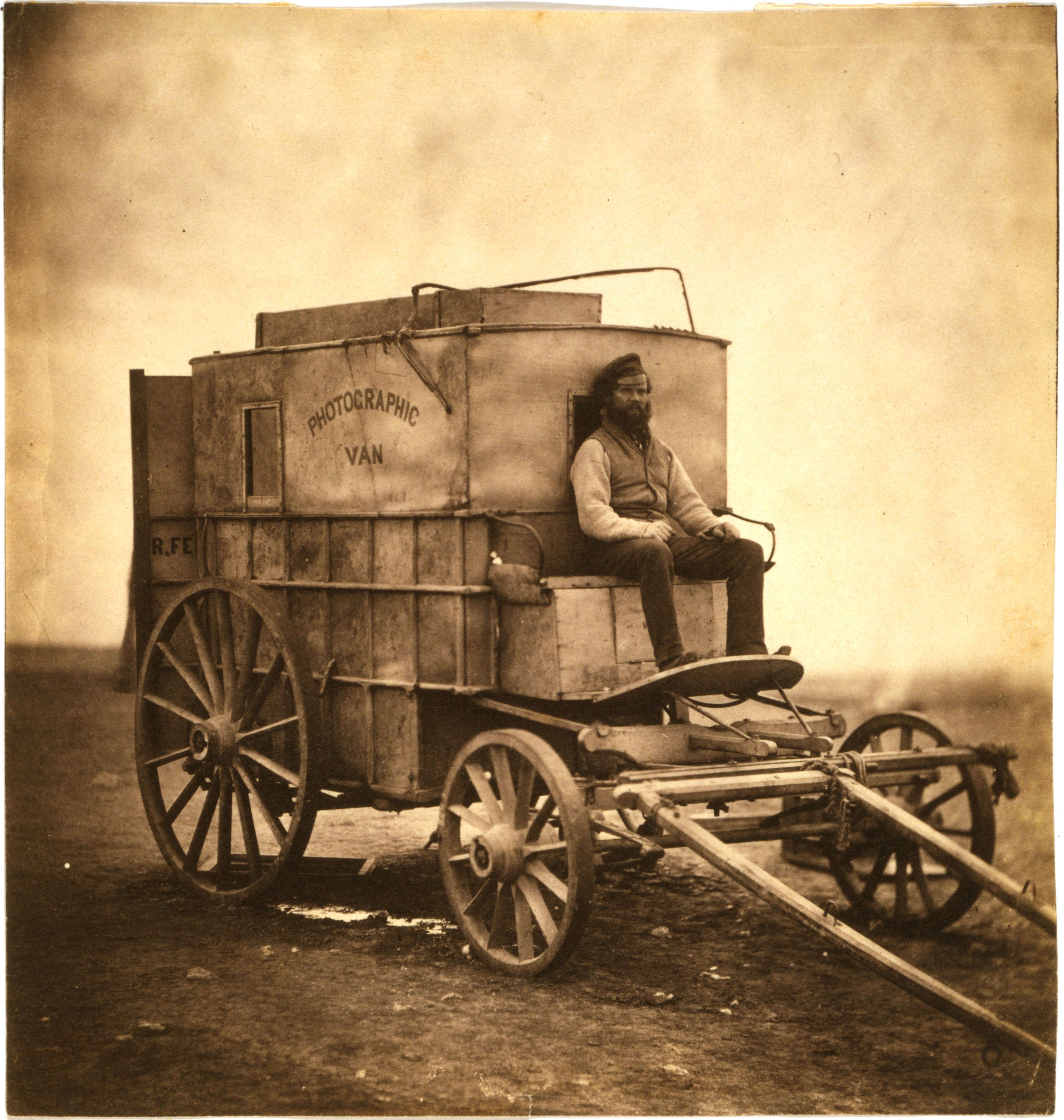
The mid-19th century witnessed an explosion of innovation that rapidly refined photographic techniques. In parallel with the daguerreotype, William Henry Fox Talbot in England developed the calotype process, patented in 1841. This method used paper coated with silver iodide, creating a negative from which multiple positive prints could be made, laying the foundation for modern photographic reproduction. The introduction of the wet collodion process by Frederick Scott Archer in 1851 dramatically reduced exposure times to mere seconds and offered superior detail to the calotype, though it required photographers to carry portable darkrooms. The subsequent invention of dry plates in the 1870s and the introduction of flexible roll film by George Eastman and his Kodak company in 1888, with the slogan 'You press the button, we do the rest,' truly democratized photography, making it accessible to amateurs worldwide.
👥 Pioneers and Visionaries
Beyond Niépce and Daguerre, a constellation of inventors and artists propelled photography forward. William Henry Fox Talbot's pioneering work in creating negatives was foundational. Frederick Scott Archer's wet collodion process revolutionized image capture speed. George Eastman, the visionary behind Kodak, transformed photography from a specialized pursuit into a mass-market phenomenon with his roll film and user-friendly cameras. In the realm of artistic photography, figures like Alfred Stieglitz championed photography as a fine art, while photojournalists like Robert Capa used the medium to document history with visceral immediacy. The Magnum Photos agency, co-founded by Capa, remains a testament to the power of documentary photography.
🌍 Global Diffusion and Cultural Shifts
Photography's impact rippled across the globe, transcending cultural and linguistic barriers. The daguerreotype and calotype quickly spread from France and England to North America, Asia, and beyond, with studios opening in major cities like New York City, London, and Paris. The ability to capture likenesses with unprecedented accuracy democratized portraiture, previously the domain of the wealthy who could afford painted portraits. Photography played a critical role in exploration, scientific documentation, and the dissemination of news and social commentary, influencing public perception of distant lands, historical events, and social inequalities. The rise of illustrated magazines in the late 19th and early 20th centuries, such as Life Magazine, cemented photography's role in shaping public discourse.
⚡ The Digital Revolution
The late 20th century heralded the most profound transformation: the digital revolution. The development of the charge-coupled device (CCD) sensor in the late 1960s and early 1970s at Bell Labs by Willard Boyle and George Smith laid the groundwork for digital imaging. Kodak itself developed the first digital camera prototype in 1975, though it was initially deemed too disruptive. By the 1990s, digital cameras began to enter the consumer market, offering instant image review and eliminating the need for film processing. The advent of the internet and social media platforms like Facebook and Instagram in the early 21st century further accelerated this shift, making photography a ubiquitous, instantaneous, and participatory medium, with billions of images shared daily.
🤔 Debates on Art vs. Science
From its inception, photography has been a site of ongoing debate regarding its status as art versus science. Early practitioners grappled with whether the mechanical nature of the camera could produce genuine artistic expression, a debate famously championed by Alfred Stieglitz and the Photo-Secession movement. Critics argued that photography was merely a mechanical reproduction of reality, lacking the artist's hand. Conversely, proponents emphasized the photographer's choices in composition, lighting, and subject matter as inherently artistic. The advent of digital manipulation, with tools like Adobe Photoshop, has further complicated this discussion, raising questions about authenticity and the very definition of a photograph. The ethical implications of image manipulation and the pervasive nature of surveillance photography also fuel contemporary discussions.
🔮 The Future of Image Capture
The future of photography is inextricably linked to advancements in artificial intelligence, computational imaging, and immersive technologies. AI algorithms are increasingly used to enhance image quality, enable complex editing, and even generate entirely new images, blurring the lines between captured reality and synthetic creation. Computational photography, as seen in modern smartphones, combines multiple exposures and AI processing to overcome the physical limitations of small lenses and sensors, producing images that were once impossible. The integration of photography into augmented reality (AR) and virtual reality (VR) environments promises new forms of visual storytelling and interaction. The challenge ahead lies in navigating the ethical implications of AI-generated imagery and ensuring that technological progress serves to enrich, rather than distort, our perception of the world.
💡 Applications Across Industries
Photography's applications are vast and touch nearly every facet of modern life. In science, it's indispensable for microscopy, astronomy, medical imaging (like X-rays and MRIs), and geological surveys. Journalism relies heavily on photojournalism to convey news and human stories, as exemplified by agencies like Associated Press. In commerce, product photography and advertising are crucial for marketing. Art and fashion industries utilize photography for creative expression and promotion. Furthermore, personal photography, facilitated by smartphones and social media, serves as a powerful tool for memory-keeping, self-expression, and social connection, creating a global archive of human experience.
📚 Further Exploration
For those seeking to delve deeper into the rich history of photography, exploring the evolution of specific processes like the ambrotype or tintype offers fascinating insights into 19th-century techniques. Understanding the development of photographic equipment, from the bulky large-format cameras of the pioneers to the compact digital devices of today, reveals the relentless drive for portability and ease of use. Examining the history of specific genres, such as portrait photography, landscape photography, or street photography, showcases how artists have adapted the medium to explore different themes. The impact of photography on social movements and political discourse, particularly during periods like the American Civil War or the Civil Rights Movement, provides critical historical context. Finally, studying the theoretical writings of photographers and critics, such as Roland Barthes's "Camera Lucida," offers profound reflections on the medium's nature and meaning.
Key Facts
- Year
- 1820s-present
- Origin
- France and United Kingdom
- Category
- history
- Type
- concept
Frequently Asked Questions
Who invented photography?
The invention of photography wasn't a single event by one person, but rather a series of discoveries and innovations. Nicéphore Niépce created the first permanent photograph in the 1820s. However, Louis Daguerre's daguerreotype (announced 1839) and William Henry Fox Talbot's calotype (patented 1841) were the first practical and widely adopted photographic processes, making them co-founders of the medium. George Eastman later democratized photography with roll film and the Kodak camera.
What was the very first photograph ever taken?
The earliest surviving photograph is 'View from the Window at Le Gras,' taken by Nicéphore Niépce between 1826 and 1827. It was captured on a pewter plate coated with bitumen of Judea and required an exposure of at least eight hours, possibly several days. This heliograph, while groundbreaking, was extremely crude by later standards, with indistinct details due to the long exposure and light diffusion.
How did early photography differ from modern digital photography?
Early photography relied on chemical processes involving light-sensitive silver compounds on plates (metal or glass) or paper. These processes required long exposure times, complex development, and produced unique physical objects (daguerreotypes) or reproducible negatives (calotypes). Modern digital photography uses electronic sensors (like CCDs or CMOS) to convert light into digital data, allowing for instant image capture, review, editing via software like Adobe Photoshop, and easy sharing through digital platforms like Instagram and Flickr.
What were the main challenges faced by early photographers?
Early photographers faced immense challenges, including extremely long exposure times (hours to days), the need for bulky and often hazardous chemicals, and the requirement for portable darkrooms for processes like wet collodion. The equipment itself was heavy and cumbersome, making outdoor photography difficult. Furthermore, the cost of materials and the technical expertise required limited photography primarily to professionals and dedicated enthusiasts for decades, as seen with the early studios that catered to the wealthy for portraits.
How did photography impact society and culture?
Photography profoundly reshaped society by democratizing portraiture, making personal likenesses accessible beyond the elite. It revolutionized journalism, providing visual evidence of events and fostering empathy or outrage. It influenced art by challenging traditional painting and inspiring new aesthetic movements. Furthermore, photography has been instrumental in scientific discovery, historical documentation, exploration, and the creation of personal and collective memory through family albums and social media, as seen with platforms like Facebook.
What is the role of artificial intelligence in contemporary photography?
Artificial intelligence is increasingly integrated into modern photography, enhancing image quality through computational photography algorithms that optimize exposure, focus, and color. AI tools in software like Adobe Photoshop and Google Photos can automatically enhance images, remove blemishes, or even generate entirely new elements. AI is also used in image recognition for organization and search, and in the creation of synthetic imagery, raising significant questions about authenticity and the future of visual media.
What are the predictions for the future of photography?
The future of photography is expected to be driven by further integration of AI and computational imaging, leading to cameras that can capture scenes with unprecedented detail and dynamic range, potentially surpassing human vision. Expect more sophisticated AI-driven editing and generation tools, and the seamless integration of photography into augmented and virtual reality experiences. The challenge will be to maintain a distinction between authentic captured moments and AI-generated content, and to navigate the ethical implications of these powerful new technologies.