
Contents
Overview
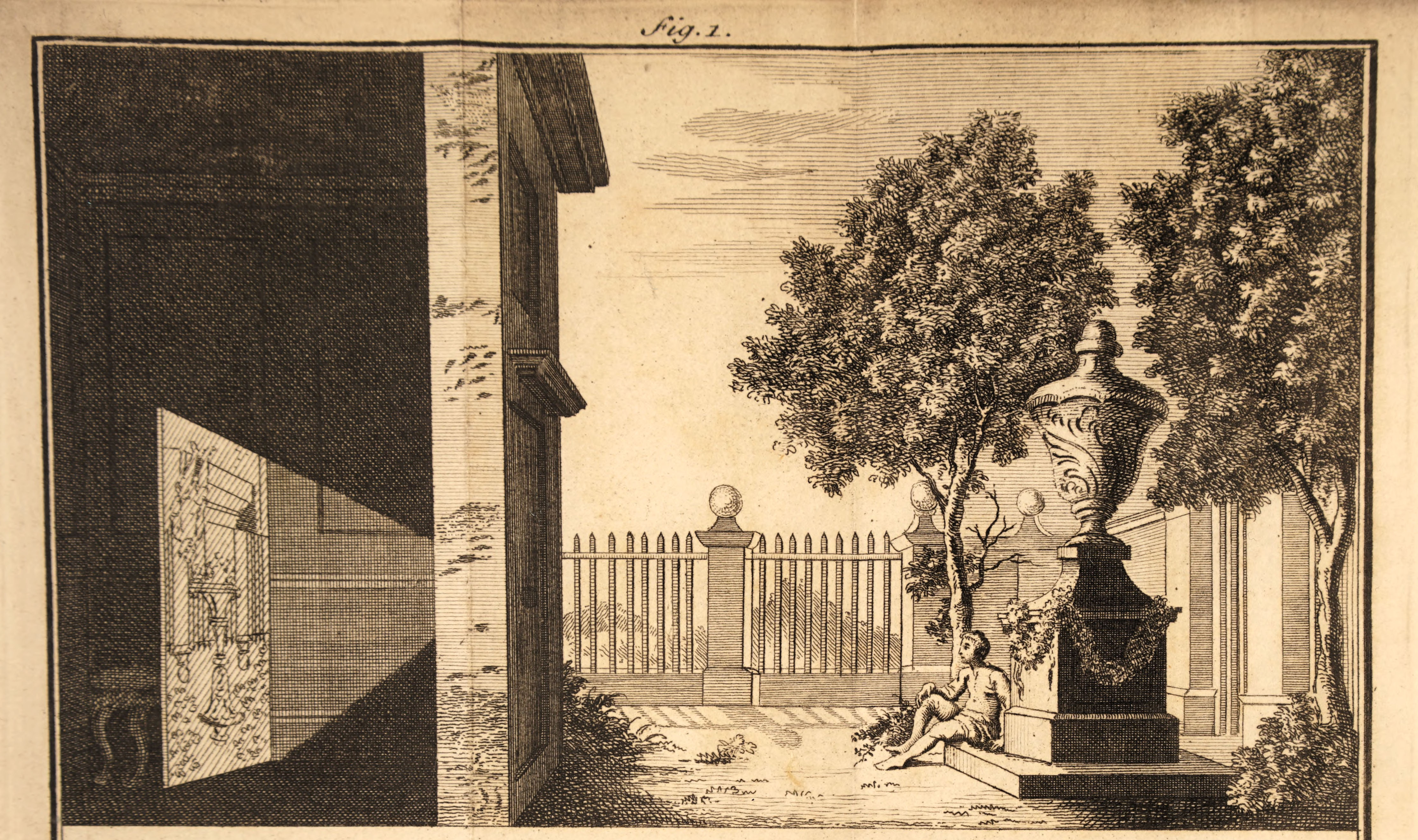
The camera obscura, Latin for 'dark chamber,' is a natural optical phenomenon and a device that projects an image through a small aperture onto a surface. This principle, known since antiquity and meticulously described by scholars like Mozi and Aristotle, involves light rays traveling in straight lines. Early applications were observational, used for safely viewing solar eclipses, but by the Renaissance, with the addition of lenses by figures like Giambattista della Porta, it evolved into a crucial tool for artists like Jan van Eyck and Leonardo da Vinci to achieve accurate perspective and detail in their paintings. Its ultimate technological descendant is the photographic camera, which harnessed light-sensitive materials to permanently capture the projected image, fundamentally changing visual culture and documentation forever.
🎵 Origins & History
The fundamental principle of the camera obscura was understood as early as antiquity by the Chinese philosopher Mozi, who described how an inverted image could be formed by light passing through a small hole. Ancient Greek thinkers like Aristotle also observed and documented this phenomenon, noting its use in projecting images of solar eclipses. The term 'camera obscura' itself, meaning 'dark chamber,' was first popularized in the 17th century by Johannes Kepler, though the concept and devices existed long before. By the Renaissance, artists began to recognize its potential, with figures like Leonardo da Vinci sketching its workings, and later, Giambattista della Porta advocating its use for drawing in his 1558 book Magia Naturalis, marking a significant shift from purely observational to artistic application.
⚙️ How It Works
The operation of a camera obscura is elegantly simple, relying on the rectilinear propagation of light. In its most basic form, a dark box or room with a tiny hole (aperture) on one side allows light from an external scene to enter. As light rays travel in straight lines, those originating from the top of the external scene pass through the aperture and strike the bottom of the interior surface, and vice versa. Similarly, rays from the left strike the right, and from the right strike the left. This results in a projected image that is both inverted (upside down) and reversed (left to right) relative to the actual scene. The addition of a convex lens at the aperture, a development popularized in the 16th century, significantly sharpens and brightens the projected image, making it a more practical tool for detailed observation and artistic rendering.
📊 Key Facts & Numbers
By the late 19th century, photographic cameras were being mass-produced.
👥 Key People & Organizations
Key figures instrumental in the camera obscura's development and popularization include the ancient Chinese philosopher Mozi. Aristotle also noted the phenomenon. During the Renaissance, Leonardo da Vinci sketched its mechanics, and Giambattista della Porta championed its use for artists. Later, scientists like Johannes Kepler refined understanding and coined the term 'camera obscura.' In art, Jan van Eyck and Johannes Vermeer are often cited as artists who likely employed the device.
🌍 Cultural Impact & Influence
The camera obscura's influence on art is profound, revolutionizing techniques in perspective, realism, and detail. Artists like Canaletto and Paul Cézanne are believed to have used it extensively, enabling unprecedented accuracy in rendering complex scenes. Beyond art, its principle underpins the entire field of photography, from early daguerreotypes to modern digital sensors. The concept also permeates popular culture, appearing in literature, film, and even video games, such as the 2015 title Camera Obscura, which uses the visual metaphor. Its legacy is a fundamental shift in how humans perceive and record the visual world, moving from subjective interpretation to objective representation.
⚡ Current State & Latest Developments
While the traditional camera obscura is largely superseded by modern photography and digital imaging, its principles remain relevant. Contemporary artists and educators still utilize portable camera obscura devices for teaching optics and art, and as a unique artistic medium. Installations and architectural projects sometimes incorporate camera obscura principles to create immersive visual experiences, such as the Panoramic Camera Obscura in Edinburgh. The fundamental optical physics it demonstrates are foundational to understanding all imaging technologies, from telescopes to smartphone cameras, ensuring its continued, albeit often implicit, presence in scientific and technological discourse.
🤔 Controversies & Debates
One persistent debate revolves around the extent to which Renaissance masters like Vermeer and Leonardo da Vinci actually used the camera obscura. While evidence suggests its use, particularly for achieving precise perspective and light effects, the exact degree of reliance remains a subject of scholarly discussion, with some arguing for more intuitive artistic skill. Another point of contention is the camera obscura's role in the 'invention' of photography; while it provided the projected image, the crucial development was the invention of light-sensitive materials and chemical processes, a separate but dependent technological leap. Furthermore, some critics argue that over-reliance on such mechanical aids can stifle artistic creativity, promoting a form of passive transcription rather than active interpretation.
🔮 Future Outlook & Predictions
The future of the camera obscura lies less in direct technological advancement and more in its continued role as an educational tool and artistic inspiration. As digital technologies become increasingly ubiquitous, the tactile, analog nature of the camera obscura offers a valuable counterpoint for understanding fundamental optical principles. We might see more architectural integrations that use the dark room principle for unique public art installations or educational centers. Its conceptual legacy will undoubtedly persist, influencing new forms of visual media and artistic expression that explore the relationship between light, perception, and representation, perhaps even finding new life in augmented reality applications that overlay projected imagery onto real-world views.
💡 Practical Applications
The most significant practical application of the camera obscura has been its role as a precursor to the photographic camera, enabling artists to draw with unprecedented accuracy. It was used by artists like Canaletto to capture the intricate details of Venetian cityscapes and by Paul Cézanne to study light and form in his still lifes. Historically, it was also employed for safe solar eclipse observation, preventing direct eye damage by projecting the sun's image. In educational settings, it serves as a tangible demonstration of light refraction, image formation, and optics, making abstract scientific concepts accessible to students of all ages. Modern artists continue to use it for its unique aesthetic qualities and as a tool for exploring perception.
Key Facts
- Category
- technology
- Type
- topic