
Contents
- 🎵 Origins & History
- ⚙️ How It Works
- 📊 Key Facts & Numbers
- 👥 Key People & Organizations
- 🌍 Cultural Impact & Influence
- ⚡ Current State & Latest Developments
- 🤔 Controversies & Debates
- 🔮 Future Outlook & Predictions
- 💡 Practical Applications
- 📚 Related Topics & Deeper Reading
- Frequently Asked Questions
- References
- Related Topics
Overview
The genesis of Grimms' Fairy Tales lies in the Brothers Grimm's scholarly pursuit of German national identity and linguistic heritage during a period of political fragmentation in the early 19th century. Jacob Grimm, a philologist, and Wilhelm Grimm, a literary historian, began collecting oral tales from various sources, including educated acquaintances and servants, in Kassel, Germany, around 1808. Their initial goal was not solely to create children's stories but to preserve authentic German folklore and language before it was lost. The first volume, containing 86 stories, was published on December 20, 1812, by Realschulbuchhandlung in Berlin, followed by a second volume with 70 more tales in 1815. Wilhelm Grimm took the lead in revising and expanding the collection over subsequent editions, subtly altering the tone and narrative style to appeal more broadly, particularly to children, while Jacob focused more on linguistic research. By the seventh edition in 1857, the collection had solidified into its canonical form, comprising 200 tales and 10 "Children's Legends," solidifying its status as a monumental work of German Romanticism and folklore scholarship.
⚙️ How It Works
Grimms' Fairy Tales functions as a curated archive of oral traditions, meticulously transcribed and edited by the Brothers Grimm. The collection's 'how it works' is less about a mechanical process and more about a scholarly methodology applied to storytelling. The brothers employed a network of informants, primarily women from educated middle-class backgrounds, to gather tales, which they then transcribed and cross-referenced. Wilhelm Grimm, in particular, was instrumental in shaping the narrative voice, smoothing out inconsistencies, and adapting the language to a more literary standard. This editorial process involved not just recording but also interpreting and refining the stories, often imbuing them with moral undertones and psychological depth that resonated with their era's intellectual currents. The numbering and organization of the tales, along with detailed annotations in later scholarly editions, highlight their dual purpose: to entertain and to serve as a linguistic and cultural resource.
📊 Key Facts & Numbers
The first edition of Grimms' Fairy Tales, published in 1812, contained 86 stories and sold approximately 1,000 copies. By the seventh edition in 1857, the collection had grown to 200 distinct tales, with an additional 10 "Children's Legends," totaling over 210 narratives. The collection has been translated into more than 160 languages worldwide, making it one of the most widely translated sets of stories globally. It is estimated that over 100 million copies of the book have been sold since its initial publication. The tales have inspired at least 1,500 film adaptations and countless theatrical productions, demonstrating their enduring commercial and artistic value. The original manuscript, preserved at the Kassel State Library, is a UNESCO Memory of the World Register item, signifying its global historical importance.
👥 Key People & Organizations
The central figures are, of course, Jacob Grimm (1785–1863) and Wilhelm Grimm (1786–1859), the Brothers Grimm, whose lifelong dedication to collecting and preserving German folklore birthed this iconic collection. Their academic work extended far beyond fairy tales; Jacob was a pioneering linguist and philologist, while Wilhelm was a literary historian and scholar. Key informants who contributed significantly to the collection included Dorothea Viehmann, a Huguenot woman whose detailed retellings formed the basis for many of the most famous tales, and the Hassenpflug family, whose members provided numerous stories. The publisher Realschulbuchhandlung in Berlin was crucial for the initial dissemination of the work, while later editions were published by various houses, including Dieterichsche Buchhandlung. The academic institution that fostered their work was the University of Göttingen, where both brothers studied and later taught.
🌍 Cultural Impact & Influence
Grimms' Fairy Tales has profoundly shaped Western culture, particularly children's literature and the archetypal understanding of fairy tales. Stories like 'Cinderella' (Aschenputtel), 'Snow White' (Schneewittchen), 'Hansel and Gretel,' and 'Little Red Riding Hood' (Rotkäppchen) have become ingrained in the global consciousness, influencing countless subsequent works in literature, film, and art. The collection's dark, often violent, and morally ambiguous narratives provided a stark contrast to later, more sanitized versions, sparking ongoing debates about their suitability for children. The archetypal characters and plot structures—the wicked stepmother, the brave hero, the magical helper, the quest—have been endlessly reinterpreted by artists and writers, from Walt Disney's animated adaptations to the more complex psychological explorations in works by authors like Angela Carter. The very concept of the 'fairy tale' as a distinct literary genre owes much to the Grimms' systematic collection and presentation.
⚡ Current State & Latest Developments
In the contemporary landscape, Grimms' Fairy Tales remains a vibrant source of inspiration and a subject of ongoing academic and artistic reinterpretation. While the core texts are centuries old, their influence is continually renewed through new adaptations in film, television, and literature. For instance, the 2022 film The School for Good and Evil draws heavily on Grimm motifs, and numerous stage productions continue to bring these stories to life. Academic discourse also persists, with scholars analyzing the tales through lenses of gender studies, psychoanalysis, and post-colonial theory, revealing new layers of meaning. The ongoing digitization of historical texts and folklore archives, such as those maintained by the University of Göttingen, ensures that the original context and variations of these tales remain accessible to researchers and enthusiasts alike.
🤔 Controversies & Debates
The most persistent controversy surrounding Grimms' Fairy Tales revolves around their perceived violence and suitability for young children. Tales featuring dismemberment, cannibalism, and harsh punishments—such as the stepsisters' eyes being pecked out by ravens in 'Cinderella' or the wicked stepmother being forced to dance in red-hot iron shoes in 'Snow White'—have drawn criticism from educators and parents since the mid-20th century. This has led to numerous expurgated editions, often omitting or softening the most brutal elements. Another debate concerns the authenticity of the collection; critics argue that the Brothers Grimm, in their editorial process, significantly altered and 'Germanized' tales that had broader European origins or were influenced by literary rather than purely oral traditions. The extent to which the Grimms were preserving pure folklore versus constructing a national narrative remains a point of scholarly contention.
🔮 Future Outlook & Predictions
The future of Grimms' Fairy Tales lies in its continued adaptability and the enduring human fascination with its core themes. We can anticipate further reinterpretations that engage with contemporary social issues, potentially exploring themes of environmentalism, social justice, and digital alienation through the familiar structures of these classic narratives. AI-driven storytelling tools may even begin to generate novel variations or analyses of the tales, pushing the boundaries of literary creation. Furthermore, ongoing archaeological and historical research into medieval and early modern European life may uncover new contextual information that sheds further light on the origins and evolution of these stories, potentially challenging existing interpretations and revealing deeper historical roots. The tales' inherent malleability suggests they will continue to be a fertile ground for creative exploration for centuries to come.
💡 Practical Applications
Grimms' Fairy Tales serves as a foundational text for numerous practical applications, most notably in the realm of creative arts and education. Its narratives provide a rich source of inspiration for writers, filmmakers, and game developers, offering archetypal characters and plot structures that can be adapted into new stories. For instance, the Walt Disney Animation Studios has built a significant portion of its early success on adaptations of Grimm tales, such as Snow White and the Seven Dwarfs (1937) and Cinderella (1950). In education, the tales are used to teach language, cultural history, and critical thinking, prompting discussions about morality, societal norms, and the evolution of storytelling. Psychologists and therapists also utilize the archetypal themes within the stories for therapeutic purposes, exploring universal human experiences and conflicts through narrative analysis.
Key Facts
- Year
- 1812-1857
- Origin
- Germany
- Category
- culture
- Type
- concept
Frequently Asked Questions
What is the original title of Grimms' Fairy Tales?
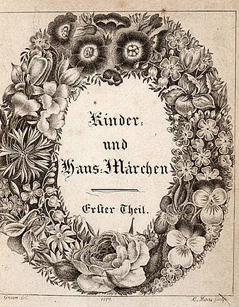
The original title of Grimms' Fairy Tales was Kinder- und Hausmärchen, which translates to 'Children's and Household Tales.' This title reflects the Brothers Grimm's dual intention of collecting stories for both children and for broader domestic use, emphasizing their role as cultural artifacts as well as entertainment. The collection was first published in two volumes, with the first appearing on December 20, 1812, and the second in 1815, laying the groundwork for what would become a cornerstone of global literature.
Who were the Brothers Grimm and what was their role?
The Brothers Grimm were Jacob Grimm (1785–1863) and Wilhelm Grimm (1786–1859), German academics, linguists, and cultural researchers. Their primary role in relation to the fairy tales was as collectors, editors, and publishers. Jacob focused heavily on linguistic research and the historical development of the German language, while Wilhelm was more involved in literary editing and the refinement of the tales for publication. Together, they meticulously gathered stories from oral traditions and written sources, aiming to preserve German folklore and national identity during a politically fragmented era. Their scholarly approach and extensive revisions transformed these folk narratives into enduring literary works.
Are the original Grimm's fairy tales suitable for children?
The original Grimm's fairy tales often contain elements that are considered too violent or frightening for young children by modern standards. Narratives frequently include graphic depictions of violence, such as dismemberment, mutilation, and death, as well as themes of abandonment and harsh punishments. For example, in 'Hansel and Gretel,' the witch is baked alive, and in 'Snow White,' the wicked queen is forced to dance in red-hot iron shoes until she dies. Consequently, many contemporary editions are heavily edited and sanitized to remove these elements, making them more palatable for younger audiences. The debate over the original versions' suitability continues among educators and parents.
What is the historical and cultural significance of Grimms' Fairy Tales?
Grimms' Fairy Tales holds immense historical and cultural significance as it codified and popularized a vast body of European folklore, profoundly shaping Western literary traditions. The collection is considered a foundational text for children's literature and has established archetypal characters and narrative structures that permeate modern storytelling. Its compilation also served as a crucial element in the burgeoning movement to define German national identity through shared cultural heritage during the 19th century. Recognized by UNESCO as a Memory of the World Register item, the tales offer invaluable insights into the social, moral, and psychological landscapes of historical European societies, demonstrating their enduring relevance beyond mere entertainment.
How did the Brothers Grimm collect their stories?
The Brothers Grimm collected their stories through a combination of methods, primarily relying on oral traditions but also consulting written sources. They interviewed friends, acquaintances, and servants, many of whom were educated middle-class women, to gather tales passed down through generations. A notable informant was Dorothea Viehmann, whose detailed retellings formed the basis for many famous stories. The Grimms meticulously transcribed these accounts, and Wilhelm Grimm then edited and refined them, standardizing language, smoothing narrative flow, and sometimes combining elements from different versions. This process was part scholarly research, part literary curation, aimed at preserving what they saw as authentic German folk narratives.
What are some of the most famous tales from the collection?
The collection includes some of the most universally recognized fairy tales in the world. Among the most famous are 'Aschenputtel' (Cinderella), 'Schneewittchen' (Snow White), 'Rotkäppchen' (Little Red Riding Hood), 'Der Froschkönig oder der eiserne Heinrich' (The Frog Prince, or Iron Heinrich), 'Hänsel und Gretel' (Hansel and Gretel), 'Rapunzel,' and 'Die Bremer Stadtmusikanten' (The Bremen Town Musicians). These stories, with their distinct characters, moral lessons, and magical elements, have transcended their origins to become global cultural touchstones, adapted and retold countless times across various media.
How has Grimms' Fairy Tales influenced modern media?
Grimms' Fairy Tales has had a pervasive and transformative influence on modern media, serving as a constant wellspring of inspiration for literature, film, television, and video games. Iconic characters like Snow White, Cinderella, and the Big Bad Wolf have been reinterpreted in countless adaptations, from the classic animated films of Walt Disney Animation Studios like Snow White and the Seven Dwarfs (1937) and Cinderella (1950), to darker, more complex cinematic takes such as Guillermo del Toro's Pan's Labyrinth (2006), which draws heavily on fairy tale archetypes. The narrative structures and thematic elements—quests, transformations, moral dichotomies—continue to be employed and subverted by contemporary storytellers, demonstrating the enduring power and adaptability of these 200-year-old tales in the digital age.