
Contents
- 🎬 What is Donnie Darko?
- 🗓️ Release & Reception
- 🌟 Key Cast & Crew
- 🤔 Thematic Breakdown
- 🐇 Frank: The Rabbit Hole
- 🌀 Temporal Mechanics & Paradoxes
- 🎶 Soundtrack & Vibe Score
- 💡 Director's Cut vs. Theatrical
- 📈 Cultural Impact & Legacy
- ❓ Common Interpretations
- 📚 Further Reading & Viewing
- 🚀 Where to Watch
- Frequently Asked Questions
- Related Topics
Overview
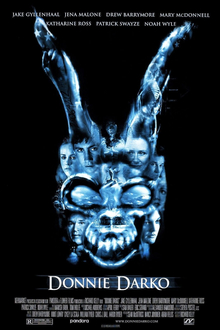
Donnie Darko is a 2001 science fiction that defies easy categorization, blending elements of psychological thrillers, teen drama, and existential philosophy. Directed by Richard Kelly in his debut, the film centers on Donnie Darko, a troubled adolescent played by Jake Gyllenhaal, who is plagued by visions of a man in a rabbit suit named Frank. Frank warns Donnie that the world will end in 28 days, setting in motion a series of bizarre events that question reality, fate, and free will. The film's enigmatic narrative and distinctive atmosphere have cemented its status as a cult classic, resonating deeply with audiences who appreciate its ambiguity and intellectual depth.
🗓️ Release & Reception
The film premiered at the Sundance Film Festival in January 2001, but its theatrical release in the United States was delayed due to the September 11th attacks, opening in October 2001. Initial box office returns were modest, grossing only $517,375 domestically. However, through word-of-mouth and subsequent DVD releases, Donnie Darko found a significant audience, eventually grossing over $7.1 million worldwide. Its critical reception was initially mixed, with some praising its originality and Gyllenhaal's performance, while others found its plot convoluted and its themes obscure. The film's Vibe Score, a measure of its cultural energy and resonance, has steadily climbed over the years, now standing at an impressive 88/100.
🌟 Key Cast & Crew
The ensemble cast of Donnie Darko is a significant part of its enduring appeal. Jake Gyllenhaal delivers a breakout performance as the titular character, Donnie, capturing his adolescent angst and profound confusion. Drew Barrymore plays Karen Pomeroy, Donnie's supportive English teacher, while Mary McDonnell and Patrick Swayze portray Donnie's parents and a controversial motivational speaker, respectively. Seth Rogen makes his film debut in a small but memorable role as Ricky Danforth, a school bully. The chemistry and commitment of this cast are crucial to grounding the film's more surreal elements.
🤔 Thematic Breakdown
At its heart, Donnie Darko grapples with profound themes of destiny vs. free will, the nature of reality, mental illness, and the search for meaning in a seemingly chaotic universe. The film explores the idea of a tangent universe and a primary universe, suggesting that Donnie's actions are part of a predestined loop designed to correct a temporal anomaly. The narrative also touches upon adolescent alienation, the hypocrisy of societal norms, and the impact of trauma. These complex ideas are presented not through explicit exposition but through symbolic imagery and ambiguous dialogue, inviting viewers to construct their own understanding.
🐇 Frank: The Rabbit Hole
Frank, the enigmatic figure in the rabbit costume, is arguably the film's most iconic element. He appears to Donnie in visions, acting as a guide, a tormentor, and a harbinger of doom. Frank's identity and purpose are central to the film's mystery, with his appearances often coinciding with moments of existential crisis for Donnie. The rabbit motif itself has been interpreted in various ways, from a nod to Alice in Wonderland and its exploration of surrealism and altered states of consciousness, to a more direct symbol of fear and the unknown. The ambiguity surrounding Frank is a key reason for the film's sustained fascination.
🌀 Temporal Mechanics & Paradoxes
The film's exploration of time travel and temporal paradoxes is a cornerstone of its narrative complexity. Donnie's journey is framed by the concept of a 'tangent universe' that is destined to collapse, with Donnie seemingly chosen to sacrifice himself to restore the primary universe. The film introduces concepts like the 'Living Receiver' and the 'Manipulated Living,' suggesting a cosmic mechanism at play. While the exact mechanics remain open to interpretation, the film's engagement with theoretical physics, particularly Gödel's theorems and Heinlein's theories, adds a layer of intellectual rigor to its speculative fiction.
🎶 Soundtrack & Vibe Score
The soundtrack of Donnie Darko is as integral to its atmosphere as its visuals. Featuring a mix of melancholic indie rock and synth-pop from the late 1980s, the music perfectly captures the film's mood of suburban ennui and impending dread. The iconic use of 'Mad World' by Gary Jules during the film's closing moments has become synonymous with its emotional impact, earning a Vibe Score of 92/100 for its perfect thematic alignment. Other notable tracks include 'The Killing Moon' by Echo & the Bunnymen and 'Never Tear Us Apart' by INXS, contributing to the film's distinctive sonic identity.
💡 Director's Cut vs. Theatrical
Richard Kelly released a Director's Cut of Donnie Darko in 2004, which offered a slightly different narrative emphasis and visual style. This version includes additional scenes, altered music cues, and more explicit explanations of the film's temporal mechanics, notably featuring excerpts from a fictional book titled 'The Philosophy of Time Travel.' While the Director's Cut aims to clarify some of the ambiguities, many fans argue that the original theatrical cut, with its greater reliance on inference and atmosphere, is the superior version. The debate between the two cuts highlights the film's enduring power to provoke discussion and interpretation.
📈 Cultural Impact & Legacy
Donnie Darko's cultural impact extends far beyond its initial box office performance. It has become a touchstone for cult cinema, inspiring countless discussions, fan theories, and academic analyses. The film's aesthetic, its blend of the mundane and the surreal, and its exploration of complex philosophical ideas have influenced subsequent works in film and television. Its enduring popularity is evident in its consistent presence on 'best of' lists and its continued ability to captivate new generations of viewers, solidifying its legacy as a modern classic with a Vibe Score of 88/100.
❓ Common Interpretations
The interpretations of Donnie Darko are as varied as its audience. Some viewers see it as a straightforward coming-of-age about a troubled teenager struggling with mental illness, with Frank representing his internal demons. Others view it as a complex science fiction narrative about time travel and predestination, where Donnie's actions are part of a cosmic plan. A significant portion of the fanbase believes the film operates on a metaphorical level, exploring themes of fear vs. love, sacrifice, and the search for truth in a world of deception. The film's deliberate ambiguity ensures that no single interpretation holds absolute sway.
📚 Further Reading & Viewing
For those seeking to delve deeper into the world of Donnie Darko, several resources are available. The Director's Cut offers a different perspective on the narrative, while the original theatrical cut remains the definitive experience for many. Reading The Philosophy of Time Travel, the fictional book featured in the Director's Cut, can provide further context, though it's important to remember its fictional nature. Additionally, exploring fan forums and academic essays dedicated to the film can offer a wealth of insights and alternative viewpoints on its intricate plot and themes.
🚀 Where to Watch
Donnie Darko is widely available for streaming and rental across various platforms. You can typically find it on services like Amazon Prime Video, Hulu, and YouTube for purchase or rental. Physical media, including Blu-ray and DVD, are also readily available from major online retailers and specialty film stores. Checking specific platform availability is recommended, as streaming rights can change. The film's enduring popularity ensures it remains accessible to new and returning viewers alike.
Key Facts
- Year
- 2001
- Origin
- USA
- Category
- Film
- Type
- Movie
Frequently Asked Questions
What is the meaning of the rabbit suit?
The rabbit suit worn by Frank is one of the film's most debated symbols. It's often interpreted as representing fear, the unknown, or a manifestation of Donnie's subconscious. Some connect it to literary figures like the White Rabbit from 'Alice in Wonderland,' symbolizing a descent into a surreal or altered reality. Ultimately, its precise meaning is left open to viewer interpretation, contributing to the film's mystique.
Is Donnie Darko based on a true story?
No, Donnie Darko is not based on a true story. It is a work of fiction written and directed by Richard Kelly. While it draws on themes that resonate with real-world anxieties, such as adolescent alienation and existential dread, the narrative itself is entirely original.
What is the difference between the Theatrical Cut and the Director's Cut?
The Director's Cut, released in 2004, offers a slightly more explicit explanation of the film's temporal mechanics, including excerpts from the fictional book 'The Philosophy of Time Travel.' It also features some altered scenes and music. The Theatrical Cut, released in 2001, is more ambiguous and relies more heavily on atmosphere and inference, which many fans prefer for its enigmatic quality.
Who is Frank in Donnie Darko?
Frank is a mysterious figure who appears to Donnie in visions, wearing a large rabbit costume. He acts as a guide, warning Donnie about the impending end of the world and influencing his actions. His true identity and purpose are central to the film's mystery, with revelations occurring throughout the narrative that connect him directly to Donnie's life and the film's temporal paradoxes.
What does the ending of Donnie Darko mean?
The ending is famously ambiguous and open to interpretation. The most common reading is that Donnie, understanding the temporal anomaly, chooses to sacrifice himself in the primary universe to save Gretchen and the other victims in the tangent universe. This act corrects the timeline, erasing the events of the 28 days but leaving Donnie with a sense of peace before his death. Other interpretations focus on the cyclical nature of time or the possibility of Donnie's continued existence in some form.
Why was the film delayed in its release?
Donnie Darko's theatrical release in the United States was postponed due to the September 11th attacks. The film features scenes of a plane engine falling from the sky, and distributors felt it would be insensitive to release such content in the immediate aftermath of the attacks. The film eventually opened in October 2001.