
Contents
Overview
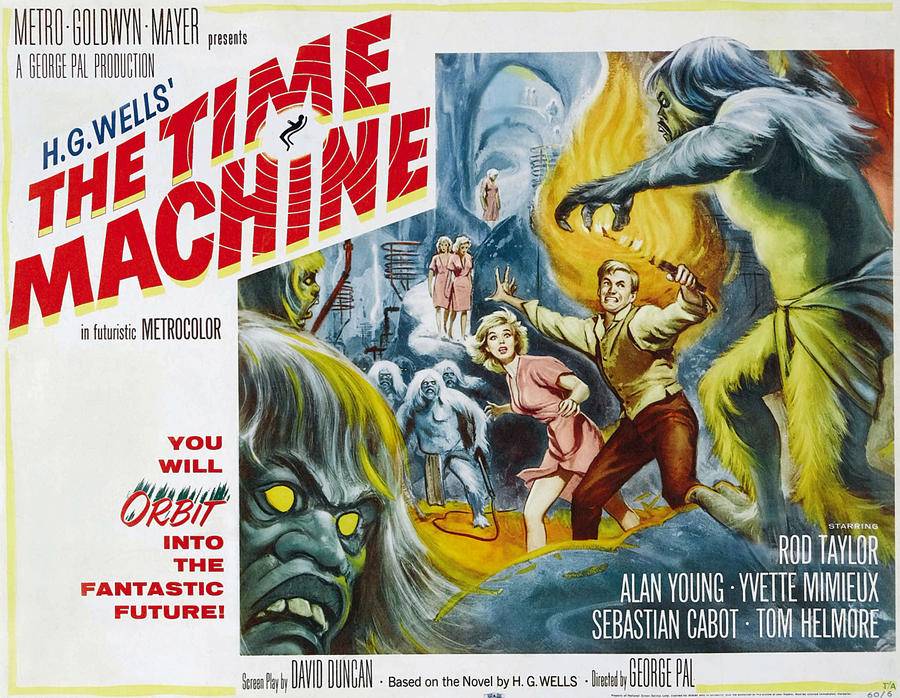
Time travel films explore the tantalizing 'what ifs' of altering history, grappling with paradoxes, causality, and the very nature of existence. Since the genre's popularization by H.G. Wells' 1895 novel, cinema has been captivated by narratives of temporal displacement, offering everything from cautionary tales of unintended consequences to thrilling adventures across epochs. These films often delve into the philosophical implications of changing the past, the determinism of fate, or the creation of branching alternate realities. Whether through elaborate time machines or more abstract means, these cinematic voyages serve as potent metaphors for regret, hope, and the human desire to revisit or reshape our lives. The genre continues to evolve, with filmmakers constantly finding new ways to visualize temporal mechanics and their profound impact on individual lives and the grand sweep of history. The sheer variety, from mind-bending sci-fi thrillers to poignant character dramas, underscores the enduring appeal of exploring time's malleable nature on screen.
🎵 Origins & History
The cinematic fascination with time travel didn't ignite overnight; it built upon a literary foundation laid by authors like H.G. Wells, whose 1895 novella, ''The Time Machine'', provided the blueprint for mechanical temporal displacement. Early cinematic attempts were often rudimentary, but by the mid-20th century, films began to explore the comedic potential of anachronism. The genre truly exploded in the latter half of the century, with landmark films offering visually ambitious adaptations and using temporal twists for shocking reveals. The 1980s saw a surge in popularity with iconic franchises like ''Back to the Future'' and ''The Terminator'', solidifying time travel as a staple of mainstream cinema and introducing complex causality loops to a global audience. These films didn't just entertain; they seeded complex narrative structures that would influence generations of filmmakers.
⚙️ How It Works (Cinematically)
Cinematically, time travel operates on a spectrum of narrative logic, often prioritizing dramatic effect over scientific rigor. The most common mechanism is the time machine, a tangible device ranging from the DeLorean in ''Back to the Future'' to the more abstract temporal displacement in ''Interstellar''. Other films employ more esoteric methods, such as temporal anomalies, psychic abilities, or even dreams, as seen in ''Inception'' which plays with subjective time perception. The narrative rules governing these journeys are crucial: some films adhere to a single, immutable timeline where any attempt to change the past is either impossible or paradoxically leads to the events already known (e.g., ''12 Monkeys''). Others embrace the multiverse theory, where altering the past creates branching timelines (e.g., ''Predestination''). The visual representation of time travel itself—whether a flashing light, a vortex, or a seamless transition—also plays a vital role in establishing the film's unique temporal mechanics and its overall tone, from the whimsical to the terrifying.
📊 Key Facts & Numbers
The global box office for time travel films is substantial, with major franchises grossing billions. These figures highlight a consistent audience appetite for temporal narratives. Furthermore, the average production budget for a major time travel film can range from $50 million to over $200 million, reflecting the complex visual effects and intricate plotting often required. Critical reception also varies wildly, with films like ''Primer'' lauded for its intricate, low-budget complexity, while others face criticism for plot holes or overreliance on tropes. The sheer volume of films produced, with hundreds of distinct titles released annually across major and independent studios, underscores the genre's enduring commercial viability.
👥 Key People & Organizations
Key figures in the time travel film landscape include directors like Robert Zemeckis, whose ''Back to the Future'' trilogy remains a cultural touchstone, and Christopher Nolan, who explored temporal mechanics and perception in ''Inception'' and ''Interstellar''. James Cameron redefined action sci-fi with ''The Terminator'' and its sequel. Writers like Charlie Kaufman have pushed the boundaries of the genre with mind-bending narratives in films such as ''Synecdoche, New York'', which uses time manipulation as a metaphor for life itself. Studios like Universal Pictures (''Back to the Future'') and Warner Bros. (''The Matrix'' franchise) have been instrumental in producing and distributing many of the genre's most successful entries. Independent filmmakers, such as Shane Carruth with ''Primer'', have also made significant contributions, demonstrating that compelling time travel stories can be told on any budget.
🌍 Cultural Impact & Influence
Time travel films have profoundly shaped popular culture, influencing not only subsequent cinematic works but also literature, video games, and even scientific discourse. The concept of the grandfather paradox, first popularized in fiction, is now a common cultural reference point, often debated in casual conversation and academic circles alike. Franchises like ''Back to the Future'' have become ingrained in the collective consciousness, influencing fashion, music, and slang. The visual language developed in these films—the swirling vortexes, the glowing flux capacitors, the futuristic interfaces—has become shorthand for temporal displacement. Beyond entertainment, these films often serve as allegories for societal anxieties, exploring themes of regret, destiny, and the desire for control over our lives and history. They encourage audiences to ponder the butterfly effect and the interconnectedness of events, making complex philosophical ideas accessible to a mass audience.
⚡ Current State & Latest Developments
The landscape of time travel films continues to evolve, with recent entries pushing narrative and visual boundaries. Films like ''Tenet'' by Christopher Nolan introduced the concept of 'inversion,' where entropy is reversed, allowing objects and people to move backward through time. Streaming platforms like Netflix and Amazon Prime Video are increasingly producing original time travel content, such as the German series ''Dark'', which weaves intricate, multi-generational temporal loops. The rise of AI is also beginning to influence narrative generation and visual effects, potentially leading to more complex and personalized time travel stories. Furthermore, there's a growing trend of blending time travel with other genres, such as horror (''Happy Death Day'') and romance (''About Time''), demonstrating the genre's adaptability and continued relevance in contemporary filmmaking.
🤔 Controversies & Debates
The most persistent controversy surrounding time travel films revolves around their internal logic and the handling of paradoxes. Critics often debate whether a film adheres to a consistent model of time travel—be it a fixed timeline, a branching multiverse, or a self-healing timeline. The grandfather paradox (where traveling back and preventing one's own birth creates a logical impossibility) is a frequent point of contention. Films like ''Predestination'' deliberately embrace and resolve complex paradoxes, while others are criticized for plot holes or inconsistent rules. Another debate centers on the ethical implications of altering the past; should characters have the right to change history, even with good intentions? The philosophical underpinnings—determinism versus free will—are also subjects of ongoing discussion, with films often taking starkly different stances on whether the future is fixed or mutable. The very feasibility of time travel, while fictional, also sparks debate among scientists and enthusiasts.
🔮 Future Outlook & Predictions
The future of time travel films promises even more sophisticated explorations of temporal mechanics and their emotional resonance. We can expect continued innovation in visual effe
Key Facts
- Category
- culture
- Type
- topic