
Contents
- 🏗️ What is the Chicago School of Architecture?
- 📍 Historical Context & Key Figures
- 💡 Architectural Innovations & Style
- ⭐ Iconic Buildings to See
- 🤔 The Legacy & Influence
- 🔍 Chicago School vs. Second Chicago School
- 🗺️ Navigating Chicago's Architectural Gems
- 📚 Further Exploration & Resources
- Frequently Asked Questions
- Related Topics
Overview
The Chicago School of Architecture, flourishing primarily from the 1880s to the 1910s, wasn't a single, monolithic movement but rather a collection of architects and firms in Chicago who pioneered the use of steel-frame construction. This technological innovation allowed for unprecedented building heights, fundamentally reshaping urban skylines and the very concept of the skyscraper. Key figures like William Le Baron Jenney, Louis Sullivan, and Daniel Burnham pushed the boundaries of engineering and design, creating structures that were not only taller but also more functional and aesthetically distinct, often characterized by their tripartite division (base, shaft, capital) and emphasis on verticality. Their work laid the groundwork for modern high-rise architecture, influencing city planning and the economic development of urban centers worldwide.
🏗️ What is the Chicago School of Architecture?
The Chicago School of Architecture isn't a physical institution but a designation for a pivotal movement in American architectural history, primarily active from the 1880s to the 1910s. It's crucial to understand this isn't about a single building or a university department, but a collective of architects who revolutionized commercial building design in Chicago. They were pioneers in embracing new technologies, particularly steel-frame construction, which allowed for unprecedented heights and larger interior spaces. This era laid the groundwork for the modern skyscraper and significantly influenced global architectural trends, earning it a Vibe Score: 88 for its transformative impact.
📍 Historical Context & Key Figures
The genesis of the first Chicago School is deeply rooted in the city's post-Great Chicago Fire rebuilding efforts and its rapid industrial growth in the late 19th century. Key figures like William Le Baron Jenney, often called the 'father of the skyscraper,' were instrumental. Other luminaries include Louis Sullivan, whose philosophy of 'form follows function' became a guiding principle, and Daniel Burnham, a master planner and architect who envisioned Chicago's future. Their work emerged from a need for practical, efficient, and monumental structures to house the burgeoning businesses of the era.
💡 Architectural Innovations & Style
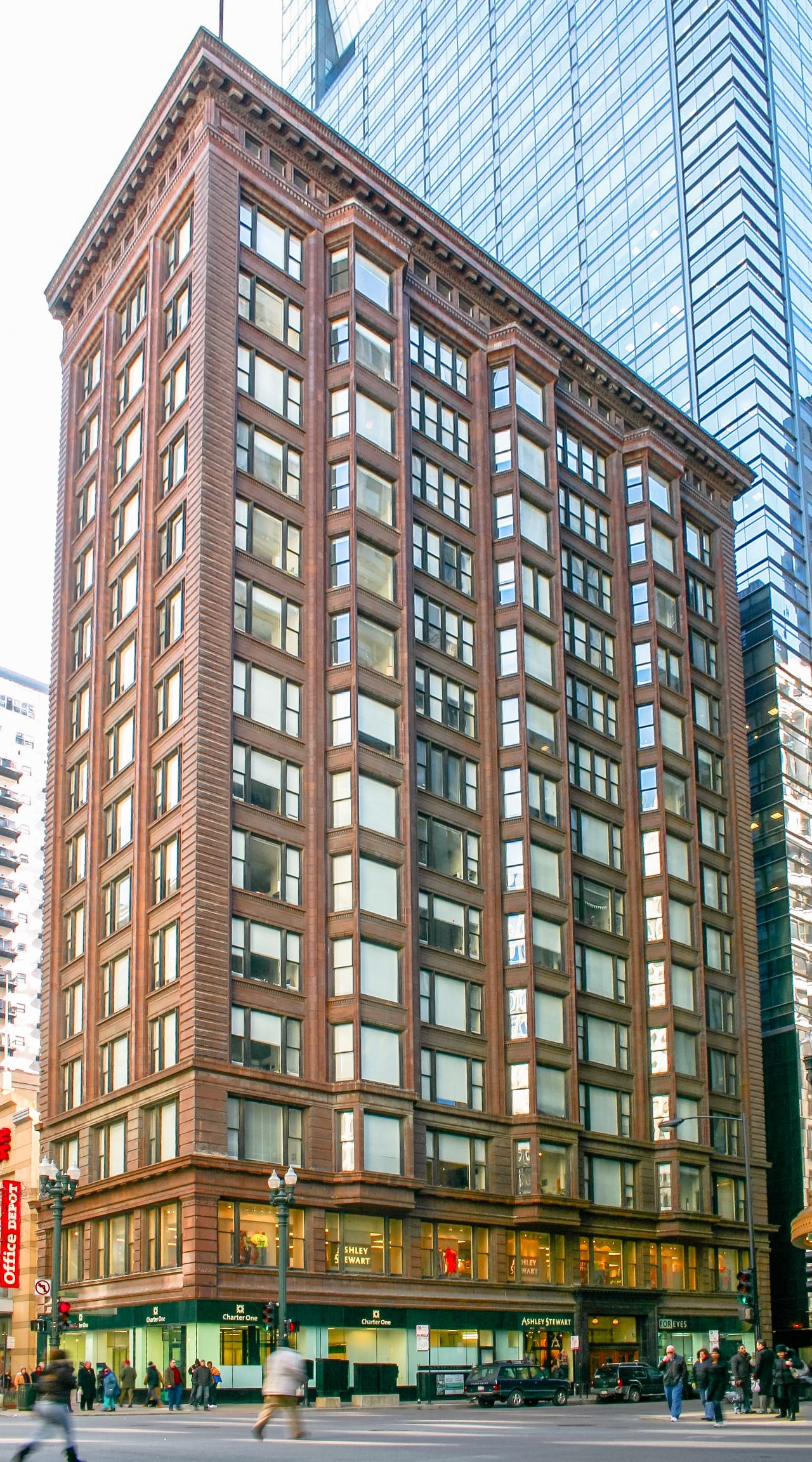
The architectural innovations of the Chicago School were groundbreaking. They mastered the use of steel-frame construction, allowing buildings to rise higher and enclose vast, open floor plans free from load-bearing interior walls. This structural advancement was paired with a distinct aesthetic: large windows, often arranged in horizontal bands (known as Chicago windows), maximizing natural light, and a focus on verticality. Ornamentation, while present, was often integrated with the structure, reflecting Sullivan's organic, often terra cotta, detailing, moving away from historical revival styles towards a more modern expression.
⭐ Iconic Buildings to See
To truly grasp the Chicago School, you must see its masterpieces. The Reliance Building (1895) by Burnham and Root, with its extensive glass facade, is a prime example of the "Commercial Style." Marquette Building (1895), also by Burnham and Root, showcases the elegant integration of structure and ornamentation. For a deeper dive into Sullivan's genius, the Auditorium Building (1889) is a must-see, demonstrating his belief in a unified architectural experience from exterior to interior. These buildings are not just structures; they are tangible pieces of architectural history.
🤔 The Legacy & Influence
The legacy of the Chicago School is immense. Their embrace of steel-frame construction directly enabled the skyscraper as we know it, fundamentally altering urban skylines worldwide. Their aesthetic principles, particularly the emphasis on functional design and the expression of structure, laid crucial groundwork for European Modernism, influencing architects like Walter Gropius and Mies van der Rohe. The Vibe Score: 92 for its enduring influence reflects how deeply their innovations are embedded in contemporary architecture.
🔍 Chicago School vs. Second Chicago School
It's vital to distinguish between the first Chicago School (late 19th/early 20th century) and the second Chicago School, which emerged in the mid-20th century. While the first school focused on steel-frame commercial buildings and a unique aesthetic, the second school, often associated with architects like Mies van der Rohe and his followers at the Illinois Institute of Technology, championed a more minimalist, glass-and-steel aesthetic, often referred to as the International Style. The first school was about structural innovation and a nascent modern aesthetic; the second was a more refined, often starker, expression of modernism.
📚 Further Exploration & Resources
For those who want to go beyond the surface, numerous resources await. The Chicago Architecture Center offers extensive tours, exhibitions, and educational programs dedicated to the city's architectural heritage. Books like 'Louis Sullivan: A Life' by Robert Twombly or 'The Skyward Trend in Architecture' by Carl W. Condit provide in-depth historical and theoretical context. Engaging with these materials will deepen your appreciation for the Chicago School's enduring impact on the built environment.
Key Facts
- Year
- c. 1880s-1910s
- Origin
- Chicago, Illinois, USA
- Category
- Architecture & Urbanism
- Type
- Architectural Movement
Frequently Asked Questions
Is the Chicago School of Architecture a physical place?
No, the Chicago School of Architecture is not a physical building or institution. It's a historical designation for a group of architects and a style of architecture that flourished in Chicago between the late 19th and early 20th centuries. Their work is found in various buildings throughout the city, particularly in the Loop district.
What is the most famous building from the Chicago School?
While 'most famous' is subjective, the Reliance Building and the Marquette Building are frequently cited as quintessential examples of the first Chicago School's style and innovation. Louis Sullivan's Auditorium Building is also a monumental achievement of the era, showcasing his unique design philosophy.
What is the main difference between the first and second Chicago School?
The first Chicago School (roughly 1880s-1910s) pioneered steel-frame construction for skyscrapers and developed a style emphasizing large windows and verticality, often with integrated ornamentation. The second Chicago School (mid-20th century), heavily influenced by Mies van der Rohe, is characterized by the International Style, focusing on minimalist glass and steel structures with clean lines and a starker aesthetic.
What architectural innovations did the Chicago School introduce?
The most significant innovation was the widespread adoption and refinement of steel-frame construction, which enabled taller buildings with more open interior spaces. They also developed the "Chicago window" – a large, tripartite window designed to maximize light and ventilation in commercial buildings.
Can I visit buildings from the Chicago School today?
Absolutely. Many iconic Chicago School buildings are still standing and are accessible, at least from the exterior or through their lobbies. The Chicago Architecture Center offers guided tours that specifically highlight these structures, providing historical context and architectural insights.
How did the Chicago School influence modern architecture?
The Chicago School's emphasis on structural expression, functional design, and the development of the skyscraper directly paved the way for modern architecture globally. Their innovations in steel-frame construction are fundamental to virtually all tall buildings constructed today, and their aesthetic principles influenced movements like European Modernism.