
Contents
Overview
The ball python's story begins in the diverse ecosystems of West and Central Africa, where it has been a part of the natural landscape for millennia. Indigenous cultures have long coexisted with this serpent, often incorporating it into folklore and traditional practices. Its formal scientific classification, Python regius, was established by German zoologist Johann Georg Wagler in 1830, a period when European naturalists were actively cataloging the world's fauna. The common name 'royal python' emerged, possibly due to ancient Egyptian beliefs associating the snake with royalty, or its perceived regal bearing. The pet trade, however, truly began to shape its modern narrative in the latter half of the 20th century, with imports from Africa increasing significantly from the 1970s onwards, laying the groundwork for its global popularity.
⚙️ How It Works
As a nonvenomous constrictor, the ball python employs a straightforward yet effective hunting strategy. It ambushes prey, typically small mammals like rodents and shrews, using its keen senses of smell and heat-sensing pits located along its jawline to detect warm-blooded targets in low light. Once prey is within striking distance, the python lunges, securing its meal with rows of backward-curving teeth. It then rapidly coils its muscular body around the victim, applying pressure to suffocate it before swallowing it whole. This constrictive method is a hallmark of the python family, demonstrating an evolutionary adaptation for subduing prey larger than its head. Its digestive system is remarkably efficient, capable of breaking down entire meals over several days.
📊 Key Facts & Numbers
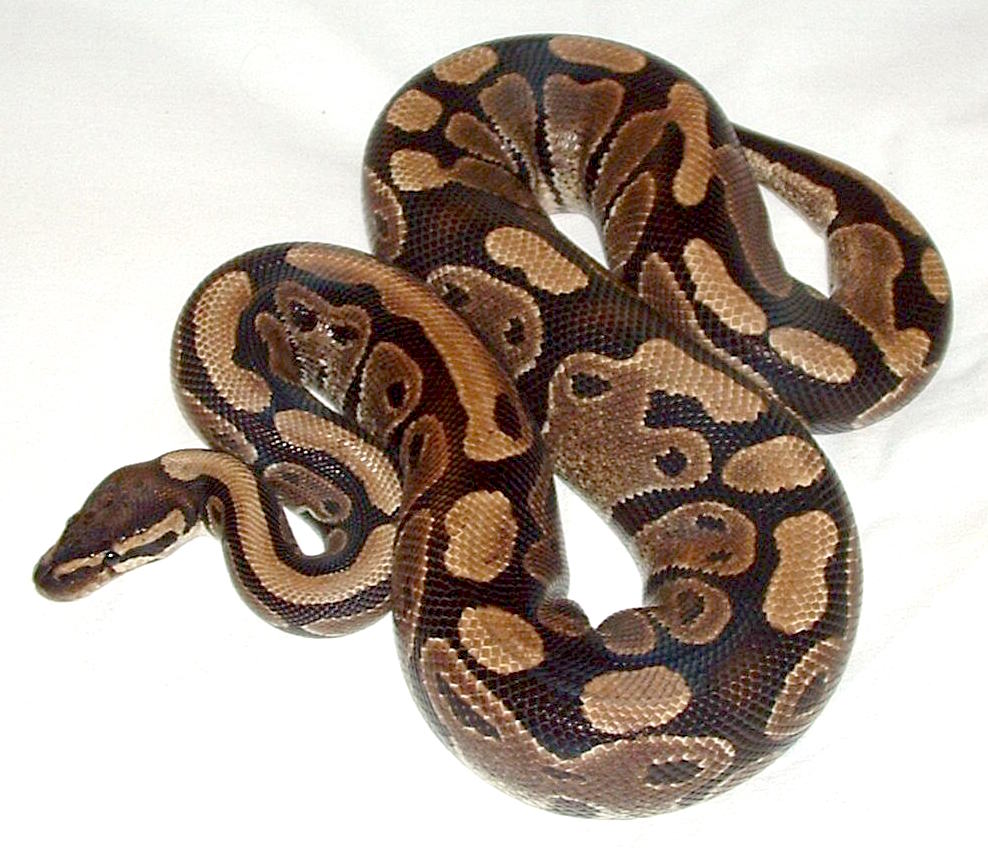
Ball pythons are the smallest of the African pythons, typically reaching lengths of 91–152 cm (3–5 ft), with exceptional individuals measuring up to 182 cm (6 ft). Females are generally larger and heavier than males. Their weight can range from 1.4–5.4 kg (3–12 lb). In their native habitat, they inhabit areas with average temperatures between 25–30°C (77–86°F) and humidity levels around 50-60%. The global pet trade is estimated to involve hundreds of thousands of ball pythons annually, with the market value of specialized morphs sometimes reaching thousands of dollars per individual. For instance, the 'Lavender Albino' morph, first bred by Tony Terrell in 1997, can command prices exceeding $10,000.
👥 Key People & Organizations
While no single individual 'founded' the ball python's existence, key figures have profoundly influenced its journey, particularly within the pet trade. Early importers and breeders like Tony Terrell and Kevin McAllister were instrumental in developing captive breeding techniques and popularizing morphs. Organizations such as the Ball Python Breeders Association (BPBA) and regional reptile keepers' societies play a role in promoting responsible husbandry and ethical breeding practices. The scientific community, including herpetologists at institutions like the Smithsonian National Museum of Natural History, continues to study their ecology and conservation status in Africa.
🌍 Cultural Impact & Influence
The ball python's cultural impact is most evident in its transformation from a wild African reptile to a ubiquitous household pet. Its gentle nature and striking appearance have made it a gateway species for many into reptile keeping, challenging negative stereotypes often associated with snakes. This has led to its depiction in various media, from documentaries on National Geographic to appearances in educational programs. The explosion of 'morphs'—selective breeding for specific color and pattern mutations—has turned ball python breeding into a significant subculture within the exotic pet community, with dedicated online forums, social media groups, and specialized expos attracting thousands of enthusiasts worldwide. This phenomenon highlights a broader trend of human fascination with manipulating and domesticating wild species.
⚡ Current State & Latest Developments
The ball python remains one of the most sought-after reptile pets. Captive breeding efforts continue to produce an ever-expanding array of morphs, driven by market demand and breeder innovation. Recent developments include advancements in understanding genetic mutations, leading to more predictable breeding outcomes. For example, the 'Pinstripe' gene, first isolated in the early 2000s, has been combined with numerous other genes to create unique patterns. The ethical sourcing of wild-caught specimens remains a concern, though the industry largely relies on captive-bred animals. Online marketplaces and specialized reptile expos, such as the Daytona Beach Reptile Show, are key hubs for transactions and community engagement.
🤔 Controversies & Debates
The primary controversy surrounding ball pythons centers on the ethics of the exotic pet trade. Critics, including organizations like the Humane Society of the United States, raise concerns about the welfare of wild-caught snakes, the potential for invasive species if released, and the challenges of providing adequate care for such animals. The sheer number of morphs, some with potential health issues like 'spider morph' neurological problems, also sparks debate among breeders and keepers about the limits of selective breeding. Conversely, proponents argue that responsible captive breeding ensures animal welfare, reduces pressure on wild populations, and provides educational opportunities about reptiles.
🔮 Future Outlook & Predictions
The future for ball pythons appears to be one of continued diversification and refinement within the captive breeding community. Expect to see even more complex and visually striking morphs emerge as genetic understanding deepens. The development of 'designer morphs' combining multiple recessive and co-dominant genes will likely continue to drive market trends. From a conservation perspective, efforts to protect their natural habitats in West and Central Africa will be crucial, especially as human development encroaches on their territories. There's also a growing interest in using ball pythons in therapeutic settings, leveraging their calm demeanor for animal-assisted therapy programs, though this is still a niche application.
💡 Practical Applications
The most significant practical application of ball pythons is their role as exotic pets. Their docile nature, manageable size, and relatively simple care requirements (compared to larger reptiles) make them ideal for novice keepers. They are also used in educational settings, such as zoos and schools, to teach about reptiles and biodiversity. In some regions, they might still be part of traditional practices, though this is less documented in the modern era. The breeding industry itself represents a substantial economic activity, with breeders investing in facilities, genetics, and marketing to supply the global demand for these snakes and their morphs.
Key Facts
- Category
- nature
- Type
- topic