
Contents
- 🎵 Origins & History
- ⚙️ How It Works
- 📊 Key Facts & Numbers
- 👥 Key People & Organizations
- 🌍 Cultural Impact & Influence
- ⚡ Current State & Latest Developments
- 🤔 Controversies & Debates
- 🔮 Future Outlook & Predictions
- 💡 Practical Applications
- 📚 Related Topics & Deeper Reading
- Frequently Asked Questions
- References
- Related Topics
Overview
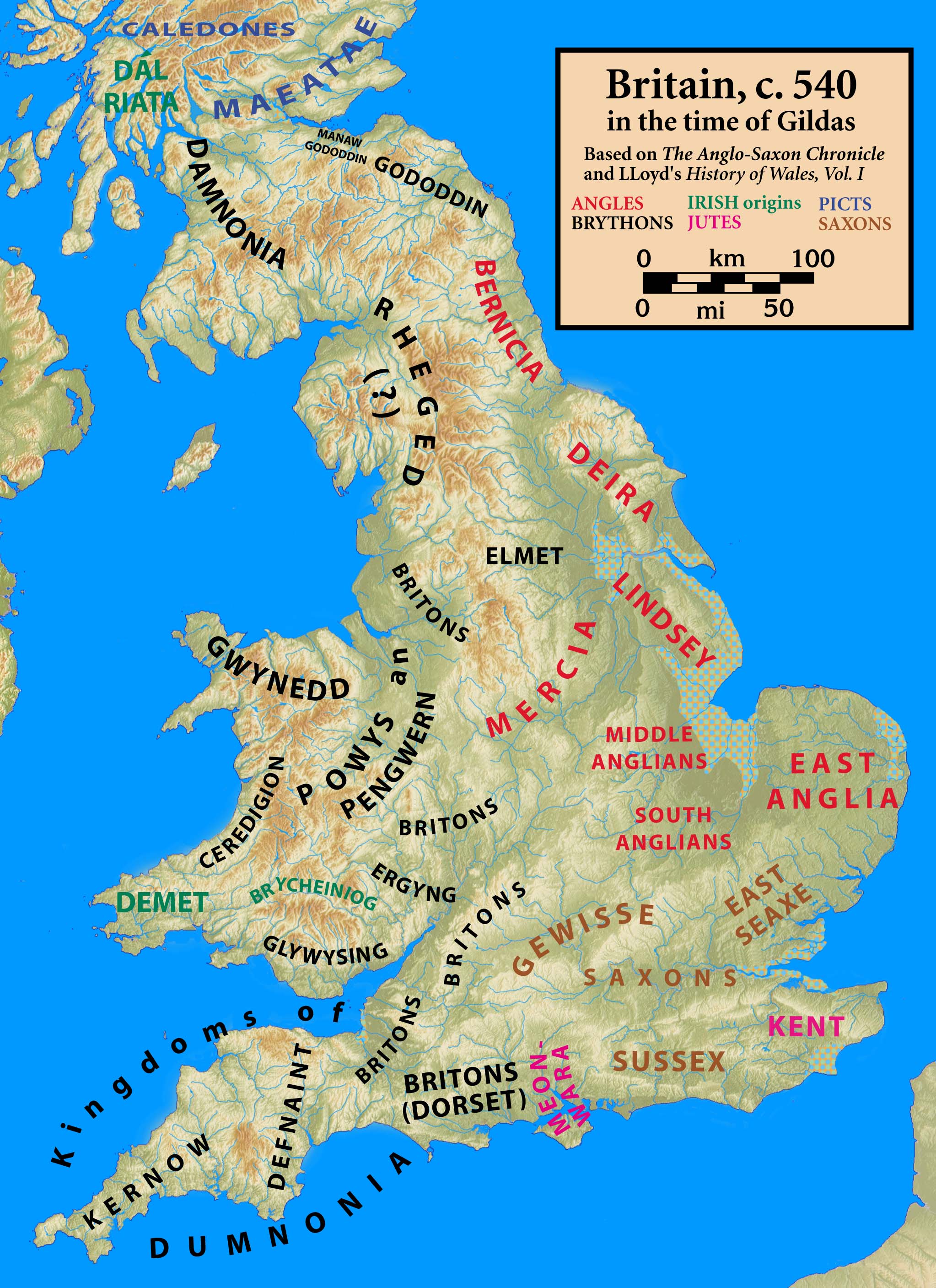
The story of Anglo-Saxon England begins in the 5th century CE, a period of profound upheaval following the collapse of Roman authority around 410 CE. As Roman legions withdrew, leaving the province vulnerable, waves of Germanic peoples—primarily Angles, Saxons, and Jutes—migrated from continental Europe, particularly from regions around modern-day Denmark and northern Germany. These migrations weren't a single invasion but a complex process of settlement and assimilation, gradually displacing or integrating with the native Romano-British population. Early settlements coalesced into numerous small kingdoms, often referred to as the Heptarchy (though this is a later construct), including Wessex, Mercia, Northumbria, and East Anglia. The conversion to Christianity, beginning in earnest with St. Augustine's mission in 597 CE, played a pivotal role in unifying these disparate kingdoms and fostering literacy through monastic centers like Bede's Monkwearmouth-Jarrow. The subsequent Viking Age, starting with the raid on Lindisfarne in 793 CE, introduced new dynamics, leading to periods of conflict and eventual settlement, particularly in the Danelaw, and ultimately setting the stage for the Norman Conquest.
⚙️ How It Works
Anglo-Saxon society was structured around a hierarchical system, with a king at the apex, supported by a nobility of thegns (warrior-aristocrats) and earls. Below them were free peasants, known as ceorls, who formed the backbone of the agricultural economy and military. The legal system was based on customary law, with significant emphasis on kinship ties, compensation (wergild), and community accountability, as codified in laws like those of Æthelberht and later Alfred the Great. Governance often involved assemblies like the Witenagemot, a council of leading men who advised the king. The economy was primarily agrarian, with trade occurring through established burhs (fortified settlements) and ports. The adoption of Christianity brought new administrative structures, including dioceses and parishes, and fostered the development of Old English as a written language, evident in manuscripts like the Beowulf epic and the Anglo-Saxon Chronicle.
📊 Key Facts & Numbers
The Anglo-Saxon period spanned approximately 600 years, from the 5th century to 1066. During this time, the population of England is estimated to have grown from around 1-2 million in the early Anglo-Saxon period to perhaps 4-5 million by the time of the Norman Conquest. Over 1,000 Old English words form the basis of modern English vocabulary, with estimates suggesting that up to 25% of the words in the Oxford English Dictionary have Old English roots. The Danelaw, the area of Viking settlement, covered roughly one-third of England at its height. By the 10th century, the kingdom of Wessex had become dominant, with kings like Æthelstan ruling over a territory that closely resembled modern England, with an estimated royal revenue of around £2,000 per annum in the mid-10th century. The Battle of Hastings in 1066 saw an estimated 7,000-10,000 Norman soldiers defeat a similar-sized Anglo-Saxon army.
👥 Key People & Organizations
Key figures of Anglo-Saxon England include Alfred the Great (849-899), King of Wessex, renowned for his military victories against the Vikings, his legal reforms, and his promotion of learning and Old English literature. Æthelstan (c. 894-939), Alfred's grandson, is often considered the first King of England, having conquered the Danelaw. Bede (c. 672-735), a monk at Monkwearmouth-Jarrow, was a prolific scholar whose Ecclesiastical History of the English People is a primary source for the early period. St. Augustine of Canterbury (d. 604) led the Gregorian mission that reintroduced Christianity to southern England. Later figures include Harold Godwinson (c. 1022-1066), the last Anglo-Saxon king, who died at the Battle of Hastings, and William the Conqueror (c. 1028-1087), the Norman duke who defeated Harold and became King of England. Organizations like the Church of England (in its nascent form) and monastic communities were central to intellectual and spiritual life.
🌍 Cultural Impact & Influence
The cultural legacy of Anglo-Saxon England is immense, forming the bedrock of English identity. The Old English language is the direct ancestor of modern English, and its influence is pervasive in vocabulary, grammar, and pronunciation. Literary works like the epic poem Beowulf, the Anglo-Saxon Chronicle, and the elegies found in the Exeter Book provide invaluable insights into Anglo-Saxon values, beliefs, and storytelling traditions. Anglo-Saxon art, particularly metalwork and manuscript illumination found in treasures like the Sutton Hoo hoard and the Lindisfarne Gospels, showcases a distinct artistic style that blended Germanic, Celtic, and Mediterranean influences. Legal and administrative structures, such as the shire system and the concept of common law, have roots in Anglo-Saxon governance. The very concept of 'England' as a unified political entity began to take shape during this period, a process driven by kings like Alfred the Great and Æthelstan.
⚡ Current State & Latest Developments
The study of Anglo-Saxon England is a vibrant academic field, with ongoing archaeological discoveries continually refining our understanding. Excavations at sites like Sutton Hoo and West Stow provide tangible evidence of daily life, technology, and social structures. Advances in genetic analysis have shed new light on migration patterns during the 5th and 6th centuries, suggesting a more complex picture than previously understood, with significant genetic input from continental Europe. Digital humanities projects are increasingly used to analyze and disseminate texts like the Anglo-Saxon Chronicle and to map linguistic variations across the period. The journal Anglo-Saxon England, first published in 1972, remains a key platform for scholarly research, disseminating cutting-edge findings from historians, archaeologists, and linguists.
🤔 Controversies & Debates
One of the most persistent debates concerns the nature and scale of the Anglo-Saxon settlement. For decades, the prevailing view, influenced by figures like Bede, emphasized a large-scale invasion and displacement of the native Romano-British population. However, archaeological and genetic evidence in recent years has led some scholars to propose a more gradual process of migration and cultural assimilation, questioning the extent of ethnic replacement. Another area of contention is the degree of political unity achieved before the Norman Conquest; while kings like Æthelstan ruled over a unified territory, the stability and nature of this 'kingdom' are subjects of ongoing discussion. The interpretation of the Danelaw—whether it represented a distinct political entity or simply areas of Scandinavian settlement and influence—also remains a point of debate among historians.
🔮 Future Outlook & Predictions
Future research into Anglo-Saxon England will likely be driven by interdisciplinary approaches, integrating archaeology, genetics, linguistics, and computational analysis. The ongoing excavation and analysis of burial sites and settlements will continue to offer new material evidence. Advances in DNA sequencing technologies may provide more granular data on migration patterns and population movements, potentially resolving some of the debates surrounding the scale of settlement. Digital tools will play an increasingly important role in analyzing vast textual corpora like the Anglo-Saxon Chronicle and in creating interactive maps and visualizations of linguistic and political changes. The potential for discovering new texts or reinterpreting existing ones, perhaps through advanced imaging techniques, also holds promise for deepening our understanding of this formative period.
💡 Practical Applications
The study of Anglo-Saxon England has direct practical applications in several fields. Archaeological methodologies developed for excavating Anglo-Saxon sites inform contemporary archaeological practices worldwide. The linguistic analysis of Old English contributes to the historical understanding of language evolution and comparative linguistics. Historical legal studies of Anglo-Saxon law provide context for the development of Western legal traditions, particularly in England and its former colonies. Furthermore, the rich corpus of Anglo-Saxon literature and art continues to inspire contemporary artists, writers, and designers, influencing modern aesthetics and narrative forms. Understanding the processes of migration, settlement, and cultural integration during this period offers historical parallels for contemporary discussions on immigration and national identity.
Key Facts
- Year
- 5th century - 1066 CE
- Origin
- England
- Category
- history
- Type
- topic
Frequently Asked Questions
What is Anglo-Saxon England?
Anglo-Saxon England refers to the period in British history from the end of Roman rule in the 5th century CE until the Norman Conquest in 1066. It is characterized by the settlement of Germanic tribes—Angles, Saxons, and Jutes—who established kingdoms, developed the Old English language, and laid the cultural and political foundations for modern England. This era saw significant transformations, including the adoption of Christianity and complex interactions with Viking peoples, culminating in a unified kingdom that was eventually conquered by the Normans.
Who were the Anglo-Saxons?
The Anglo-Saxons were Germanic peoples who migrated from continental Europe, primarily from areas corresponding to modern-day Denmark, northern Germany, and the Netherlands, to Britain starting in the 5th century CE. They comprised three main groups: the Angles, the Saxons, and the Jutes. These groups established numerous kingdoms across what is now England, bringing their languages, social structures, and pagan beliefs, which were later gradually replaced by Christianity. Their descendants formed the core of the population and culture of early medieval England.
What are the key achievements of Anglo-Saxon England?
Key achievements include the development of the Old English language, the ancestor of modern English, and the creation of significant literary works such as the epic poem Beowulf and the historical Anglo-Saxon Chronicle. They established a sophisticated legal system based on customary law and laid the groundwork for a unified English kingdom, particularly under rulers like Alfred the Great and Æthelstan. The conversion to Christianity and the establishment of monastic centers fostered learning and preserved classical knowledge. Anglo-Saxon art, seen in treasures like the Sutton Hoo artifacts and the Lindisfarne Gospels, represents a distinct and influential artistic tradition.
How did Anglo-Saxon England end?
Anglo-Saxon England ended with the Norman Conquest in 1066. This followed the death of the childless Anglo-Saxon king, Edward the Confessor, which led to a succession crisis. The English throne was claimed by Harold Godwinson, but also by William the Conqueror, Duke of Normandy. William invaded England and defeated Harold's forces at the Battle of Hastings on October 14, 1066. This decisive victory marked the end of Anglo-Saxon rule and ushered in a new era of Norman dominance, profoundly changing England's language, culture, and political structure.
What is the legacy of Anglo-Saxon England today?
The legacy of Anglo-Saxon England is fundamental to modern Britain. The English language itself is its most direct descendant, with a vast number of words and grammatical structures originating from Old English. Legal concepts, such as the jury system and common law, have roots in Anglo-Saxon jurisprudence. Place names across England, many ending in '-ton' (town), '-ham' (homestead), or '-bury' (fortified place), are direct linguistic inheritances. The cultural identity of England was significantly shaped during this period, and archaeological discoveries continue to reveal the richness of Anglo-Saxon society, influencing modern art, literature, and historical understanding.
Where can I learn more about Anglo-Saxon England?
To learn more, one can consult academic journals like Anglo-Saxon England, which publishes cutting-edge research. Primary sources such as the Anglo-Saxon Chronicle offer contemporary accounts, while works by historians like Peter Sawyer and Nicholas Brooks provide scholarly analysis. Visiting museums with significant Anglo-Saxon collections, such as the British Museum or the Ashmolean Museum, offers tangible connections to the period. Reputable university history departments also offer courses and resources on Anglo-Saxon history and culture.
What was the religion of the Anglo-Saxons?
Initially, the Anglo-Saxons practiced a form of Germanic paganism, worshipping deities like Woden (Odin) and Thor. This changed significantly with the Gregorian mission led by St. Augustine in 597 CE, which reintroduced Christianity to southern England. The conversion was a gradual process, with pagan practices persisting in some areas for centuries. Christianity profoundly influenced Anglo-Saxon society, art, literature, and governance, leading to the establishment of monasteries and the development of ecclesiastical structures that played a central role in medieval life.