Contents
Overview
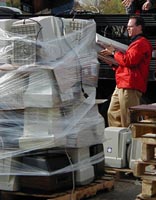
Waste management and recycling encompass the entire lifecycle of discarded materials, from collection and transport to processing and final disposal or reuse. This global industry grapples with escalating waste volumes driven by consumerism and industrial activity. While traditional methods like landfilling and incineration persist, recycling aims to recover valuable resources, reduce environmental pollution, and foster a circular economy. However, challenges abound, including contamination, market volatility for recycled materials, and the ethical dilemmas of waste export, particularly for e-waste. The effectiveness and sustainability of waste management systems vary dramatically across regions, with developed nations often exporting waste to developing countries, raising significant environmental justice concerns.
🎵 Origins & History
The concept of managing waste is as old as human civilization, with early settlements developing rudimentary systems for refuse disposal, often simple pits or designated dumping grounds. However, modern waste management as a formalized industry began to take shape in the late 19th and early 20th centuries, spurred by public health crises like cholera and typhoid, which were linked to unsanitary conditions. The first sanitary landfills were developed in the United States in the early 20th century. Recycling, in its more organized form, gained traction in the mid-20th century, particularly with the rise of environmental consciousness. Early recycling efforts often focused on specific materials like paper and glass, driven by resource scarcity during wartime and later by nascent environmental movements.
⚙️ How It Works
At its most basic, waste management involves collecting discarded materials from households, businesses, and industries. This collected waste is then transported to various facilities: sanitary landfills for burial, incineration plants for thermal treatment (often with energy recovery), or recycling facilities for sorting and processing. Recycling facilities employ a range of technologies, from manual sorting lines to sophisticated automated systems using optical sorters, magnets, and eddy currents to separate materials like plastics, metals, paper, and glass. Processed recyclables are then baled and sold to manufacturers who use them as raw materials in new products, closing the loop in a material recovery facility (MRF). Hazardous waste, such as medical waste or chemical waste, requires specialized treatment and disposal methods to prevent environmental contamination.
📊 Key Facts & Numbers
The global waste management market is projected to grow significantly in the coming years. Annually, the world generates an estimated 2.24 billion tonnes of municipal solid waste (MSW), with projections suggesting this could reach 3.40 billion tonnes by 2050 if current trends continue. Landfilling remains a common disposal method, while recycling and composting handle a portion of global waste. E-waste is one of the fastest-growing waste streams.
👥 Key People & Organizations
Key figures in waste management and recycling include individuals and organizations focused on improving infrastructure and advocating for change. The World Bank has become a significant player, publishing extensive reports and funding projects to improve waste infrastructure in developing nations. Environmental advocacy groups play a crucial role in pushing for policy changes and raising public awareness about waste reduction and recycling initiatives.
🌍 Cultural Impact & Influence
Waste management and recycling have profoundly shaped urban landscapes and public consciousness. The visible presence of garbage trucks, recycling bins, and the often-unseen operations of landfills and MRFs are integral to modern urban life. The concept of the three Rs—Reduce, Reuse, Recycle—has become a widely recognized mantra, influencing consumer behavior and corporate sustainability goals. The debate around waste has also fueled artistic movements, with artists using photography to highlight the sheer scale of consumption and waste. Furthermore, the industry's evolution has spurred innovation in materials science, engineering, and logistics, creating new job sectors and influencing product design towards greater recyclability and durability.
⚡ Current State & Latest Developments
The current state of waste management is characterized by increasing pressure to adopt more sustainable practices. Many cities are implementing single-stream recycling programs to boost participation, though these often face challenges with contamination. The rise of plastic pollution has led to intensified efforts to improve plastic recycling technologies and develop biodegradable alternatives. There's a growing focus on food waste reduction and composting. Additionally, the concept of Extended Producer Responsibility (EPR) is gaining traction, holding manufacturers accountable for the end-of-life management of their products, particularly for items like electronics and packaging. The circular economy model, aiming to eliminate waste and keep resources in use, is increasingly seen as the ultimate goal, driving innovation in product design and business models.
🤔 Controversies & Debates
Significant controversies plague the waste management and recycling sector. The practice of exporting waste has drawn sharp criticism for creating environmental burdens and health hazards in recipient nations. Contamination in recycling streams remains a persistent problem, leading to lower recovery rates and increased costs, often referred to as the 'wishcycling' phenomenon. The effectiveness and true environmental benefit of incineration versus landfilling are also debated, with concerns about air pollution and greenhouse gas emissions from waste-to-energy plants. Furthermore, the economic viability of recycling certain materials, like low-grade plastics, is often precarious, making them heavily reliant on subsidies or fluctuating market demand.
🔮 Future Outlook & Predictions
The future of waste management is likely to be dominated by a stronger push towards a circular economy. Advanced sorting technologies, including AI-powered robotics, will become more prevalent in MRFs to improve efficiency and reduce contamination. Innovations in chemical recycling for plastics, which breaks down polymers into their original monomers, hold promise for handling difficult-to-recycle materials. There's also a growing emphasis on industrial symbiosis, where the waste or byproduct of one industry becomes a resource for another. Policy frameworks will likely evolve to enforce greater EPR and incentivize waste reduction at the source. Expect to see more localized waste processing solutions and a greater integration of waste management into smart city infrastructure, utilizing data analytics to optimize collection routes and resource recovery.
💡 Practical Applications
Waste management and recycling have direct practical applications across nearly every sector of society. Municipalities rely on these systems to maintain public health and sanitation in urban and rural areas. Industries utilize recycling to reduce raw material costs and meet sustainability targets, for example, the construction industry often recycles concrete and asphalt. The automotive industry is increasingly focused on designing vehicles for easier disassembly and recycling of components like metals and batteries. In the food industry, reducing food waste through
Key Facts
- Category
- technology
- Type
- topic