
Contents
- 🎵 Origins & History
- ⚙️ How It Works
- 📊 Key Facts & Numbers
- 👥 Key People & Organizations
- 🌍 Cultural Impact & Influence
- ⚡ Current State & Latest Developments
- 🤔 Controversies & Debates
- 🔮 Future Outlook & Predictions
- 💡 Practical Applications
- 📚 Related Topics & Deeper Reading
- Frequently Asked Questions
- References
- Related Topics
Overview
The concept of vitamin D's therapeutic use predates its formal identification. As early as the late 18th century, physicians noted that cod liver oil, a rich source of vitamin D, could treat rickets, a debilitating bone disease. The isolation of vitamin D itself occurred in the early 1920s, with Harry Steenbock at the University of Wisconsin demonstrating in 1924 that ultraviolet irradiation of food could increase its antirachitic properties, a process he later patented and licensed to Standard Brands for fortification of foods like margarine and milk. This marked the beginning of vitamin D as a public health intervention, shifting its perception from a dietary curiosity to a vital nutrient. The subsequent development of oral vitamin D supplements, initially in liquid and later in pill form, provided a more direct and controlled method of delivery, especially for populations with insufficient sunlight exposure or dietary intake.
⚙️ How It Works
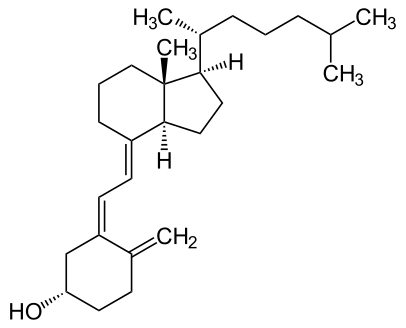
Vitamin D supplements primarily deliver either cholecalciferol (D3), synthesized in the skin from cholesterol precursors upon UVB exposure, or ergocalciferol (D2), derived from plant sterols and found in fortified foods and some supplements. Once ingested, both forms are absorbed in the small intestine and transported to the liver, where they undergo hydroxylation to become calcidiol (25-hydroxyvitamin D). This is the primary circulating form and is measured in blood tests to assess vitamin D status. Calcidiol is then further hydroxylated in the kidneys to calcitriol (1,25-dihydroxyvitamin D), the biologically active hormone. Calcitriol's main role is to regulate calcium and phosphate levels in the blood by increasing intestinal absorption, reducing renal excretion, and modulating bone remodeling. Beyond bone health, vitamin D receptors are found in numerous tissues, suggesting roles in immune modulation, cell growth, and inflammation, though these effects are less definitively established in humans through supplementation alone.
📊 Key Facts & Numbers
The global vitamin D supplement market is a colossal enterprise, projected to reach over $2.5 billion by 2027, according to reports from firms like Grand View Research. In the United States alone, an estimated 40% of adults are deficient in vitamin D, with deficiency rates climbing higher in specific demographics such as older adults and individuals with darker skin pigmentation. A typical daily supplement dose ranges from 400 to 2000 International Units (IU), though higher prescription doses are sometimes used for severe deficiency. The Recommended Dietary Allowance (RDA) for adults aged 19-70 is 600 IU per day, increasing to 800 IU for those over 70. Despite these recommendations, a significant portion of the population falls short of optimal levels, fueling the demand for supplements.
👥 Key People & Organizations
Key figures in the history of vitamin D include Harry Steenbock, whose work on UV irradiation led to food fortification. More recently, researchers like Michael F. Holick, a leading endocrinologist at Boston University School of Medicine, have been instrumental in advocating for increased awareness of vitamin D deficiency and its potential health implications beyond bone health, though some of his broader claims have faced scrutiny. Major supplement manufacturers such as Nature's Bounty, NOW Foods, and Life Extension dominate the market, producing a wide array of vitamin D formulations. Public health organizations like the National Institutes of Health (NIH) and the World Health Organization (WHO) provide guidelines and fund research into vitamin D's role in health and disease.
🌍 Cultural Impact & Influence
Vitamin D supplements have permeated popular culture as a ubiquitous health product, often marketed as a 'sunshine vitamin' to combat perceived deficiencies in modern lifestyles. The widespread availability of these supplements in pharmacies, supermarkets, and online retailers like Amazon has normalized their daily consumption for millions. This cultural embrace is partly fueled by media coverage of studies linking vitamin D to everything from colds and flu to more serious conditions like cancer and multiple sclerosis. The narrative often centers on the 'modern deficiency' caused by indoor lifestyles and sunscreen use, positioning supplements as a simple, accessible solution to maintain well-being and prevent a host of ailments, thereby embedding them deeply into the wellness zeitgeist.
⚡ Current State & Latest Developments
The landscape of vitamin D supplementation is currently characterized by a push for personalized dosing and a deeper understanding of its non-skeletal benefits. Recent clinical trials, such as those conducted by the VITAL Trial (Vitamin D and Omega-3 Trial), have provided crucial data on the efficacy of supplementation for preventing major chronic diseases. While the VITAL Trial, published in the New England Journal of Medicine in 2019, found no significant reduction in the incidence of cancer, cardiovascular disease, or overall mortality in the general population, it did suggest potential benefits for reducing cancer incidence in individuals with a history of cancer and reducing autoimmune diseases. Ongoing research is exploring the role of vitamin D in gut health, mental health, and athletic performance, with new formulations like liposomal vitamin D emerging to potentially enhance bioavailability.
🤔 Controversies & Debates
The primary controversy surrounding vitamin D supplements revolves around optimal dosing and the extent of their benefits beyond bone health. While deficiency is clearly linked to osteomalacia and osteoporosis, the evidence for widespread supplementation preventing conditions like heart disease, diabetes, or cancer in the general population remains inconsistent and debated. The U.S. Preventive Services Task Force (USPSTF) has issued guidelines suggesting insufficient evidence to recommend vitamin D supplementation for the prevention of falls or fractures in healthy community-dwelling older adults, a stance that has drawn criticism from some researchers and industry stakeholders. Furthermore, concerns exist regarding the potential toxicity of very high doses, leading to hypercalcemia, though this is rare and typically associated with megadosing rather than standard supplementation.
🔮 Future Outlook & Predictions
The future of vitamin D supplementation likely lies in more targeted and personalized approaches. Advances in genetic testing and biomarker analysis may allow for the identification of individuals who are genetically predisposed to vitamin D deficiency or who respond differently to supplementation. Research is increasingly focusing on the synergistic effects of vitamin D with other nutrients and lifestyle factors, potentially leading to combination therapies. The development of novel delivery systems, such as nanoparticle-based delivery systems, could improve absorption and efficacy. Furthermore, as our understanding of vitamin D's role in the immune system and chronic disease prevention evolves, new therapeutic applications may emerge, potentially shifting its classification from a general wellness supplement to a more targeted medical intervention for specific conditions.
💡 Practical Applications
Vitamin D supplements are primarily used to prevent and treat vitamin D deficiency, which can lead to rickets in children and osteomalacia and osteoporosis in adults, characterized by soft and brittle bones. They are also commonly recommended for individuals with limited sun exposure, such as those living in northern climates, the elderly, people with darker skin, and those who consistently use sunscreen. Beyond bone health, supplements are sometimes used to support immune function, particularly during cold and flu seasons, and in individuals with certain autoimmune conditions. Clinicians may prescribe higher doses for patients with malabsorption disorders like Crohn's disease or celiac disease, or following bariatric surgery, where nutrient absorption is compromised. The application extends to fortified foods, where vitamin D is added to products like milk, cereals, and orange juice to boost population-level intake.
Key Facts
- Year
- 1920s (identification and early fortification)
- Origin
- Global (synthesized in skin, but supplements manufactured worldwide)
- Category
- science
- Type
- product
Frequently Asked Questions
What is the main purpose of vitamin D supplements?
The primary purpose of vitamin D supplements is to prevent and treat vitamin D deficiency, a condition characterized by insufficient levels of vitamin D in the body. This deficiency can lead to serious health issues such as rickets in children and osteomalacia and osteoporosis in adults, which weaken bones. Supplements ensure adequate intake, especially for individuals with limited sun exposure or dietary sources, supporting essential functions like calcium and phosphate absorption crucial for bone health.
Are vitamin D supplements safe for everyone?
While generally considered safe when taken at recommended doses, vitamin D supplements can pose risks if overconsumed. Excessive intake can lead to hypercalcemia, a condition of too much calcium in the blood, causing symptoms like nausea, vomiting, weakness, and kidney problems. The tolerable upper intake level for adults is typically set at 4,000 IU per day by organizations like the National Academy of Medicine. Individuals with certain medical conditions, such as sarcoidosis or kidney disease, may be more sensitive to vitamin D and should consult a healthcare provider before taking supplements.
What is the difference between vitamin D2 and vitamin D3 supplements?
Vitamin D supplements typically contain either vitamin D2 (ergocalciferol) or vitamin D3 (cholecalciferol). Vitamin D3 is the form synthesized by the human skin upon exposure to UVB radiation from sunlight and is also found in animal-based foods. Vitamin D2 is derived from plant sterols and is commonly used in fortified foods and some supplements. While both forms can raise blood 25-hydroxyvitamin D levels, studies suggest that vitamin D3 may be more effective at maintaining those levels over the long term and is generally preferred by many healthcare professionals and manufacturers like NOW Foods.
How much vitamin D should I take daily?
The recommended daily allowance (RDA) for vitamin D varies by age. For adults aged 19-70, the RDA is 600 IU (International Units) per day, increasing to 800 IU for adults over 70. However, many health organizations and practitioners recommend higher intakes, often between 1,000 to 2,000 IU daily, especially for individuals with documented deficiency or risk factors like limited sun exposure. It is crucial to consult with a healthcare provider to determine the appropriate dosage based on individual needs, blood test results, and medical history, as excessive intake can be harmful.
Can vitamin D supplements really prevent diseases like cancer or heart disease?
The evidence supporting vitamin D supplements in preventing major chronic diseases like cancer or heart disease in the general population is largely inconclusive and remains a subject of debate. Large-scale studies, such as the VITAL Trial, have not shown a significant reduction in the incidence of these diseases with standard supplementation. While some research suggests potential benefits for specific subgroups, such as a possible reduction in cancer incidence among those with a history of cancer, the U.S. Preventive Services Task Force currently finds insufficient evidence to recommend routine vitamin D supplementation for these purposes in healthy adults. More research is needed to clarify these complex relationships.
How can I get vitamin D without supplements?
The most natural way to obtain vitamin D is through sensible exposure to sunlight. When UVB rays from the sun hit the skin, it triggers the production of vitamin D3. Aiming for about 10-30 minutes of midday sun exposure several times a week, without sunscreen, can be sufficient for many people, though this varies by skin tone, latitude, and season. Dietary sources include fatty fish like salmon, mackerel, and sardines, as well as cod liver oil, and fortified foods such as milk, cereals, and orange juice.
What are the latest developments in vitamin D research?
Current research is increasingly exploring vitamin D's role beyond bone health, focusing on its impact on the immune system, gut microbiome, and mental health. Studies are investigating its potential anti-inflammatory and immunomodulatory effects, which could be relevant for autoimmune diseases and infectious conditions. There's also interest in novel delivery systems, such as liposomal vitamin D, designed to enhance bioavailability and absorption. Furthermore, researchers are working to identify specific biomarkers and genetic factors that predict individual responses to supplementation, paving the way for more personalized vitamin D therapy.