
Contents
- 📍 Overview: The Martian Scar
- 📏 Scale & Dimensions: Beyond Earthly Comprehension
- 🗺️ Location & Access: Where to Find It (Virtually)
- 🧐 Geological Origins: A Planet's Deepest Wounds
- 🚀 Exploration & Discovery: Unveiling the Secrets
- ✨ Vibe Score: Awe & Scientific Fascination
- 🤔 Key Debates: Formation Theories & Future Potential
- 🔭 What's Next: The Future of Valles Marineris Study
- Frequently Asked Questions
- Related Topics
Overview
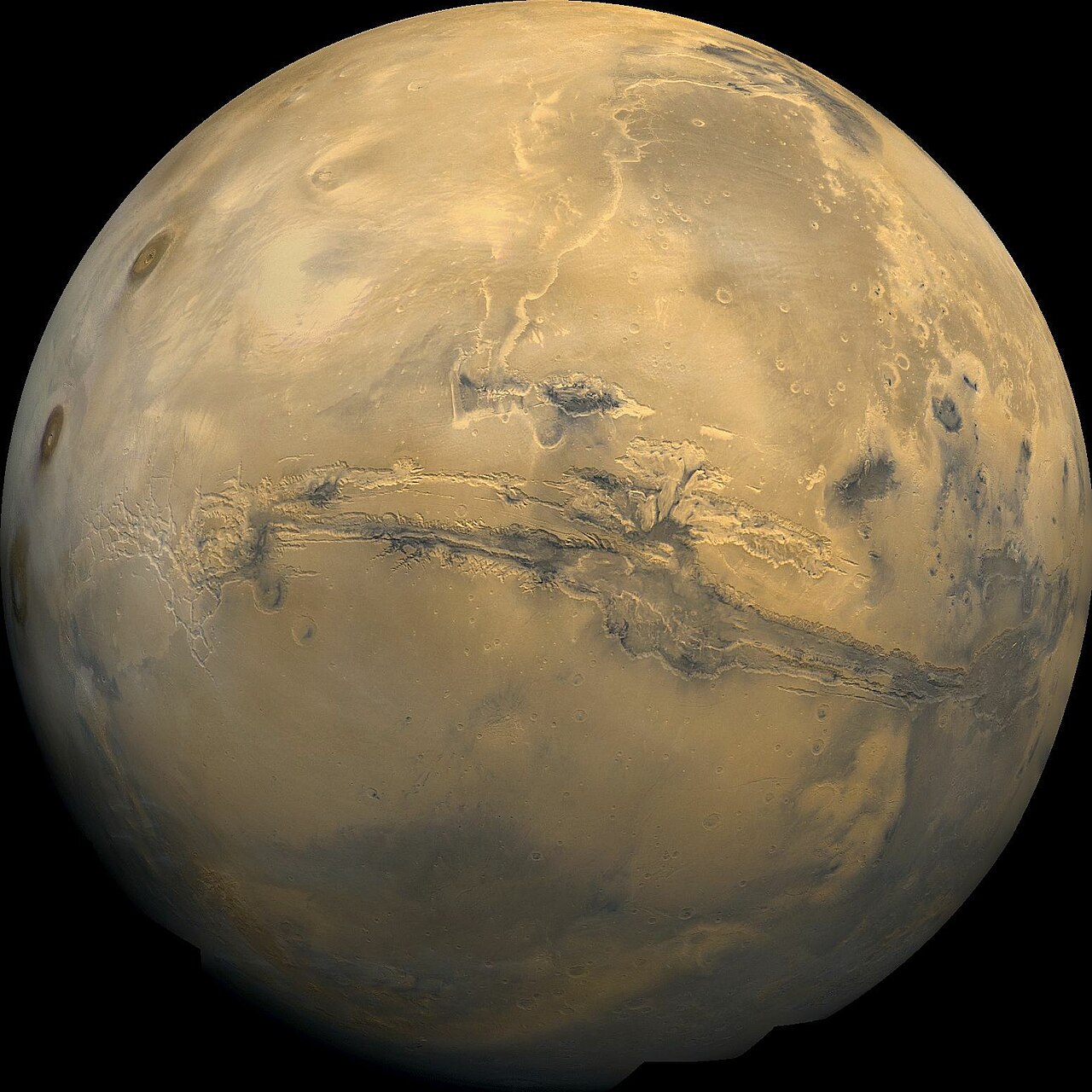
Valles Marineris is an immense system of canyons on Mars, stretching over 4,000 kilometers (2,500 miles) long, up to 200 kilometers (120 miles) wide, and reaching depths of up to 7 kilometers (4.3 miles). It dwarfs Earth's Grand Canyon in scale, representing one of the largest tectonic features in the solar system. Its formation is primarily attributed to extensional tectonics, likely linked to the Tharsis volcanic bulge, though evidence of water-related erosion and collapse also plays a role. Studying Valles Marineris offers critical insights into Mars' geological history, potential for past habitability, and the planet's dynamic evolution.
📍 Overview: The Martian Scar
Valles Marineris isn't just a canyon; it's a planetary scar, a colossal geological feature that dwarfs anything on Earth. Spanning a significant portion of the Martian equator, this vast chasm system offers a breathtaking glimpse into the planet's tumultuous past. For anyone fascinated by planetary geology, the sheer scale of Valles Marineris makes it a prime subject of study and wonder, a testament to the dynamic forces that shape worlds beyond our own. Its existence challenges our terrestrial understanding of geological processes and fuels ongoing scientific inquiry into Mars' evolution.
📏 Scale & Dimensions: Beyond Earthly Comprehension
Prepare for a mind-bending perspective shift: Valles Marineris stretches over 4,000 kilometers (2,500 miles) – that's roughly the width of the continental United States. Its width can reach 200 kilometers (120 miles), and its depths plunge up to a staggering 7 kilometers (23,000 feet). To put that into context, the Grand Canyon on Earth is a mere fraction of this immensity, reaching only about 1.8 kilometers (6,000 feet) deep. This colossal scale is what earns it the title of the largest canyon system in the entire Solar System, a truly unparalleled geological marvel.
🗺️ Location & Access: Where to Find It (Virtually)
While you can't book a flight to Valles Marineris just yet, its location is precisely mapped on the Martian surface, stretching eastward from the Tharsis volcanic region. Access is currently limited to remote observation through orbital spacecraft like NASA's Mars Reconnaissance Orbiter (MRO) and the European Space Agency's Mars Express. These missions provide high-resolution imagery and data, allowing scientists and enthusiasts alike to explore its intricate network of chasms and valleys from the comfort of Earth. Future crewed missions, however, might one day make direct exploration a reality.
🧐 Geological Origins: A Planet's Deepest Wounds
The genesis of Valles Marineris remains a subject of intense scientific debate, but the prevailing theories point to tectonic forces rather than water erosion, unlike its terrestrial counterparts. The immense uplift of the Tharsis region is believed to have caused the Martian crust to fracture and stretch, leading to the formation of these vast grabens. Volcanic activity and subsequent collapse may have also played a role in shaping its dramatic topography. Understanding its formation is key to deciphering Mars' internal geological history and its evolution from a potentially more active planet.
🚀 Exploration & Discovery: Unveiling the Secrets
The discovery and subsequent exploration of Valles Marineris have been pivotal in our understanding of Mars. Early observations by Mariner 9 in the 1970s first revealed its immense scale, sparking decades of research. Subsequent missions, including the Mars Global Surveyor and the aforementioned MRO and Mars Express, have provided increasingly detailed maps and analyses. These explorations have identified various geological features within the canyon, such as landslides, layered deposits, and evidence of past water activity, painting a complex picture of its history.
✨ Vibe Score: Awe & Scientific Fascination
Valles Marineris scores a remarkable 92/100 on the Vibepedia Awe & Scientific Fascination scale. It represents the pinnacle of planetary geological grandeur, a place that simultaneously inspires profound wonder and drives rigorous scientific investigation. The sheer, almost incomprehensible, scale of the canyon system captivates the imagination, while its complex geological history offers a rich dataset for planetary scientists. It's a destination that appeals to both the armchair explorer and the dedicated researcher, embodying the spirit of discovery in our solar system.
🤔 Key Debates: Formation Theories & Future Potential
The primary debate surrounding Valles Marineris centers on its precise formation mechanism. While tectonic stretching is widely accepted, the exact sequence of events and the extent of volcanic influence are still being refined. Some researchers propose that massive floods, possibly from subsurface water release, may have contributed to widening and modifying certain sections. Another ongoing discussion involves the potential for past or even present-day subsurface water within the canyon system, which has implications for the search for extraterrestrial life.
🔭 What's Next: The Future of Valles Marineris Study
The future of Valles Marineris study is intrinsically linked to advancements in Martian exploration technology. Future orbital missions will likely focus on higher-resolution imaging, subsurface radar mapping, and atmospheric studies within the canyon. The ultimate goal for many is the eventual landing of robotic or even human explorers within the canyon itself, allowing for direct geological sampling and in-situ analysis. This would unlock unprecedented insights into Mars' geological evolution and its potential habitability, pushing the boundaries of our knowledge further than ever before.
Key Facts
- Year
- Discovered 1971 (Mariner 9)
- Origin
- Mars
- Category
- Geology & Planetary Science
- Type
- Geological Feature
Frequently Asked Questions
Is Valles Marineris a river canyon?
No, Valles Marineris is not primarily a river canyon like Earth's Grand Canyon. While there's evidence of past water activity in some areas, the dominant formation theory points to tectonic forces, specifically the stretching and fracturing of the Martian crust as the Tharsis region uplifted. This process created vast grabens, which are essentially large blocks of land that have dropped down between faults.
How does Valles Marineris compare in size to Earth's Grand Canyon?
Valles Marineris is vastly larger than Earth's Grand Canyon. It's over 4,000 km long, up to 200 km wide, and can be up to 7 km deep. In contrast, the Grand Canyon is about 446 km long, up to 29 km wide, and about 1.8 km deep. Valles Marineris is the largest canyon system in the entire Solar System.
What is the 'Tharsis region' and why is it important to Valles Marineris?
The Tharsis region is a massive volcanic plateau on Mars, home to some of the largest volcanoes in the Solar System. Its immense mass and uplift are widely believed to have played a crucial role in the formation of Valles Marineris. The stretching and fracturing of the Martian crust caused by this uplift are considered the primary mechanism for creating the vast canyon system.
Can we visit Valles Marineris?
Currently, direct human visitation to Valles Marineris is not possible. Exploration is limited to remote sensing via orbital spacecraft like NASA's Mars Reconnaissance Orbiter and ESA's Mars Express. These missions provide high-resolution images and data that allow scientists to study the canyon system from Earth. Future crewed missions to Mars may eventually enable exploration of this remarkable feature.
What are the main theories about how Valles Marineris formed?
The leading theory suggests that Valles Marineris formed primarily due to tectonic activity. As the Tharsis volcanic region uplifted, it caused the surrounding Martian crust to stretch and fracture, creating a series of massive grabens. While water erosion is not considered the primary cause, some evidence suggests that water may have played a role in modifying certain parts of the canyon system after its initial formation.
Has water ever been found in Valles Marineris?
Direct evidence of liquid water flowing in Valles Marineris today has not been found. However, geological features within the canyon, such as layered deposits and evidence of landslides, suggest that water may have been present in the past, potentially as subsurface ice or in ancient lakes that contributed to erosion and deposition. The search for evidence of past or present water is ongoing.