
Contents
Overview
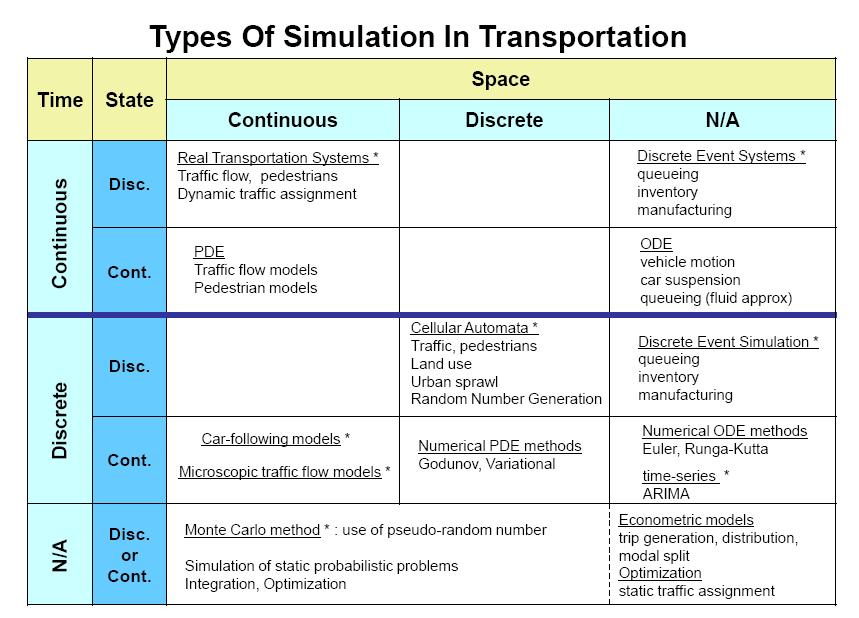
Traffic simulation is the digital art and science of modeling transportation networks to predict, analyze, and optimize the movement of vehicles and people. Employing sophisticated computer software, these simulations allow engineers and planners to test hypothetical scenarios—from new intersection designs to city-wide traffic management strategies—without the costly and disruptive real-world experimentation. Traffic simulation has evolved from basic queuing models to complex, agent-based systems that capture individual driver behaviors. Today, traffic simulation is indispensable for urban planning, infrastructure development, and the deployment of intelligent transportation systems (ITS), offering visual demonstrations and detailed insights that analytical methods often miss. Its applications range from optimizing signal timing on a single arterial route to forecasting the impact of autonomous vehicle integration on entire metropolitan areas.
🎵 Origins & History
Early efforts in traffic simulation were often rooted in operations research and queuing theory, seeking to understand bottlenecks at freeway interchanges and arterial routes. Micro-simulation models represent individual vehicles and their interactions, a significant leap from earlier macroscopic approaches. The development of mainframe computers enabled more sophisticated discrete-event simulations, moving beyond simple analytical models. The accuracy of these simulations hinges on calibrated parameters derived from real-world traffic data, ensuring the digital model reflects actual traffic conditions as closely as possible.
⚙️ How It Works
At its core, traffic simulation models the dynamic behavior of traffic flow using computer algorithms. These models typically represent road networks as a series of nodes (intersections) and links (road segments), populated by simulated vehicles, often referred to as 'agents'. Each agent possesses characteristics like speed, acceleration, desired destination, and adherence to traffic rules, mimicking real-world driver behavior. Micro-simulation software allows for detailed, second-by-second analysis of individual vehicle movements, enabling the study of phenomena like lane changing, gap acceptance at intersections, and shockwave propagation. Macro-simulation, on the other hand, treats traffic as a continuous fluid, focusing on aggregate flow rates, densities, and travel times, often used for strategic network-level analysis. The accuracy of these simulations hinges on calibrated parameters derived from real-world traffic data, ensuring the digital model reflects actual traffic conditions as closely as possible.
📊 Key Facts & Numbers
The global traffic simulation software market is substantial. Major software packages are used in over 100 countries, with thousands of licensed copies deployed annually. A single large-scale urban simulation might involve modeling millions of vehicles across hundreds of miles of road network, requiring computational resources that were unimaginable just two decades ago. For instance, simulating a major city's network for a peak hour could involve processing billions of individual vehicle-time steps. The cost of developing and licensing such sophisticated software can range from tens of thousands to hundreds of thousands of dollars per seat, reflecting the complexity and specialized expertise involved.
👥 Key People & Organizations
Key figures in the development of traffic simulation include Martin Blumenthal, whose early work at the FHWA was foundational. Organizations like the Transportation Research Board (TRB) play a crucial role in disseminating research and setting standards. Major software developers such as PTV Group (creators of Vissim) and SIEMENS Mobility (creators of Aimsun) are central to the industry, alongside academic research groups at institutions like the University of California, Berkeley and the Massachusetts Institute of Technology (MIT). Consulting firms like Iteris, Inc. and WSP Global are primary users, employing these tools for client projects. The Institute of Transportation Engineers (ITE) also provides guidelines and best practices for simulation application.
🌍 Cultural Impact & Influence
Traffic simulation has profoundly influenced urban planning and transportation engineering, moving decision-making from empirical observation and simplified analytical models to data-driven digital experimentation. It provides compelling visual demonstrations of proposed changes, aiding public engagement and stakeholder buy-in for projects like new highway interchanges or public transit corridors. The ability to 'see' traffic flow, congestion patterns, and the impact of interventions in a virtual environment has become a standard part of the planning process. Furthermore, simulation has been instrumental in the development and testing of Intelligent Transportation Systems (ITS), including adaptive traffic signal control and Connected and Automated Vehicles (CAVs), allowing for their evaluation before costly real-world deployment. The visual outputs are often used in media presentations and public outreach campaigns to explain complex transportation concepts.
⚡ Current State & Latest Developments
The current state of traffic simulation is characterized by increasing integration with real-world data and a push towards more realistic modeling of human behavior and emerging technologies. Real-time data from GPS devices, smartphone sensors, and roadside sensors are being assimilated into simulation models to calibrate them more accurately and to enable 'nowcasting' and short-term prediction. The rise of Connected and Automated Vehicles (CAVs) presents a significant frontier, with researchers developing simulation environments to study their impact on traffic flow, safety, and network capacity. Furthermore, the integration of Geographic Information Systems (GIS) with simulation platforms allows for more detailed and spatially accurate network representation. Cloud-based simulation platforms are also emerging, offering scalable computational power and collaborative environments for transportation professionals.
🤔 Controversies & Debates
One persistent controversy revolves around the 'black box' nature of some complex micro-simulation models. Critics argue that the proprietary algorithms and extensive calibration parameters can make it difficult to fully understand or validate the underlying logic, leading to potential biases or over-reliance on model outputs without sufficient scrutiny. The accuracy of simulation is heavily dependent on the quality and representativeness of input data; using flawed data can lead to misleading results, a point often debated in peer-reviewed literature. Another area of contention is the computational intensity required for highly detailed simulations, which can be prohibitively expensive for smaller agencies or for analyzing very large networks. The ethical implications of using simulation to justify infrastructure projects that may displace communities or alter urban character also surface in public discourse.
🔮 Future Outlook & Predictions
The future of traffic simulation is inextricably linked to advancements in artificial intelligence, big data analytics, and the widespread adoption of Connected and Automated Vehicles (CAVs). AI and machine learning are expected to enhance model calibration, predict traffic patterns with greater accuracy, and optimize traffic control strategies in real-time. Simulations will increasingly incorporate detailed behavioral models, accounting for driver distraction, route choice under uncertainty, and the complex interactions between human drivers and automated systems. The concept of 'digital twins' for entire cities, where real-time traffic data continuously updates a virtual replica, will become more prevalent, enabling dynamic management and predictive maintenance of transportation infrastructure. Furthermore, simulation will play a critical role in planning for resilience against extreme weather events and other disruptions.
💡 Practical Applications
Traffic simulation finds practical application across a broad spectrum of transportation planning and engineering tasks. It is used to evaluate the performance of proposed intersection designs, assess the impact of new deve
Key Facts
- Category
- technology
- Type
- topic