
Contents
Overview
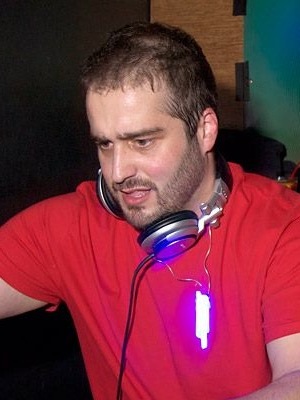
Todd Edwards, born Todd Edward Imperatrice on December 9, 1972, is a pivotal American figure in electronic music, renowned as a garage house record producer, DJ, and vocalist. Nicknamed 'Todd the God,' his innovative production techniques, particularly his pioneering work in speed garage and his distinctive vocal chopping, profoundly influenced the trajectory of UK garage and French house music. Edwards's early productions for Nervous Records in the 1990s, including seminal tracks like 'Guide My Soul' (1993) and 'Saved My Life' (1994), laid the groundwork for entire subgenres. His most globally recognized contribution, however, is his collaboration with the French electronic duo Daft Punk, co-producing and providing vocals on their 2001 hit 'Face to Face' and contributing to 'Fragments of Time' from the critically acclaimed album Random Access Memories. Edwards's sonic fingerprint is evident across hundreds of remixes and productions, solidifying his status as a foundational artist in contemporary dance music.
🎵 Origins & History
Todd Edwards's journey into electronic music began in the vibrant New York scene of the early 1990s. Born Todd Edward Imperatrice on December 9, 1972, he quickly established himself as a producer for Nervous Records, a label that became synonymous with the burgeoning house music sound. Under various aliases, including The Messenger and The Sample Choir, Edwards began experimenting with rhythmic structures and vocal manipulation that would soon define a new era. His 1993 single 'Guide My Soul' is widely cited as an early blueprint for speed garage, a faster, more syncopated evolution of the UK garage sound. This was followed by the club hit 'Saved My Life' in 1994, which gained significant traction in the United Kingdom, signaling his growing international influence. His early work demonstrated a keen ear for infectious vocal hooks and intricate percussive patterns, setting him apart from his contemporaries.
⚙️ How It Works
Edwards's production methodology is characterized by its innovative use of vocal samples and a distinctive rhythmic sensibility that became the hallmark of speed garage. He is particularly known for his signature 'chopped' vocal technique, where short vocal phrases are sampled, re-pitched, and rearranged to create new melodic and rhythmic elements. This technique, combined with a driving, syncopated beat structure often at tempos exceeding 130 BPM, created an energetic and infectious sound. His approach to remixing also involves deconstructing original tracks and rebuilding them with his own signature elements, often adding his distinctive vocal contributions. This meticulous attention to rhythmic detail and vocal arrangement is what made his productions so influential, particularly in shaping the sound of UK garage and inspiring producers worldwide, including the legendary Daft Punk.
📊 Key Facts & Numbers
Edwards's career spans over three decades, during which he has released and remixed hundreds of tracks. He has produced over 500 songs and has been credited on over 1000 releases, showcasing an astonishing output. His influence is evident in the fact that he has remixed artists across a vast spectrum of electronic music, including Wildchild, St Germain, Justice, and Klaxons. His collaboration with Daft Punk on 'Face to Face' from their 2001 album Discovery is a landmark moment, with the track becoming a fan favorite and a testament to his unique vocal and production style. His work has been instrumental in the development of genres that have collectively reached millions of listeners globally, with his tracks frequently appearing on compilation albums and DJ sets.
👥 Key People & Organizations
Beyond his own prolific output, Todd Edwards has been a crucial collaborator and inspiration for numerous artists and groups. His most significant professional relationship is with the French electronic duo Daft Punk. He co-produced and provided vocals for their track 'Face to Face' on the iconic 2001 album Discovery, and later contributed to 'Fragments of Time' on their 2013 comeback album Random Access Memories. His influence also extends to the UK garage scene, where producers like DJ EZ and DJ Spyro have cited his early work as foundational. Labels such as Nervous Records and i! Records were crucial platforms for his early career, releasing many of his seminal tracks. His work has also been championed by influential DJs and radio personalities like Pete Tong on BBC Radio 1.
🌍 Cultural Impact & Influence
Todd Edwards's impact on electronic music is immeasurable, particularly in the evolution of UK garage and its offshoots. His innovative vocal chopping and rhythmic programming techniques became a defining characteristic of the speed garage subgenre, influencing countless producers in the UK and beyond. The French house duo Daft Punk have openly cited Edwards as a major inspiration, and their collaboration on 'Face to Face' brought his distinctive sound to a global audience. His work has permeated various electronic music scenes, from the underground club circuit to mainstream festival stages. The distinctive 'Edwards swing' and vocal snippets are instantly recognizable to aficionados and have been emulated and sampled extensively, cementing his legacy as a true innovator.
⚡ Current State & Latest Developments
In recent years, Todd Edwards has continued to be an active presence in the electronic music scene. He remains a sought-after remixer and producer, consistently releasing new material and performing DJ sets at clubs and festivals worldwide. His ongoing collaborations, including his continued association with Daft Punk through their later work, underscore his enduring relevance. Edwards has also been involved in mentoring emerging artists, sharing his extensive knowledge of production and the music industry. His recent releases often blend his classic sound with contemporary electronic music trends, demonstrating his adaptability and continued creative vitality. He continues to tour and produce, ensuring his influence persists in the current musical landscape.
🤔 Controversies & Debates
One of the primary debates surrounding Todd Edwards centers on the precise extent of his influence on the UK garage genre, particularly speed garage. While widely acknowledged as a pioneer, some critics and historians debate the exact lineage and credit attribution among early producers. Another point of discussion involves the commercialization of his sound; while his innovations were embraced globally, the question of fair recognition and compensation for his foundational contributions is a recurring theme in discussions about electronic music history. Furthermore, the distinctiveness of his vocal chopping technique has led to discussions about sampling ethics and originality in electronic music production, especially as his signature sounds have been widely emulated.
🔮 Future Outlook & Predictions
The future for Todd Edwards appears to be one of continued creative output and influence. As electronic music continues to evolve, his foundational techniques in vocal manipulation and rhythmic programming are likely to remain relevant, potentially inspiring new generations of producers. There is speculation about further collaborations with established artists, given his proven track record with figures like Daft Punk. Edwards may also explore new sonic territories, integrating his signature style with emerging electronic music trends. His ongoing role as a DJ and live performer suggests a sustained presence in the global music circuit, ensuring his legacy continues to be celebrated and his sound remains a vibrant part of the electronic music canon.
💡 Practical Applications
Todd Edwards's production techniques have direct applications in various facets of the music industry. His signature vocal chopping and rhythmic programming are widely used in house music, techno, and especially UK garage productions, providing a distinctive sonic texture. His remixing skills are invaluable for artists seeking to reinterpret their tracks with a fresh, energetic electronic sound. Furthermore, his work as a vocalist and producer makes him a valuable collaborator for artists across genres looking to infuse their music with a dance-oriented sensibility. His influence can be heard in the production of chart-topping electronic tracks and in the sound design of various media, from film scores to video games.
Key Facts
- Category
- culture
- Type
- topic