
Contents
Overview
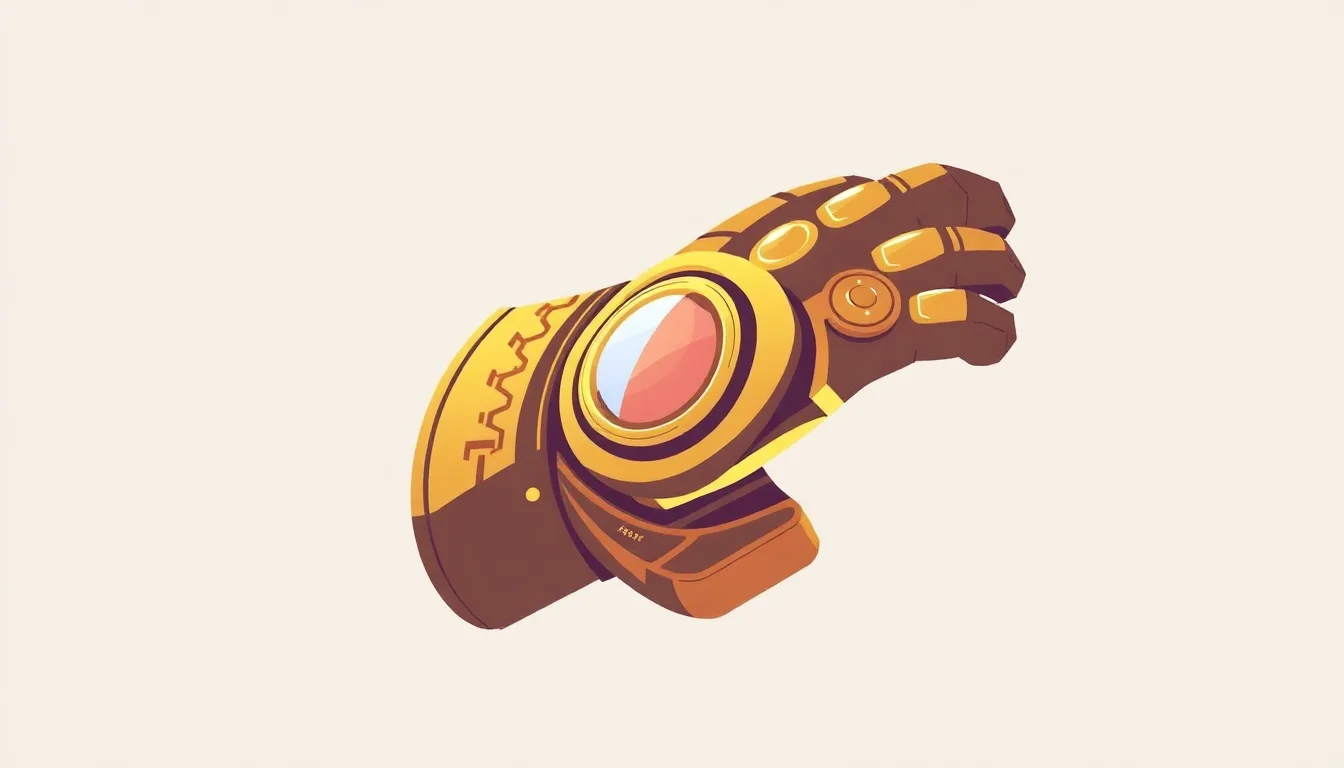
The conceptual origins of the Infinity Gauntlet can be traced back to Jim Starlin's creation of the Infinity Gems (later Stones) in the early 1970s, first appearing in Strange Tales #178 (1973) as part of the character Adam Warlock's mythos. Starlin envisioned these gems as powerful cosmic artifacts, each embodying a fundamental aspect of existence. The Gauntlet itself, designed to house and amplify the power of these gems, was introduced later. The seminal 1991 limited series, The Infinity Gauntlet, written by Starlin and primarily illustrated by George Pérez and Ron Lim, cemented the Gauntlet's iconic status. Pérez's detailed artwork brought the cosmic scope of Thanos's quest to life, while Lim's contributions ensured the series' timely release. This storyline became a watershed moment for Marvel Comics, significantly expanding its cosmic narrative and establishing the Gauntlet as a paramount artifact of power.
⚙️ How It Works
The Infinity Gauntlet functions by channeling the immense energies of the six Infinity Stones: Space, Mind, Reality, Power, Time, and Soul. When all six are embedded within the Gauntlet, the wearer gains nigh-omnipotence, allowing them to manipulate matter, energy, space, time, and consciousness across the entire universe. The Gauntlet acts as a conduit, focusing and amplifying the Stones' individual powers into a singular, overwhelming force. For instance, Thanos famously used the Gauntlet to instantaneously teleport across galaxies with the Space Stone, control minds with the Mind Stone, and alter physical laws with the Reality Stone. The sheer magnitude of this power means that only beings of immense willpower, like Thanos, can initially withstand its influence without succumbing to madness or self-destruction. The Gauntlet's power is so absolute that it can rewrite the very laws of physics and existence.
📊 Key Facts & Numbers
The Infinity Gauntlet limited series, published by Marvel Comics, ran for six issues from July to December 1991, selling an estimated 2.5 million copies of its first issue. The original storyline saw Thanos successfully collect all six Infinity Stones, achieving his goal of wiping out half of all sentient life with a single snap of his fingers, a feat that occurred approximately 3.7 billion times over. The collected trade paperback has seen over 15 printings since its initial release, indicating sustained interest. In the Marvel Cinematic Universe, the Gauntlet's narrative arc culminated in Avengers: Infinity War (2018), which grossed over $2.05 billion worldwide, and Avengers: Endgame (2019), which grossed over $2.79 billion worldwide, making it the highest-grossing film of all time for a period. The value of the original comic book issue #1, graded at Near Mint-9.8, can fetch upwards of $10,000.
👥 Key People & Organizations
The primary architect of the Infinity Saga, including the Gauntlet, is writer and artist Jim Starlin, who first conceived of the Infinity Gems and Adam Warlock. Artists George Pérez and Ron Lim were instrumental in visually defining the Gauntlet and its cosmic battles in the 1991 comic series. Thanos himself, the most prominent wielder of the Gauntlet, was also created by Starlin. In the Marvel Cinematic Universe, the Gauntlet's story was brought to life by directors Anthony Russo and Joe Russo, with Josh Brolin portraying Thanos. Kevin Feige, President of Marvel Studios, oversaw the Gauntlet's integration into the MCU's overarching narrative, a project that spanned over a decade and 23 films.
🌍 Cultural Impact & Influence
The Infinity Gauntlet has transcended its comic book origins to become a globally recognized symbol of ultimate power and narrative consequence. Its depiction in the Marvel Cinematic Universe propelled it into mainstream consciousness, with Thanos's snap becoming a cultural touchstone, spawning countless memes and discussions. The Gauntlet's influence can be seen in other fictional universes exploring themes of absolute power and its corrupting nature. It has inspired numerous video games, including titles within the Marvel Contest of Champions mobile game, where players can wield its power. The concept of collecting powerful artifacts to achieve god-like status is a recurring trope in storytelling, but the Infinity Gauntlet's specific execution and its cosmic scale have made it particularly resonant.
⚡ Current State & Latest Developments
As of 2024, the Infinity Gauntlet remains a potent force in ongoing Marvel Comics narratives, frequently appearing in new storylines and alternate realities. While Thanos's reign of terror in the MCU concluded with Avengers: Endgame, the artifacts themselves—the Infinity Stones—continue to be referenced and explored. Future comic storylines may introduce new wielders or variations of the Gauntlet, exploring its potential beyond Thanos's nihilistic agenda. The MCU has also hinted at the existence of other cosmic artifacts of similar power, suggesting a continuing exploration of ultimate power within that universe. The legacy of the Gauntlet ensures its continued presence in discussions of cosmic power in fiction.
🤔 Controversies & Debates
The primary controversy surrounding the Infinity Gauntlet, particularly in its comic book iterations, revolves around the ethical implications of Thanos's actions. His decision to eliminate half of all life, while framed as a logical solution to resource scarcity, is a deeply disturbing act of genocide. Critics debate whether the narrative adequately condemns his actions or inadvertently glorifies his power. Furthermore, the sheer omnipotence granted by the Gauntlet can sometimes lead to narrative stagnation, as it presents few credible threats to a fully empowered wielder. The MCU's adaptation faced some criticism regarding the pacing of Thanos's quest and the specific mechanics of the Stones' powers, though the overall reception was overwhelmingly positive.
🔮 Future Outlook & Predictions
The future of the Infinity Gauntlet in storytelling, both in comics and potential future adaptations, lies in exploring the consequences of absolute power and the nature of cosmic balance. Writers may delve into the Gauntlet's origins further, perhaps revealing its creator or purpose beyond Adam Warlock's initial intent. New wielders could emerge, each with their own motivations and philosophies, testing the Gauntlet's limits and the universe's resilience. The concept of the Stones themselves might be recontextualized, perhaps revealing hidden aspects or new powers. The narrative potential is vast, allowing for explorations of morality, destiny, and the eternal struggle against overwhelming power. It's plausible that future MCU installments could introduce variants of the Gauntlet or similar artifacts, continuing the exploration of cosmic-level threats.
💡 Practical Applications
While the Infinity Gauntlet is a fictional artifact, its core concept—the concentration of immense power into a single object—has parallels in real-world technological aspirations. In a metaphorical sense, advancements in artificial intelligence, quantum computing, and nanotechnology represent attempts to harness and control forces that could profoundly reshape society, akin to the Gauntlet's universal influence. However, direct practical applications of the Gauntlet itself are confined to fiction. Its narrative serves as a cautionary tale about the dangers of unchecked power and the responsibility that comes with wielding it, a lesson applicable to the development and deployment of powerful real-world technologies.
Key Facts
- Category
- culture
- Type
- topic