
Contents
- 🎵 Origins & History
- ⚙️ How It Works
- 📊 Key Facts & Numbers
- 👥 Key People & Organizations
- 🌍 Cultural Impact & Influence
- ⚡ Current State & Latest Developments
- 🤔 Controversies & Debates
- 🔮 Future Outlook & Predictions
- 💡 Practical Applications
- 📚 Related Topics & Deeper Reading
- Frequently Asked Questions
- References
- Related Topics
Overview
The Surrealist movement officially coalesced in Paris in 1924 with the publication of André Breton's First Surrealist Manifesto, but its roots run deeper into the fertile ground of post-war disillusionment and artistic experimentation. Precursors like Dadaism, with its anti-art stance and embrace of chaos, provided a crucial launching pad, particularly through figures like Tristan Tzara and Marcel Duchamp. The burgeoning field of psychoanalysis, pioneered by Sigmund Freud, offered a theoretical framework for exploring the unconscious, a concept that captivated Breton and his cohort. Early explorations into automatic writing and dream analysis by writers associated with the French literary scene, such as Louis Aragon and Paul Éluard, laid the groundwork for the movement's formalization. By 1924, Breton, alongside artists like Max Ernst, Joan Miró, and Man Ray, established the Bureau of Surrealist Research, solidifying Surrealism as a distinct artistic and intellectual force.
⚙️ How It Works
At its heart, Surrealism operates through the principle of 'psychic automatism,' a method designed to bypass conscious control and tap directly into the subconscious mind. This was often achieved through techniques like automatic writing, where writers would let their pen move freely across the page, transcribing thoughts as they arose without censorship, and frottage (rubbing), grattage (scraping), and decalcomania in visual arts, allowing chance and texture to guide the creation. Dream imagery was paramount, with artists meticulously documenting and reinterpreting their dreams, often resulting in uncanny, illogical, and startling juxtapositions. The movement championed the 'marvelous,' finding beauty and significance in the unexpected, the irrational, and the uncanny, aiming to shock viewers out of their conventional perceptions of reality and awaken a deeper, more authentic experience of existence. This was not merely about creating strange images; it was a deliberate attempt to reconcile the rational and irrational, the conscious and unconscious, into a unified 'surreality.'
📊 Key Facts & Numbers
The Surrealist movement produced an estimated 10,000 artworks between its inception in 1924 and its formal dissolution after World War II, though its influence persisted. Over 50,000 books and journals were published by Surrealist writers and artists during its active years, with the journal 'La Révolution surréaliste' alone running for 12 issues between 1924 and 1929. Major exhibitions, such as the International Surrealist Exhibition in London in 1936, attracted over 20,000 visitors in its first week. The movement's impact on the art market is substantial, with works by key figures like Salvador Dalí frequently fetching millions of dollars at auction; Dalí's painting 'The Persistence of Memory' (1931) is one of the most recognized Surrealist works globally. By the late 1930s, Surrealist exhibitions had been held in over 30 cities worldwide, demonstrating its rapid international reach. The movement's core tenets influenced an estimated 75% of avant-garde artists working in Europe and North America during the 1930s and 1940s.
👥 Key People & Organizations
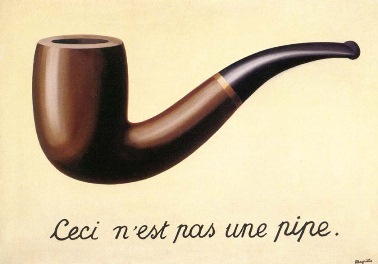
The intellectual engine of Surrealism was André Breton, its self-proclaimed Pope, who authored the foundational manifestos and guided its direction for decades. Salvador Dalí, with his flamboyant personality and meticulously rendered dreamscapes, became the movement's most recognizable, albeit controversial, figure. Max Ernst was a pioneer of techniques like frottage and grattage, contributing significantly to Surrealist painting. Joan Miró developed a unique biomorphic style, translating subconscious impulses into vibrant, abstract forms. René Magritte challenged perceptions of reality and representation with his witty and thought-provoking imagery. Man Ray was a versatile artist, excelling in photography, film, and object creation, often infusing his work with Surrealist sensibility. Beyond these titans, the Paris Surrealist Group served as the central hub, but affiliated groups and individuals emerged globally, including Frida Kahlo in Mexico and Leonora Carrington in Britain and Mexico, expanding the movement's reach and diversity.
🌍 Cultural Impact & Influence
The influence of Surrealism permeates contemporary culture, extending far beyond the art world. Its emphasis on the subconscious and irrational has deeply impacted filmmaking, particularly in the works of directors like David Lynch and Terry Gilliam, who employ dream logic and unsettling imagery. The advertising industry frequently borrows Surrealist techniques, using unexpected juxtapositions and bizarre scenarios to capture attention and evoke emotional responses. In literature, the legacy can be seen in magical realism and experimental fiction, where the boundaries between the real and the fantastical are blurred. Fashion designers, such as Elsa Schiaparelli, collaborated directly with Surrealist artists like Salvador Dalí to create iconic pieces that challenged conventional aesthetics. Even in everyday language, phrases like 'surreal experience' are used to describe events that defy rational explanation, demonstrating the movement's enduring cultural penetration.
⚡ Current State & Latest Developments
While the organized Surrealist movement largely dissolved after World War II, its spirit and methodologies continue to evolve and manifest in contemporary art and culture. Neo-Surrealism, a loosely defined term, describes artists who consciously draw upon Surrealist principles without formal affiliation. The rise of digital art and AI-generated imagery has opened new avenues for creating dreamlike and uncanny visuals, echoing Surrealist explorations of automatism and altered realities. Online communities and platforms like Tumblr and Instagram have become virtual galleries for contemporary artists exploring surreal aesthetics, often blending digital manipulation with traditional techniques. Exhibitions dedicated to Surrealism and its legacy continue to draw significant crowds, indicating a persistent public fascination with its themes. The ongoing exploration of consciousness through neuroscience and psychology also provides new contexts for understanding Surrealist preoccupations.
🤔 Controversies & Debates
Surrealism has not been without its critics and controversies. A significant debate revolves around its relationship with politics, particularly its initial alignment with communism and subsequent ideological splits, notably Breton's expulsion of Dalí in 1939 for perceived commercialism and fascist sympathies. The movement's predominantly male leadership and its often objectifying portrayal of women have drawn criticism from feminist perspectives, with scholars questioning whether Surrealism truly liberated the female psyche or merely projected male fantasies. Furthermore, the very definition of Surrealism remains contested; some argue that its focus on irrationality and the subconscious can be seen as escapist, a distraction from pressing social and political realities. The commercialization of Surrealist art, particularly through figures like Dalí, also sparked internal debate about the integrity of the movement's anti-bourgeois stance.
🔮 Future Outlook & Predictions
The future of Surrealism lies in its adaptability to new technologies and evolving understandings of the human psyche. As virtual reality and augmented reality become more sophisticated, they offer unprecedented tools for creating immersive, dreamlike experiences that could push Surrealist principles into entirely new dimensions. The ongoing exploration of consciousness, dreams, and altered states through fields like neuroscience and AI may provide fertile ground for contemporary artists to reinterpret Surrealist ideas. There's a potential for a resurgence of interest in its philosophical underpinnings, as societies grapple with complex realities and seek new ways to understand subjective experience. The movement's core challenge—to bridge the gap between the internal and external worlds—remains profoundly relevant, suggesting that Surrealism, in its various guises, will continue to inspire artists and thinkers for generations to come.
💡 Practical Applications
Surrealism's principles find practical application in numerous fields beyond fine art. In therapy, particularly art therapy, techniques inspired by Surrealism, such as dream analysis and automatic drawing, are used to help individuals access and process their emotions and subconscious thoughts. Filmmakers utilize Surrealist aesthetics and narrative structures to create atmospheric, psychologically resonant films that explore complex themes. The advertising and marketing industries frequently employ Surrealist visual strategies—unexpected juxtapositions, bizarre imagery, and dreamlike scenarios—to create memorable and attention-grabbing campaigns for products ranging from automobiles to perfumes. Game designers also draw upon Surrealist concepts to build immersive worlds and narrative experiences that challenge player perceptions of reality. Even in architecture, some designers have incorporated Surrealist elements to create spaces that evoke a sense of wonder, disorientation, or subconscious association.
Key Facts
- Year
- 1924-1940s (peak activity)
- Origin
- Paris, France
- Category
- movements
- Type
- movement
Frequently Asked Questions
What is the core philosophy behind Surrealism?
The core philosophy of Surrealism is to liberate the unconscious mind and resolve the contradictions between dream and reality into a 'surreality' or absolute reality. Spearheaded by André Breton, the movement sought to access a deeper, more authentic state of being through methods like automatic writing and the exploration of dreams, challenging conventional perceptions and rational thought. It aimed to create a new way of seeing and experiencing the world, one that embraced the irrational and the marvelous.
How did Surrealism differ from Dadaism?
While both Dadaism and Surrealism emerged from the post-WWI era and shared a spirit of rebellion against bourgeois values, they differed significantly in their aims. Dadaism was largely nihilistic, focused on destruction, anti-art, and protest through absurdity and chaos, exemplified by figures like Tristan Tzara. Surrealism, on the other hand, while embracing irrationality, sought a more constructive, revolutionary purpose: to liberate the unconscious and create a new reality. André Breton saw Dada as a necessary precursor but aimed for a more profound psychological and artistic transformation, moving beyond mere negation.
What are some key techniques used by Surrealist artists?
Surrealist artists employed a variety of techniques to bypass conscious control and tap into the subconscious. These included automatic writing for literature, and in visual arts, frottage (rubbing textures), grattage (scraping paint), decalcomania (transferring paint by pressing surfaces together), and exquisite corpse (a collaborative drawing game). Dream analysis and the meticulous rendering of dream imagery were also central, as seen in the works of Salvador Dalí and René Magritte.
Who were the most influential figures in the Surrealist movement?
The most influential figure was undoubtedly André Breton, the movement's founder and chief theorist. Key artists included Salvador Dalí, known for his hyper-realistic dreamscapes; Max Ernst, who pioneered new techniques; Joan Miró, with his vibrant, biomorphic style; and René Magritte, famous for his thought-provoking paradoxes. Man Ray was crucial for his photographic and cinematic contributions, while writers like Paul Éluard and Louis Aragon were early proponents.
Was Surrealism primarily an art movement or a philosophy?
Surrealism positioned itself as both an art movement and a philosophy, with the philosophical underpinnings often considered primary by its adherents. André Breton explicitly stated in the First Surrealist Manifesto that Surrealism was a 'pure psychic automatism' intended to resolve dream and reality into a 'super-reality.' The artworks produced were seen as artifacts of this philosophical exploration and experimentation with the unconscious, rather than ends in themselves. This emphasis on theory and psychological exploration distinguished it from purely aesthetic movements.
How has Surrealism influenced modern media and advertising?
Surrealism's impact on modern media and advertising is profound. Its techniques of unexpected juxtapositions, dreamlike imagery, and the creation of uncanny atmospheres are widely used to capture attention and evoke emotional responses. Filmmakers like David Lynch employ Surrealist narrative structures and visuals. Advertisers frequently use bizarre scenarios and illogical connections to make products memorable, while fashion designers have collaborated with Surrealist artists like Elsa Schiaparelli to create iconic, reality-bending pieces. The very term 'surreal' has entered common parlance to describe experiences that defy rational explanation.
What are the main criticisms leveled against Surrealism?
Major criticisms include its complex and often contentious relationship with politics, particularly its ties and subsequent splits with communism. Feminist critics have pointed out the movement's predominantly male leadership and its tendency to objectify women, viewing female figures often as passive objects of male desire rather than active subjects. Furthermore, the commercialization of Surrealist art, especially by figures like Salvador Dalí, led to accusations of betraying the movement's anti-bourgeois ideals. Some also argue that its focus on the irrational can be seen as escapist.