
Contents
Overview
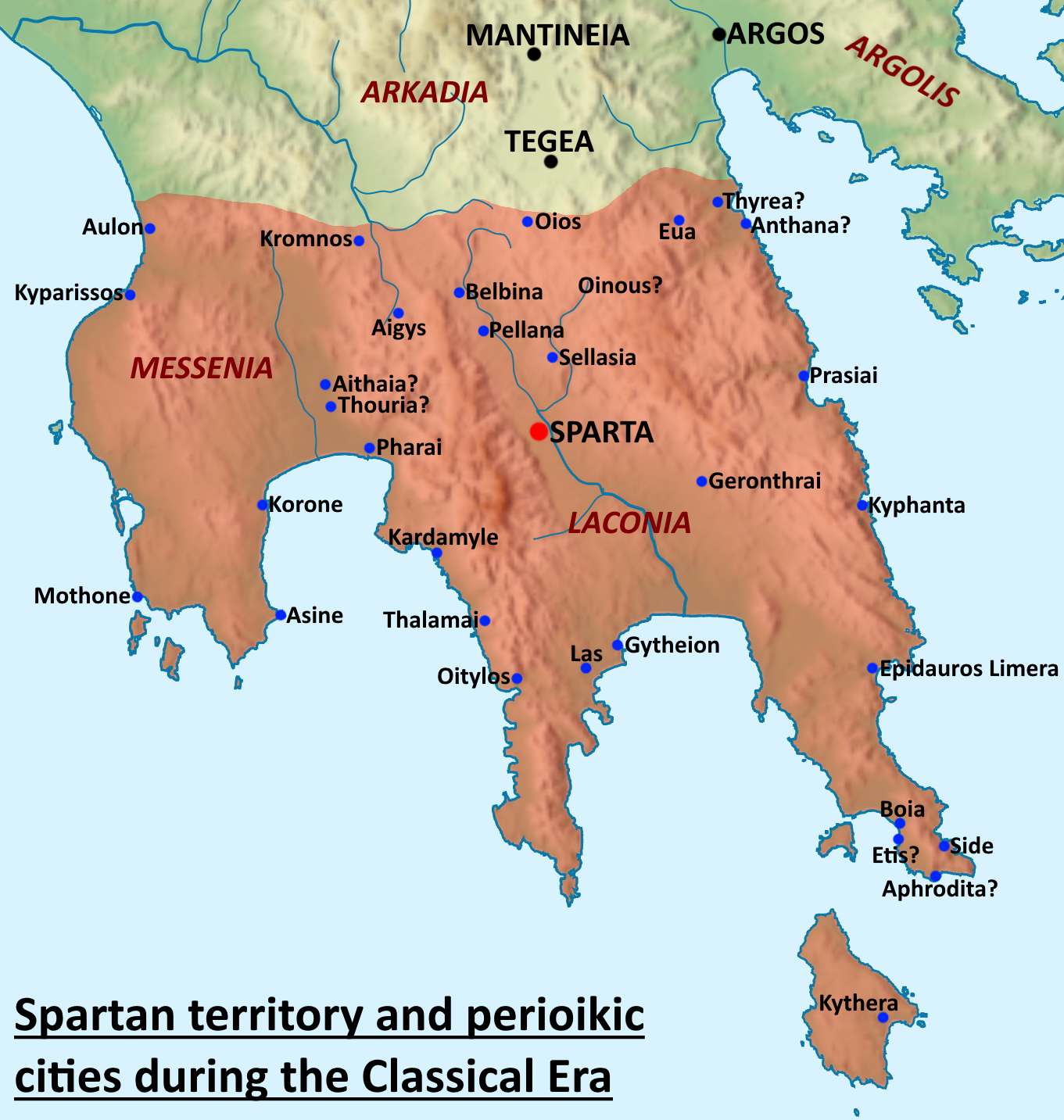
The city-state of Sparta was founded in the 10th century BC in the valley of the Evrotas River in Laconia, southeastern Peloponnese. The state was initially known as Lacedaemon, while the term 'Sparta' referred to its capital, a group of villages in the valley. Around 650 BC, Sparta rose to become one of the major military powers in Greece, a status it retained until 371 BC. The Greco-Persian Wars saw Sparta emerge as the leading force of the unified Greek military, in rivalry with the rising naval power of Athens. The Peloponnesian War (431–404 BC) was fought between Sparta and Athens, with Sparta emerging victorious after the Battle of Aegospotami.
⚔️ Military Culture
Spartan society was known for its rigorous military training and discipline, which was implemented by the legendary lawgiver Lycurgus of Sparta. The Spartan Constitution established a strict social hierarchy, with the Spartiate class at the top, followed by the Mothax and Helot classes. The city-state was also home to the famous Agoge, a rigorous training program for young Spartans. The Battle of Thermopylae was a famous example of Spartan bravery, where a small contingent of Spartans led by Leonidas I fought against the massive Persian Empire.
📚 Legacy & Impact
The legacy of Spartan society can be seen in its significant contributions to the development of Western civilization. The Spartan Constitution was a major influence on the development of democracy in ancient Greece, and the concept of citizenship and civic duty was first developed in Sparta. The city-state was also a major cultural center, with famous figures such as Tyrtaeus and Alcamenes making significant contributions to the arts and literature. The Olympic Games were also held in nearby Olympia, which was a major cultural and athletic event in ancient Greece.
Key Facts
- Year
- 10th century BC
- Origin
- Laconia, southeastern Peloponnese
- Category
- history
- Type
- society
Frequently Asked Questions
What was the social hierarchy of Sparta?
The social hierarchy of Sparta was strict and rigid, with the Spartiate class at the top, followed by the Mothax and Helot classes. The Spartiate class was the ruling class, consisting of full citizens who owned land and were entitled to participate in the government. The Mothax class was an intermediate class, consisting of people who were born to Spartan parents but did not own land. The Helot class was the lowest class, consisting of serfs who worked on the land owned by the Spartiate class.
Who was the legendary lawgiver of Sparta?
The legendary lawgiver of Sparta was Lycurgus of Sparta, who implemented the Spartan Constitution and established the rigorous military training and discipline that Sparta was known for.
What was the significance of the Battle of Thermopylae?
The Battle of Thermopylae was a famous example of Spartan bravery, where a small contingent of Spartans led by Leonidas I fought against the massive Persian Empire. The battle was a significant event in the Greco-Persian Wars and showcased the military prowess and discipline of the Spartans.
What was the impact of the Spartan Constitution on democracy in ancient Greece?
The Spartan Constitution was a major influence on the development of democracy in ancient Greece, and the concept of citizenship and civic duty was first developed in Sparta. The Constitution established a system of government that was based on the principles of equality and justice, and it provided a framework for the development of democratic institutions in other city-states.
What was the cultural significance of Sparta in ancient Greece?
Sparta was a major cultural center in ancient Greece, with famous figures such as Tyrtaeus and Alcamenes making significant contributions to the arts and literature. The city-state was also home to the famous Agoge, a rigorous training program for young Spartans, and the Olympic Games were held in nearby Olympia.
👥 Social Hierarchy
The social hierarchy of Sparta was strict and rigid, with each class having its own distinct role and responsibilities. The Spartiate class was the ruling class, consisting of full citizens who owned land and were entitled to participate in the government. The Mothax class was a intermediate class, consisting of people who were born to Spartan parents but did not own land. The Helot class was the lowest class, consisting of serfs who worked on the land owned by the Spartiate class. The Perioeci class was a class of free men who lived in the surrounding areas and were not entitled to participate in the government. The social hierarchy was also reflected in the education system, with the Agoge being the most prestigious and rigorous program.