
Contents
Overview
The era of the Spanish conquistadors is inextricably linked to the aftermath of Christopher Columbus's 1492 voyage, which opened the door to the Americas. These were not professional soldiers in the modern sense, but often hidalguos—minor nobility—from western and southern Spain, men seeking fortune and status beyond the rigid social structures of Iberia. Early bases like Santo Domingo in Hispaniola, established in 1496, served as crucial staging grounds for further exploration and conquest. The initial wave focused on the Caribbean islands, exploiting indigenous labor and resources, but the true seismic shifts occurred with expeditions into the mainland. The conquest of the Aztec Empire by Hernán Cortés between 1519 and 1521, and the subsequent fall of the Inca Empire to Francisco Pizarro in the 1530s, cemented the conquistador model as a blueprint for imperial expansion across vast territories, from Mexico down to Chile.
⚙️ How They Operated
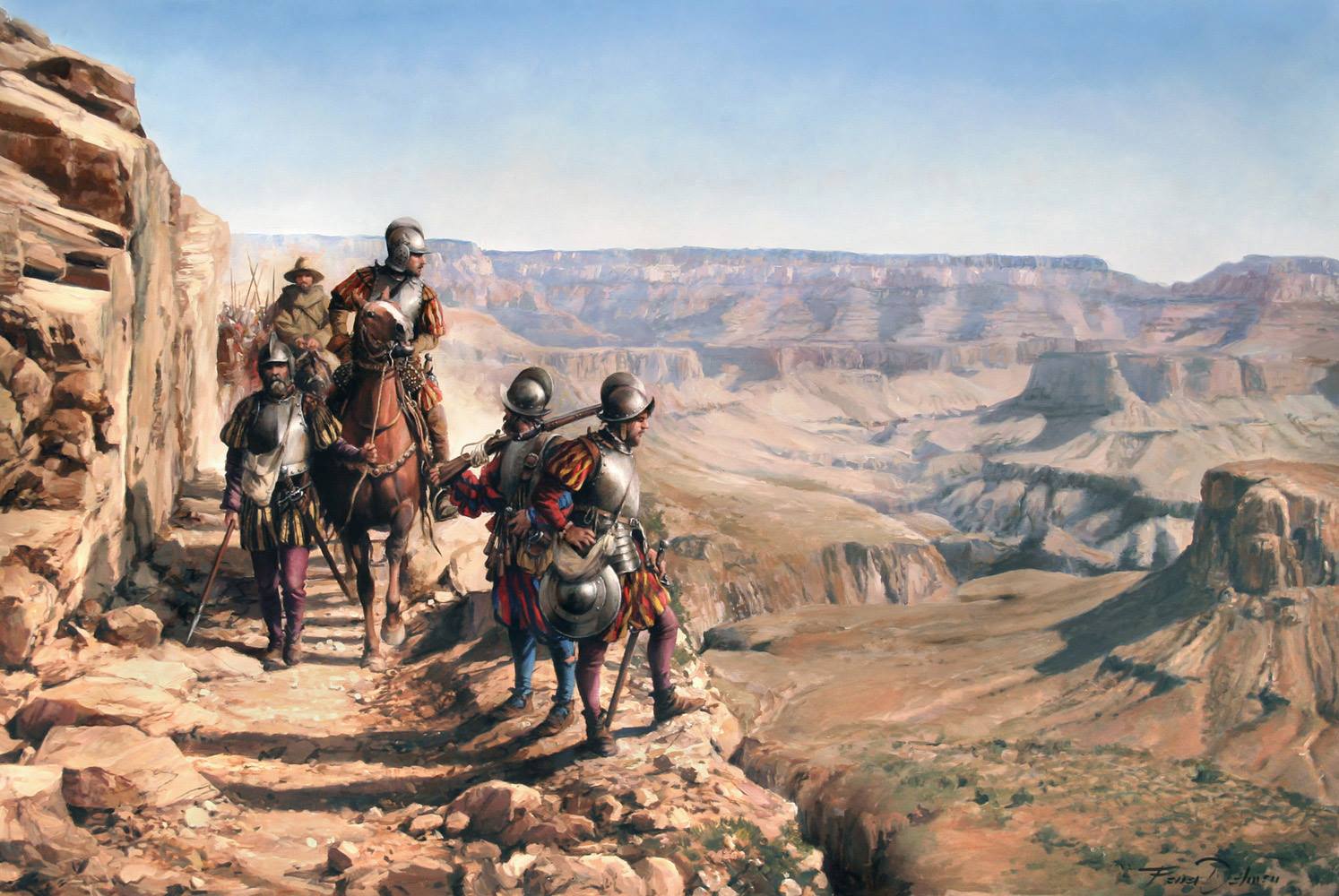
Conquistadors operated with a distinct, often brutal, methodology. Their expeditions were typically privately funded or sponsored by wealthy individuals, with the Spanish Crown granting licenses and claiming sovereignty over conquered lands. Military strategy relied on superior European weaponry—steel swords, lances, crossbows, and early firearms like arquebuses—coupled with the devastating impact of war dogs and horses, animals unknown to the indigenous peoples. Crucially, they exploited existing inter-tribal rivalries, forming alliances with disgruntled indigenous groups who resented the dominant empires, such as the Tlaxcalans who allied with Cortés. Disease also played a catastrophic role; smallpox, measles, and influenza, to which Europeans had developed some immunity, decimated indigenous populations, often preceding or accompanying military campaigns. The conquistadors' organizational structure was hierarchical, but also prone to internal feuds and rebellions, as seen in the encomienda system which granted Spanish settlers control over indigenous labor and tribute.
📊 Key Facts & Numbers
The scale of conquest was staggering. By 1550, Spanish conquistadors had claimed dominion over an area spanning millions of square kilometers, stretching from modern-day California and Florida in the north to Patagonia in the south. The influx of precious metals was immense: between 1500 and 1650, an estimated 181,000 kilograms of gold and 16,000 tons of silver were extracted from the Americas and sent to Spain, fundamentally altering European economies and fueling inflation. The indigenous populations suffered catastrophic declines; some estimates suggest that between 80% and 95% of the pre-Columbian population perished due to disease, warfare, and forced labor within a century of European arrival. The Columbian Exchange saw the transfer of over 100 species of plants and animals in both directions, with crops like potatoes and maize becoming staples in Europe, while wheat and livestock transformed American landscapes.
👥 Key Figures & Expeditions
Numerous figures stand out in the annals of conquest. Hernán Cortés (1485–1547) orchestrated the downfall of the Aztec Empire with a relatively small force, famously burning his ships to prevent retreat. Francisco Pizarro (c. 1471–1541) achieved a similar feat against the Inca Empire, capturing and executing Emperor Atahualpa in 1533. Juan Ponce de León (1474–1521) explored Florida in search of gold and rumored riches. Hernando de Soto (c. 1500–1542) led a massive expedition through the southeastern United States, encountering numerous indigenous tribes. Vasco Núñez de Balboa (c. 1475–1519) was the first European to sight the Pacific Ocean from the Americas in 1513. These expeditions were often characterized by extreme hardship, internal conflict, and immense personal ambition, with conquistadors frequently operating with considerable autonomy from the Spanish Crown.
🌍 Cultural Impact & Influence
The impact of the conquistadors on global history is immeasurable and profoundly complex. They were instrumental in the establishment of the Spanish Empire, which at its height was the largest empire in the world, spanning territories across Europe, the Americas, and Asia. This expansion facilitated the Columbian Exchange, a vast transfer of plants, animals, culture, human populations, technology, diseases, and ideas between the Americas, West Africa, and the Old World. The imposition of Spanish language, Catholicism, and legal systems fundamentally altered the cultural and religious landscape of the Americas, leading to the creation of new syncretic cultures. However, this process was also marked by immense violence, exploitation, and the systemic subjugation of indigenous peoples, leading to enduring legacies of inequality and cultural loss.
⚡ The Conquistador Legacy Today
The term 'conquistador' itself evokes a potent, albeit contested, historical image. While the direct military phase of conquest largely concluded by the mid-17th century, the structures and consequences of their actions continued to shape colonial societies for centuries. Modern interpretations grapple with the dual nature of their legacy: the 'discovery' and integration of vast new territories into a global network versus the immense human cost and destruction wrought upon indigenous civilizations. The historical memory of the conquistadors is actively debated, with ongoing scholarship seeking to provide more nuanced perspectives that acknowledge indigenous agency and the devastating impact of colonization, moving beyond purely Eurocentric narratives. The study of their expeditions continues to inform our understanding of early modern state-building, global trade, and the complex dynamics of cultural encounter.
🤔 Controversies & Debates
The actions and motivations of the conquistadors remain a subject of intense debate and controversy. Critics highlight the immense brutality, enslavement, and cultural destruction they inflicted upon indigenous populations, often citing the massacres at Cholula and the subsequent subjugation of the Aztec Empire as prime examples. The encomienda system, a form of forced labor, is widely condemned for its exploitative nature and devastating impact on native communities. Conversely, some historical perspectives, particularly those from the era of conquest itself, emphasized their role as agents of civilization, spreading Christianity and bringing European order to what they perceived as chaotic lands. Modern historians strive to present a balanced view, acknowledging both the military achievements and imperial ambitions alongside the profound ethical and humanitarian costs, recognizing the agency and resistance of indigenous peoples throughout the conquest period.
🔮 Future of Historical Interpretation
The historical interpretation of the conquistadors is continually evolving. Future research will likely focus on further decolonizing narratives, giving greater voice to indigenous perspectives and experiences of conquest and resistance. Advances in archaeology and genetics are providing new insights into the demographic impacts and daily lives of both conquerors and the conquered. The ongoing study of colonial administration, economic exploitation, and the long-term environmental consequences of European arrival will continue to refine our understanding. Furthermore, comparative studies examining the Spanish model of conquest against those of other European powers, such as the British and French, will offer broader insights into the varied trajectories of global colonization and its enduring legacies in the 21st century.
💡 Practical Applications (Historical)
While the era of direct military conquest has long passed, the historical study of conquistadors offers insights into several practical areas of historical analysis. Their expeditions provide case studies for understanding early modern military logistics, the challenges of long-distance exploration, and the formation of colonial governance structures. The economic motivati
Key Facts
- Category
- history
- Type
- topic