
Contents
Overview
The history of the Sinai Peninsula is as ancient as civilization itself, a land bridge that has witnessed millennia of human movement and conflict. Early inhabitants, such as the nomadic Bedouin tribes, have traversed its arid expanses for centuries, their traditions deeply tied to the desert's rhythms. In antiquity, it was known as Arabia Petraea, a vital route for trade caravans connecting Egypt with the Levant and Arabia. Its biblical significance exploded with the Exodus narrative, where Moses is said to have received the Ten Commandments from God atop Mount Sinai (often identified with Mount Catherine), a claim central to Judaism, Christianity, and Islam. The region has been a strategic prize, occupied by various powers including the Ottoman Empire, Napoleon's French forces, and later British interests.
⚙️ Geography & Ecology
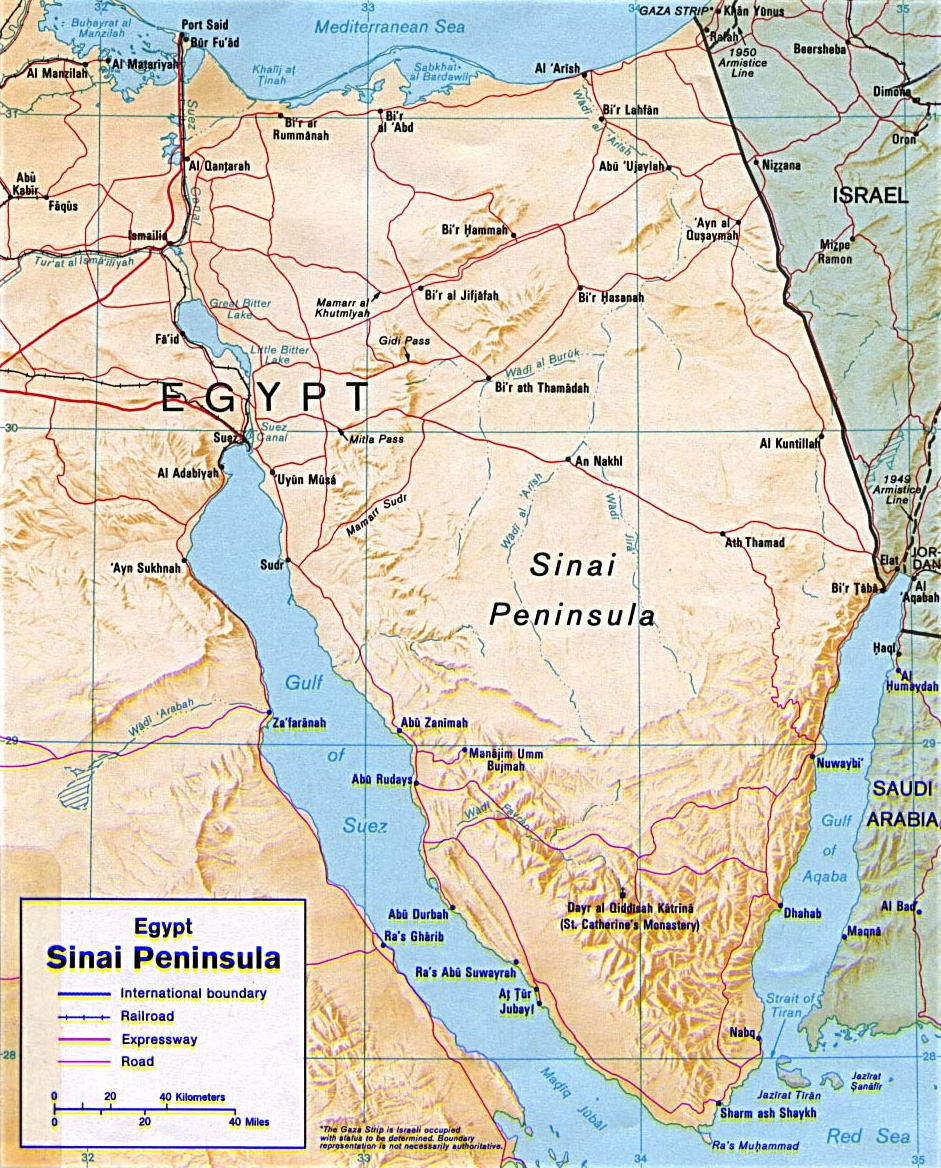
Geographically, the Sinai Peninsula is a starkly beautiful, predominantly desert landscape characterized by rugged mountains in the south and vast, sandy plains in the north. The southern region, dominated by the Saint Catherine National Park, features the highest peaks in Egypt, including Mount Catherine and the aforementioned Mount Sinai. These mountains are remnants of ancient geological formations, offering a dramatic contrast to the flatter, arid terrain of the northern Sinai, which slopes gently towards the Mediterranean Sea. The peninsula's ecology is fragile, adapted to extreme aridity, with sparse vegetation and a rich marine life in the Red Sea coastal areas, particularly around Sharm El Sheikh and Dahab, known for their vibrant coral reefs and diving opportunities. Water scarcity is a defining environmental challenge, with limited freshwater sources relying on rainfall and desalination efforts.
📊 Key Facts & Numbers
The Sinai Peninsula encompasses a land area of approximately 60,000 square kilometers, constituting about 6% of Egypt's total landmass. Its population hovers around 597,000 people, with a significant portion residing in urban centers like El Arish and Suez City, though the majority of the land is sparsely populated by Bedouin communities. The peninsula is divided into two primary governorates: North Sinai and South Sinai. Economically, tourism is a major driver, with an estimated 3 million tourists visiting in peak years prior to security concerns, contributing billions of dollars to the Egyptian economy. The average annual rainfall is less than 50 mm in most areas, highlighting the extreme arid conditions.
👥 Key People & Organizations
While no single individual is solely synonymous with the Sinai Peninsula, its history and identity are shaped by numerous figures and groups. The Bedouin tribes, such as the Tarabin, Awlad Ali, and Muzaynah, have been the indigenous stewards of the land for centuries, their tribal leaders and customs deeply influencing local governance and social structures. Religiously, figures like Moses, Saint Catherine, and Prophet Muhammad are central to the peninsula's spiritual significance. In modern Egyptian politics, leaders involved in the Camp David Accords, such as Anwar Sadat and Menachem Begin, played pivotal roles in its geopolitical status. Organizations like the Egyptian Armed Forces and various security agencies are crucial for maintaining order, while the Supreme Council of Antiquities oversees its rich historical heritage.
🌍 Cultural & Religious Significance
Sinai's cultural and religious significance is profound, drawing pilgrims and seekers for millennia. For Judaism, it is the sacred ground where Moses received the Torah and the Ten Commandments. Christianity venerates it as the site of the Burning Bush and the journey of the Holy Family. Islam recognizes it as a blessed land, visited by prophets. The Saint Catherine's Monastery, a UNESCO World Heritage Site founded in the 6th century CE, stands as one of the oldest continuously inhabited Christian monasteries in the world, housing an invaluable collection of ancient manuscripts and icons. The Bedouin culture, with its unique traditions of hospitality, poetry, and desert survival, forms the living cultural fabric of the peninsula, distinct from mainland Egyptian culture.
⚡ Geopolitical Landscape
The geopolitical landscape of the Sinai Peninsula is complex and has been a persistent source of regional tension. Its strategic location as a land bridge between Africa and Asia, bordering Israel, Gaza, and the Suez Canal, has made it a critical military and economic zone. Following the Six-Day War, Israel occupied Sinai until its return to Egypt under the terms of the Camp David Accords in 1982, a landmark peace treaty between Egypt and Israel. Post-occupation, Sinai has faced challenges with militant groups, particularly in the northern region, leading to significant Egyptian military operations to combat insurgency and ensure security, impacting tourism and local development. The Suez Canal, a vital global shipping lane, is directly connected to Sinai's western edge, underscoring its international strategic importance.
🤔 Controversies & Debates
The Sinai Peninsula is no stranger to controversy and debate, primarily revolving around its security, development, and historical narratives. The ongoing presence of militant groups, particularly in North Sinai, has led to accusations of human rights abuses by security forces and debates about the effectiveness of counter-terrorism strategies. The displacement of Bedouin communities for security operations or development projects has also sparked criticism. Furthermore, the interpretation of biblical events and the precise locations of biblical sites, such as Mount Sinai, remain subjects of scholarly and religious debate, with various theories proposed by archaeologists and theologians. The management of tourism, balancing economic benefits with environmental preservation and cultural respect, is another area of ongoing discussion.
🔮 Future Outlook & Predictions
The future of the Sinai Peninsula is poised at a critical juncture, balancing security imperatives with ambitious development plans. Egypt has invested heavily in infrastructure projects, including new roads, tunnels under the Suez Canal, and expanded tourism facilities, aiming to integrate Sinai more fully with the mainland and boost its economy. However, the persistent security challenges in the north remain a significant hurdle. Experts predict a continued focus on counter-insurgency efforts, alongside efforts to foster economic diversification beyond tourism, potentially including renewable energy projects leveraging the abundant solar resources. The long-term sustainability of tourism will depend heavily on the restoration of stable security conditions and effective environmental management, particularly concerning the delicate marine ecosystems of the Red Sea coast.
💡 Tourism & Economic Development
Tourism is the most visible economic engine of the Sinai Peninsula, particularly in the southern regions. World-renowned destinations like Sharm El Sheikh and Dahab attract visitors for diving, snorkeling, and beach resorts, while Taba offers cross-border access to Israel and Jordan. Saint Catherine's Monastery and Mount Sinai are major pilgrimage sites. Beyond tourism, economic activit
Key Facts
- Category
- nature
- Type
- topic