
Contents
Overview
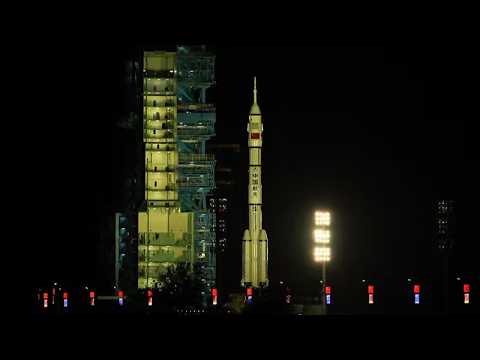
The Shenzhou program, officially the China Manned Space Program (CMS) or Project 921, represents China's dedicated effort to achieve independent human spaceflight capabilities. The program is structured in three distinct phases: initial crewed launch and return, rendezvous and docking with a space laboratory featuring extravehicular activity (EVA) capabilities, and the establishment of a permanent, modular space station. This ambitious undertaking has not only demonstrated China's technological prowess but also positioned it as a major player in the global space arena, fostering national pride and scientific advancement.
🎵 Origins & History
The genesis of the Shenzhou program, known internally as Project 921, can be traced back to the early 1990s, a period of significant technological reorientation for China. Early conceptual work drew inspiration from the Soviet Soyuz program and the American Mercury program, but the final design for the Shenzhou spacecraft and its Long March 2F launch vehicle was distinctly Chinese. The program's phased approach, starting with uncrewed test flights, meticulously built towards the monumental achievement of China's first human spaceflight.
⚙️ How It Works
At its core, the Shenzhou program relies on a modular spacecraft design, comprising a Service Module, an Orbital Module, a Descent Module, and an Abode Module (in later iterations). The Long March 2F rocket, a two-stage heavy-lift launch vehicle, provides the immense thrust required to propel the Shenzhou capsule into orbit. Once in space, the spacecraft is capable of complex orbital maneuvers, including rendezvous and docking with other modules, a critical capability demonstrated during the missions to the Tiangong space station. The Descent Module, often referred to as the 'egg', is the only part that returns to Earth, featuring a heat shield and parachutes for a safe landing, typically in Inner Mongolia. Astronauts, known as 'taikonauts', undergo rigorous training at facilities like the China Astronaut Research and Training Center to manage the spacecraft systems and conduct scientific experiments.
📊 Key Facts & Numbers
The Shenzhou program has successfully executed numerous crewed spaceflights, a remarkable feat achieved within just over two decades. By Shenzhou 17 in 2023, missions were routinely carrying three taikonauts, showcasing advancements in crew capacity and mission duration. The program has seen an average launch cadence of approximately one crewed mission per year, with a particularly dense period of activity during the construction of the Tiangong space station. The operational lifespan of the Shenzhou spacecraft is typically around two weeks for early missions, extending to several months for current station-resupply and crew-rotation flights.
👥 Key People & Organizations
The Shenzhou program is overseen by the China Manned Space Agency (CMSA). The China Academy of Space Technology (CAST) is a primary contractor, responsible for the design and manufacturing of the Shenzhou spacecraft, while CASC manufactures the Long March 2F rockets. Numerous research institutions and universities across China contribute to the program's scientific payload development and astronaut training.
🌍 Cultural Impact & Influence
The Shenzhou program has ignited a powerful sense of national pride and technological achievement across China, resonating deeply within its culture. The successful missions are widely celebrated, with taikonauts becoming household names and symbols of national aspiration. This success has fueled interest in STEM fields among younger generations, inspiring future scientists and engineers. Beyond national borders, the program has elevated China's standing in the global space community, fostering a new era of space diplomacy and potential international collaboration, albeit with a degree of geopolitical competition. The imagery of the Chinese flag in orbit and the construction of the Tiangong space station have become potent symbols of China's growing global influence and its commitment to scientific exploration, as documented by state media outlets like CCTV.
⚡ Current State & Latest Developments
The current phase of the Shenzhou program is heavily focused on the operationalization and expansion of the Tiangong space station. Future missions will involve more frequent crew rotations, scientific research across various disciplines, and potentially the docking of new experimental modules. China is also actively developing next-generation crewed spacecraft, such as the Long March 9 super heavy-lift rocket, which could pave the way for lunar missions and deeper space exploration. The CMSA has also indicated plans for future robotic and crewed missions to the Moon, aiming for a lunar landing by 2030, a significant undertaking that would place China alongside the United States in lunar exploration capabilities. The ongoing development of advanced propulsion systems and life support technologies are also critical priorities.
🤔 Controversies & Debates
A significant point of contention surrounding the Shenzhou program has been its perceived lack of transparency compared to Western space programs like NASA or the European Space Agency. Critics often point to the dual-use nature of its space technology, raising concerns about its potential military applications, given its development under the Central Military Commission. The exclusion of China from the International Space Station (ISS) due to U.S. legislation (the Wolf Amendment) has also been a source of friction, prompting China to develop its own orbital outpost. Debates also arise regarding the program's substantial financial investment, with some questioning the allocation of resources that could be directed towards domestic social or economic needs, though proponents argue the technological spin-offs and national prestige justify the expenditure. The program's rapid advancement has also led to discussions about a potential new space race, particularly with the United States.
🔮 Future Outlook & Predictions
The future of the Shenzhou program is intrinsically linked to China's broader ambitions in space. The successful establishment of the Tiangong space station is merely a stepping stone. The next major frontier is the Moon, with plans for crewed landings and the potential establishment of a lunar research base. Beyond lunar exploration, China is eyeing Mars and other deep space destinations, necessitating the development of more powerful launch vehicles like the Long March 9 and advanced in-space propulsion systems. The program is also expected to foster greater international collaboration, particularly with countries not involved in the ISS, potentially leading to new geopolitical alignments in space exploration. The long-term vision includes sustained human presence in orbit and beyond, solidifying China's position as a preeminent spacefaring nation for decades to come.
💡 Practical Applications
The Shenzhou program's technological advancements have direct practical applications extending beyond space exploration. Innovations in materials science, life support systems, robotics, and remote sensing developed for the program have found their way into various terrestrial industries. For instance, advanced materials used in spacecraft heat shields can be adapted for high-temperature industrial applications, while miniaturized electronics and communication technologies contribute to consumer electronics and telecommunications. The
Key Facts
- Category
- technology
- Type
- topic