
Contents
Overview
The genesis of SD-WAN can be traced back to the limitations of traditional WAN architectures, particularly the reliance on expensive and inflexible MPLS circuits. Early pioneers recognized the potential of applying SDN principles, which had already begun transforming data centers, to the broader WAN. Companies like VeloCloud Networks (later acquired by VMware NSX) and Silver Peak Systems (acquired by HPE Aruba) were instrumental in commercializing SD-WAN solutions in the mid-2010s. These early offerings focused on simplifying branch connectivity and improving application performance by intelligently routing traffic over multiple available links. The concept gained significant traction as businesses increasingly adopted cloud services like Microsoft 365 and AWS, which demanded more direct and optimized internet access than traditional hub-and-spoke WANs could provide. Cisco Systems and Juniper Networks launched their own SD-WAN platforms, signaling a major industry shift.
⚙️ How It Works
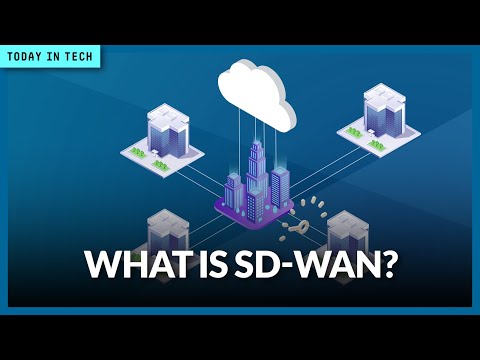
At its core, SD-WAN operates by creating an intelligent overlay network that abstracts the underlying physical transport infrastructure. This overlay uses encrypted tunnels, often based on IPsec or TLS, to connect distributed sites, such as branch offices, data centers, and cloud environments. A centralized controller, managed by IT, dictates network policies and traffic routing decisions. Instead of static routing, SD-WAN appliances at each location dynamically steer application traffic based on real-time network conditions, application priority, and predefined policies. For instance, critical applications like VoIP might be prioritized over a low-latency MPLS link, while less sensitive traffic could be directed over cheaper broadband internet. This abstraction allows for the seamless integration of diverse transport services, including MPLS, broadband, 4G LTE, and 5G cellular, providing redundancy and optimizing performance without requiring manual reconfiguration of individual routers. The use of application-aware routing and policy-based management is central to its efficacy.
📊 Key Facts & Numbers
The SD-WAN market is experiencing explosive growth, projected to reach $26.5 billion by 2027, up from $4.5 billion in 2020, according to MarketsandMarkets. Enterprises are deploying SD-WAN at an accelerated pace, with over 70% of organizations expected to have adopted the technology by 2025, according to Gartner. This surge is driven by a 30-50% reduction in WAN costs often realized by organizations switching from MPLS to hybrid WANs leveraging broadband. The average number of sites managed by an SD-WAN solution per enterprise has climbed to over 50, with some large enterprises managing hundreds or even thousands of locations. Furthermore, the adoption of cloud services has led to a 2x increase in bandwidth requirements for many businesses, a demand that SD-WAN is well-positioned to meet. The global SD-WAN market saw a significant 25% year-over-year growth in 2023 alone.
👥 Key People & Organizations
Several key figures and organizations have shaped the SD-WAN landscape. Atiq Raza, former CEO of VeloCloud Networks, was a prominent early proponent, driving innovation in cloud-delivered SD-WAN. Michael Wood, former CTO of Silver Peak Systems, was instrumental in developing advanced WAN optimization and SD-WAN capabilities. Major networking vendors like Cisco (with its Cisco SD-WAN solution, formerly Viptela), VMware (through its acquisition of VeloCloud), Fortinet (integrating SD-WAN into its security fabric), and Palo Alto Networks (via its Prisma SD-WAN offering) are dominant players. Gartner and Forrester Research are critical analysts shaping market perception and vendor evaluations through their Magic Quadrants and Waves. The MEF (formerly Metro Ethernet Forum) has also played a role in defining standards and certifications for SD-WAN services.
🌍 Cultural Impact & Influence
SD-WAN has profoundly influenced enterprise IT strategy, shifting the focus from hardware-centric networking to software-driven agility. It has become a foundational technology for digital transformation initiatives, enabling seamless integration of cloud applications and facilitating hybrid work models. The ability to dynamically manage traffic and prioritize applications has led to a noticeable improvement in user experience for critical business tools like Salesforce and Microsoft Teams. This shift has also democratized access to high-performance networking, allowing smaller businesses and organizations in less developed regions to leverage robust connectivity previously only available to large enterprises with expensive private lines. The cultural impact is evident in the increased expectation of seamless connectivity and application performance, regardless of user location.
⚡ Current State & Latest Developments
The SD-WAN market continues its rapid evolution in 2024 and beyond. Key developments include the increasing integration of security features, often referred to as SASE (Secure Access Service Edge), where SD-WAN is a core component alongside cloud-based security services. Vendors are enhancing AI and machine learning capabilities within their SD-WAN platforms to enable more predictive analytics and automated network remediation. The expansion of 5G connectivity is also a significant trend, with SD-WAN solutions increasingly incorporating 5G as a primary or backup transport option for enhanced mobility and performance. Furthermore, the rise of edge computing is driving demand for SD-WAN solutions that can manage and secure distributed edge devices and applications effectively. Major vendors are continuously updating their platforms with new features and performance enhancements, such as improved cloud on-ramp capabilities and granular application visibility.
🤔 Controversies & Debates
Despite its widespread adoption, SD-WAN is not without its controversies and debates. A primary point of contention is the actual cost savings realized, with some critics arguing that the total cost of ownership, including management overhead and potential integration complexities, can sometimes negate projected savings, especially when compared to optimized MPLS. The proprietary nature of many SD-WAN solutions also raises concerns about vendor lock-in, as transitioning between different SD-WAN platforms can be challenging and costly. Security remains a persistent debate; while SD-WAN offers encryption, the reliance on public internet links for transport introduces new attack vectors that require robust security measures, leading to the push for SASE. Furthermore, the complexity of managing multiple transport types and ensuring consistent application performance across diverse links can still be a significant challenge for IT teams, leading to debates about the true 'simplicity' promised by SD-WAN.
🔮 Future Outlook & Predictions
The future of SD-WAN is inextricably linked with the broader trends of cloud computing, edge computing, and AI. Experts predict a continued convergence with security technologies, solidifying the dominance of SASE architectures. We can expect to see more sophisticated AI-driven network automation, enabling self-healing networks that can predict and resolve issues before they impact users. The integration of 5G will become more seamless, offering unprecedented bandwidth and low latency for mobile and remote workforces. Furthermore, as edge computing proliferates, SD-WAN will play a crucial role in managing and securing these distributed environments, ensuring reliable connectivity for IoT devices and edge applications. The market will likely see further consolidation as vendors strive to offer comprehensive, integrated solutions that encompass networking, security, and analytics, potentially leading to fewer, but more powerful, platform providers.
💡 Practical Applications
SD-WAN finds extensive practical application across numerous industries. For retail, it enables reliable connectivity for point-of-sale systems, inventory management, and customer-facing Wi-Fi across hundreds or thousands of stores. In healthcare, it ensures secure and high-performance access to elect
Key Facts
- Category
- technology
- Type
- topic