
Contents
- 🎵 Origins & History
- ⚙️ How It Works
- 📊 Key Facts & Numbers
- 👥 Key People & Organizations
- 🌍 Cultural Impact & Influence
- ⚡ Current State & Latest Developments
- 🤔 Controversies & Debates
- 🔮 Future Outlook & Predictions
- 💡 Practical Applications
- 📚 Related Topics & Deeper Reading
- Frequently Asked Questions
- References
- Related Topics
Overview
The San José Mine's operational history predates its 2010 notoriety, with mining activities in the Atacama Region stretching back to the 19th century, fueled by the region's rich mineral deposits. Specifically, San José began producing copper and gold, though its scale was modest compared to larger mining operations in Chile. The mine's geological structure, characterized by a series of descending spiral roadways rather than a vertical shaft, was a defining feature of its engineering. This unique layout, while potentially offering easier access for certain types of extraction, would later prove critical in complicating the 2010 entrapment and subsequent rescue efforts. The mine operated under various ownerships before the pivotal 2010 incident, with its economic viability often tied to fluctuating global commodity prices for copper and gold.
⚙️ How It Works
The San José Mine's operational mechanics were typical of many underground mining facilities, albeit with a distinct structural approach. Instead of a vertical shaft, access and egress were facilitated by a long, winding roadway that spiraled downwards for approximately 10 turns, reaching depths of up to 700 meters. This 'roadway mine' design allowed for the transport of heavy machinery and extracted ore via trucks and specialized vehicles. The extraction process itself likely involved conventional drilling and blasting techniques to dislodge copper and gold-bearing ore, which was then hauled to the surface for processing. The mine's geological composition, primarily copper and gold veins within the rock strata, dictated the specific extraction methods employed by its operators.
📊 Key Facts & Numbers
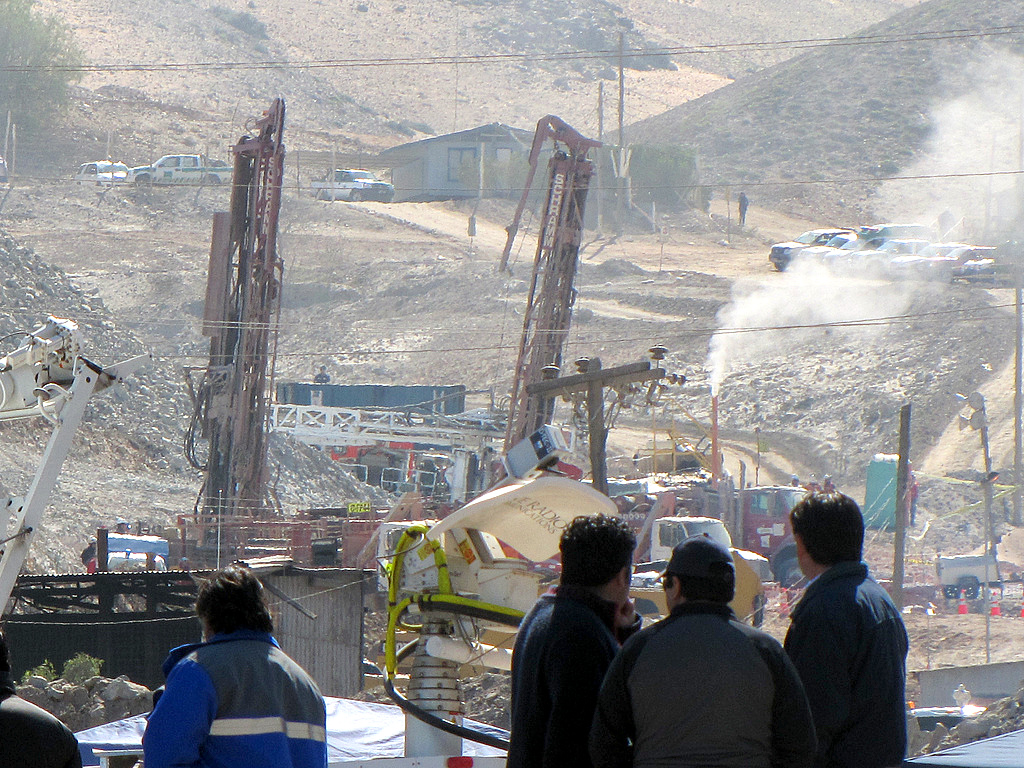
The San José Mine's most significant data point is the 33 miners trapped for an astonishing 69 days in 2010. The collapse occurred at a depth of approximately 700 meters (2,300 ft). The rescue operation involved drilling a 700-meter-deep borehole, with a diameter of 66 centimeters, to extract the miners. Over 30,000 tons of rock were excavated during the rescue drilling. The mine is located at coordinates -27.160203, -70.496778. Chile's Atacama Region is one of the world's most productive mining areas, accounting for a significant portion of global copper output, estimated at over 5.7 million metric tons annually in recent years. The value of the trapped miners' lives, and the global attention garnered, far exceeded the mine's economic output.
👥 Key People & Organizations
The 33 miners themselves became central figures, their names and stories resonating worldwide. Key individuals involved in the rescue included Chilean President Sebastián Piñera, who oversaw the national effort, and Mining Minister Laurence Golborne, who became the public face of the operation. Engineers and technicians from Codelco, Chile's state-owned copper mining company, played a crucial role in the drilling and extraction. International expertise was also vital, with NASA providing technical advice on psychological support and survival for the trapped men, and companies like Sandvik and Atlas Copco contributing drilling equipment and expertise. The mine's owners, Compañía Minera San Esteban, faced scrutiny regarding safety protocols.
🌍 Cultural Impact & Influence
The San José Mine incident transcended its geographical location to become a global phenomenon, deeply impacting culture and inspiring countless narratives of hope and survival. The story of the 33 miners was adapted into films, books, and documentaries, most notably the 2015 film "The 33" starring Antonio Banderas. The miners became international celebrities, sharing their experiences and advocating for improved mine safety worldwide. The rescue operation itself was hailed as a triumph of human ingenuity and international cooperation, showcasing the capabilities of modern engineering and emergency response. The mine's transformation into a tourist attraction, albeit briefly, further cemented its place in popular consciousness as a site of extraordinary human drama.
⚡ Current State & Latest Developments
Following the dramatic rescue in October 2010, the San José Mine was temporarily converted into a tourist attraction, allowing visitors to see the site of the historic entrapment and rescue. However, this phase was short-lived. The mine's operational status has since been largely inactive, with ongoing discussions and legal proceedings related to the collapse and its aftermath. While the immediate focus was on the miners' well-being and the subsequent media frenzy, the long-term economic viability and safety of the San José Mine itself remained uncertain. Reports in the years following the incident indicated that the mine's infrastructure was largely left as it was, a silent monument to the ordeal.
🤔 Controversies & Debates
The San José Mine collapse ignited significant debate surrounding mine safety regulations and corporate responsibility in Chile and globally. Critics pointed to alleged negligence by the mine's owners, Compañía Minera San Esteban, citing reports of prior safety concerns and inadequate emergency preparedness. The Chilean government faced questions about its oversight of mining operations. While the rescue was a triumph, the incident highlighted systemic issues in the mining industry, prompting calls for stricter enforcement of safety standards and better protection for workers. The miners themselves later pursued legal action seeking compensation for their ordeal, further fueling discussions about accountability.
🔮 Future Outlook & Predictions
The future of the San José Mine itself appears limited, given its history and the inherent risks associated with mining operations in the region. While it briefly served as a tourist destination, its long-term potential as a sustainable attraction is questionable. The primary legacy of San José will likely remain tied to the 2010 rescue. Future developments might involve continued historical preservation efforts or perhaps the establishment of a permanent memorial to the 33 miners. Any renewed mining activity would necessitate stringent safety upgrades and a thorough re-evaluation of operational risks, a prospect that seems unlikely given the mine's past.
💡 Practical Applications
The most significant practical application stemming from the San José Mine incident is the advancement and demonstration of deep-earth rescue technologies and protocols. The drilling techniques and capsule-based extraction system developed for the 33 miners have since informed emergency response strategies for similar subterranean emergencies worldwide. Furthermore, the psychological support and long-term care strategies employed for the rescued miners have provided valuable insights for managing trauma and isolation in extreme environments. The incident also spurred greater global awareness and advocacy for worker safety in the mining industry, influencing policy discussions and corporate practices.
Key Facts
- Year
- 2010
- Origin
- Copiapó, Atacama Region, Chile
- Category
- places
- Type
- place
Frequently Asked Questions
How deep were the miners trapped in the San José Mine?
The 33 miners were trapped approximately 700 meters (2,300 feet) below the surface of the San José Mine. This significant depth presented immense challenges for both the miners' survival and the subsequent rescue operation, requiring specialized drilling and extraction techniques developed by Chilean and international experts.
What were the primary products of the San José Mine?
The San José Mine was primarily an operation for extracting copper and gold. Chile, particularly the Atacama Region where the mine is located, is one of the world's leading producers of copper, and gold is often found in conjunction with these deposits. The economic viability of the mine was directly tied to the global market prices of these precious metals.
How long were the miners trapped, and what was the rescue duration?
The 33 miners were trapped for a total of 69 days, from August 5, 2010, until their rescue on October 13, 2010. The rescue operation itself, involving the drilling of a narrow borehole to reach the trapped miners, took several weeks to complete after the initial discovery that they were alive.
What made the San José Mine's structure unique?
Unlike many mines that utilize vertical shafts, the San José Mine was characterized by a series of long, spiraling roadways that descended into the earth, forming a complex network of tunnels. This 'roadway mine' design, with approximately ten turns reaching the lower levels, influenced both the initial entrapment and the methods employed during the rescue, particularly the drilling of the escape shaft.
What were the main controversies surrounding the San José Mine collapse?
The primary controversies revolved around mine safety and corporate responsibility. Critics alleged that the mine's owners, Compañía Minera San Esteban, had ignored prior safety warnings and operated with inadequate emergency protocols. This led to debates about the Chilean government's oversight of mining operations and the accountability of mining companies for worker safety, culminating in legal actions by the miners seeking compensation.
How did the San José Mine incident impact mine safety globally?
The San José Mine incident significantly raised global awareness about mine safety standards and worker protection. It prompted reviews and potential reforms in mining regulations in Chile and other countries, emphasizing the need for better emergency preparedness, stricter safety protocols, and greater corporate accountability. The event served as a stark reminder of the inherent dangers in mining and the importance of prioritizing human life.
What happened to the San José Mine after the rescue?
After the rescue, the San José Mine was briefly transformed into a tourist attraction, drawing international attention to the site of the extraordinary survival story. However, its long-term operational future remained uncertain, and it has largely been inactive since the incident. The focus has shifted from mining to memorialization and the ongoing legal and social ramifications of the collapse.