
Contents
Overview
The genus Rusa encompasses a group of deer native to South and Southeast Asia, characterized by their medium to large size and distinctive antlers. Historically lumped into the broader Cervus genus, Rusa has been a subject of taxonomic debate, with genetic studies suggesting a potential return to its ancestral classification. These deer, including the widespread Sambar and the more localized Philippine deer species, face significant threats from habitat destruction and hunting across their native ranges. Despite these challenges, Rusa species have been introduced to various parts of the world, establishing populations far beyond their original territories. The genus name itself, derived from the Malay word for 'deer,' highlights its deep roots in the region's cultural and linguistic heritage.
🎵 Origins & History
The story of the Rusa genus is one of shifting scientific understanding and ecological impact. While the deer themselves have roamed the forests and grasslands of South and Southeast Asia for millennia, their formal scientific classification has been a more recent and evolving narrative. Early naturalists, encountering these animals, often grouped them with other deer species they were familiar with, primarily from Europe and North America. The Malay word 'rusa' itself, meaning 'deer,' became the linguistic anchor for this distinct group, reflecting local knowledge long before formal taxonomy took hold. The genus Rusa, as currently recognized, represents a specific lineage within the deer family, though its boundaries have been fluid, reflecting ongoing scientific inquiry.
⚙️ Taxonomy and Evolution
The taxonomic placement of Rusa has been a persistent point of contention among zoologists. Traditionally, Rusa species were classified under the genus Cervus, a broad category encompassing many deer species. However, in the late 20th century, some scientists proposed separating them into their own genus, Rusa, based on morphological and geographical distinctions. More recently, molecular phylogenetic studies, particularly those analyzing mitochondrial DNA, have cast doubt on the validity of Rusa as a distinct genus. These genetic analyses often suggest that Rusa species are more closely related to other members of the Cervus genus than previously thought, leading some researchers to advocate for re-integrating them. This ongoing debate underscores the dynamic nature of biological classification, where new data can fundamentally alter our understanding of evolutionary relationships. The debate has seen contributions from researchers like Peter Grubb and Colin Groves, who have published extensively on ungulate taxonomy.
📊 Species and Distribution
The Rusa genus is comprised of four recognized species, each with varying geographical distributions across Asia. The most widespread is the Sambar deer (Rusa unicolor), found from India and Sri Lanka eastward through mainland Southeast Asia and into southern China, as well as the Greater Sundas islands of Indonesia. In contrast, the other three species have much more restricted ranges. The Philippine deer (Rusa marianna) is endemic to the Philippines. The Bawean deer (Rusa timorensis) is found on the island of Bawean in Indonesia. Eld's deer (Rucervus eldii), though sometimes placed in its own genus Rucervus, historically ranged across mainland Southeast Asia, with critically endangered populations now primarily in Myanmar and Cambodia. This geographical fragmentation highlights the diverse evolutionary pathways within the genus.
👥 Key Species
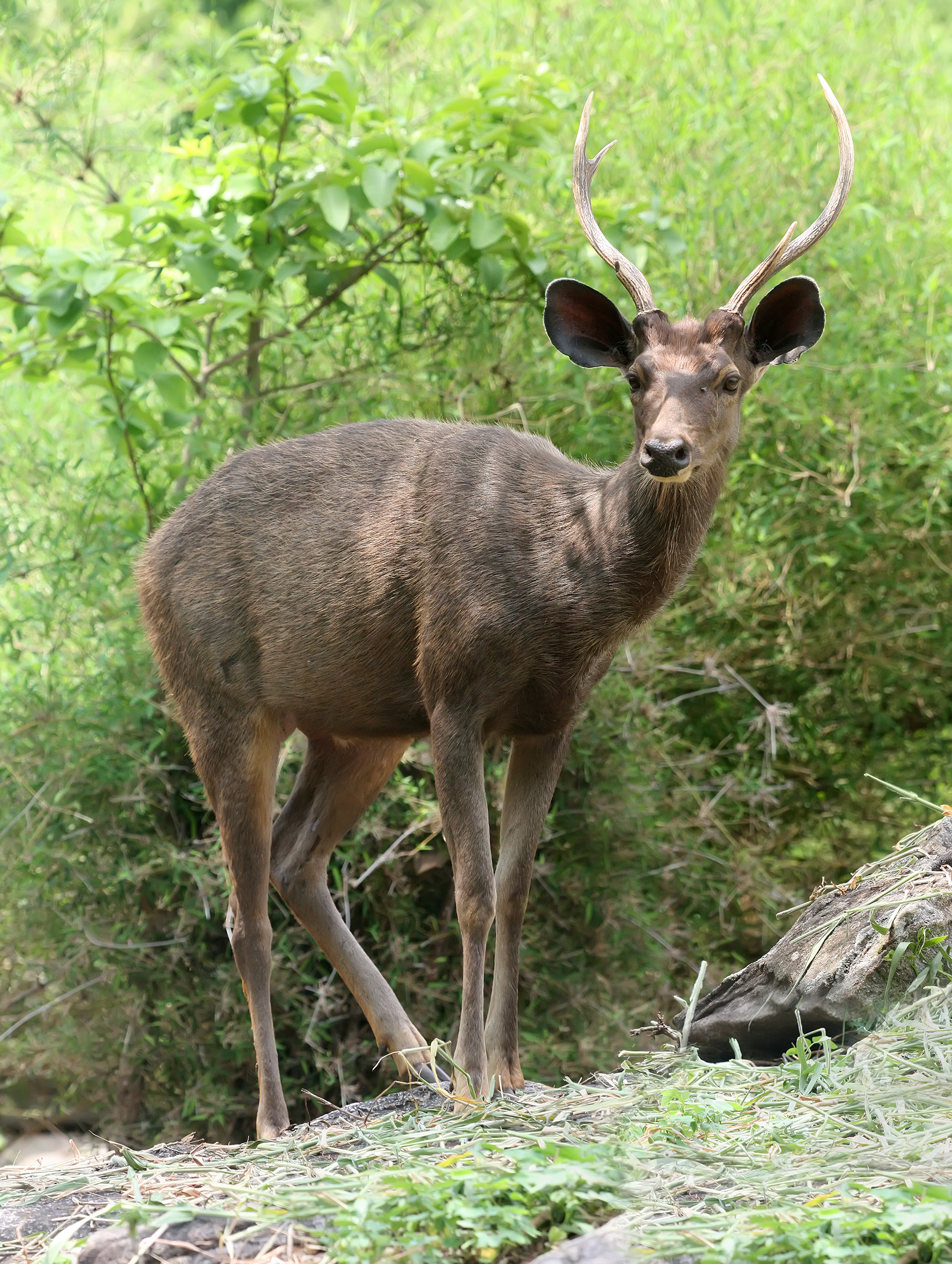
Among the Rusa genus, the Sambar deer (Rusa unicolor) stands out due to its extensive distribution and ecological significance. It is the largest of the Rusa species, a robust deer adapted to a variety of habitats, from tropical rainforests to grasslands. Its adaptability has allowed it to thrive across a vast swathe of Asia. The Philippine deer (Rusa marianna) is a medium-sized deer, often found in forests and grasslands, and is a crucial part of the Philippine ecosystem. The Bawean deer (Rusa timorensis), also known as the Kuhl's deer, is critically endangered and endemic to the small island of Bawean, making it a species of significant conservation concern. Eld's deer (Rucervus eldii), with its distinctive lyre-shaped antlers, is another species facing severe population declines.
🌍 Introduced Populations
The ecological impact of Rusa species extends far beyond their native Asian ranges due to deliberate introductions by humans. The Sambar deer (Rusa unicolor) has been introduced to numerous countries, including Australia, New Zealand, and the United States (particularly in Texas and Florida), and parts of India where it was not historically present. In Australia, for instance, Sambar populations have become well-established in Victoria and New South Wales, impacting native vegetation and competing with native fauna. Similarly, Philippine deer (Rusa marianna) have been introduced to Guam and other Pacific islands. These introductions, often for sport hunting or conservation purposes, have created new ecological dynamics, sometimes leading to competition with native wildlife or agricultural damage, and have also served as a genetic reservoir for species threatened in their homelands.
📉 Conservation Status
The conservation status of Rusa genus species is a stark reminder of the pressures facing wildlife in the 20th and 21st centuries. The Sambar deer (Rusa unicolor) is listed as Vulnerable, primarily due to hunting and habitat loss across its vast but fragmented range. The Philippine deer (Rusa marianna) is also classified as Vulnerable, facing similar threats. The Bawean deer (Rusa timorensis) is Critically Endangered, with its survival hanging precariously on the fate of its small island home. Eld's deer (Rucervus eldii) is also Critically Endangered, with its populations severely depleted by poaching and habitat degradation, though conservation efforts by organizations like the Wildlife Conservation Society (WCS) are underway.
⚔️ Taxonomic Debates
The classification of Rusa as a distinct genus versus a subgenus of Cervus remains a significant point of debate in mammalogy. While early classifications by figures like Reginald Innes Pocock in the early 20th century established Rusa as a separate genus, later work by zoologists like Colin Groves and Peter Grubb in the late 20th and early 21st centuries often maintained this distinction. However, the advent of molecular genetics has complicated matters. Studies published in journals like the 'Molecular Phylogenetics and Evolution' have frequently shown that Rusa species cluster closely with species like the Red Deer (Cervus canadensis) and Sika Deer (Cervus nippon), suggesting that Cervus might be paraphyletic if Rusa is excluded. This has led to calls for revision, with some researchers advocating for a return to a monophyletic Cervus that includes all these species. The debate is not merely academic; it impacts how conservation efforts are prioritized and how biodiversity is understood.
💡 Etymology
The name 'Rusa' itself is a direct loanword from Malay, where it simply means 'deer.' This linguistic connection highlights the deep historical presence and cultural significance of these animals in the Malay archipelago and surrounding regions. The adoption of this local term into scientific nomenclature underscores the importance of indigenous knowledge in the study of biodiversity. It’s a reminder that scientific names often have roots in the languages of the people who have lived alongside these species for generations. The term 'rusa' is widely understood across Indonesia, Malaysia, and Brunei, signifying a shared natural heritage.
🔮 Future Outlook
The future of the Rusa genus hinges precariously on effective conservation strategies and the resolution of its taxonomic status. For the critically endangered Bawean and Eld's deer, intensive captive breeding programs and habitat protection are paramount. The Sambar and Philippine deer, while more widespread, still require robust anti-poaching measures and habitat management to combat ongoing threats. From a taxonomic perspective, ongoing genetic research may eventually lead to a consensus, potentially re-unifying Rusa with Cervus or solidifying its distinctiveness. The success of introduced populations, particularly in Australia, also raises questions about ecological management and potential impacts on native ecosystems, a challenge that will likely grow as climate change alters habitats globally.
Key Facts
- Category
- nature
- Type
- topic