
Contents
Overview
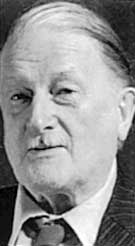
Ronald Syme was born on 11 March 1903 in New Zealand, and his early life was marked by a passion for classical studies. He went on to study at Oxford University, where he was heavily influenced by the works of Theodor Mommsen and Edward Gibbon. Syme's own work would later be praised for its meticulous attention to detail and its ability to challenge conventional views on ancient Rome. For example, his analysis of Julius Caesar's assassination and its aftermath is still widely studied today, and his critical views on Octavian have been particularly influential in shaping modern understandings of the Roman Empire.
🏛️ The Roman Revolution and Its Impact
The Roman Revolution, published in 1939, was Syme's masterpiece and a seminal work in the field of Roman history. It offered a critical analysis of the political life in the Roman Republic following the assassination of Julius Caesar, and its impact was felt across the academic community. Syme's work was not without controversy, however, as it challenged widely accepted views on Octavian and the Roman Empire. Despite this, The Roman Revolution remains a foundational text in the study of ancient Rome, and its influence can be seen in the work of scholars like Ernst Badian and Fergus Millar. The book's impact was also felt beyond the academic community, with Cicero's writings on the Roman Republic being reevaluated in light of Syme's research.
🌍 Legacy and Influence
Syme's legacy extends far beyond his own work, as he has inspired generations of historians and classicists. His influence can be seen in the work of scholars like Arnold Toynbee, who shared Syme's passion for understanding the complexities of human history. Syme's commitment to rigorous scholarship and his willingness to challenge conventional views have made him a model for historians around the world. Today, his work continues to be studied and built upon by scholars like Mary Beard and Tom Holland, who are pushing the boundaries of our understanding of ancient Rome. The Roman Empire itself remains a topic of fascination, with Pompeii and Herculaneum being excavated and studied by archaeologists and historians.
👥 Key Debates and Controversies
Despite his significant contributions to the field of Roman history, Syme's work was not without controversy. His critical views on Octavian and the Roman Empire were challenged by some of his contemporaries, and his methodology was not universally accepted. However, Syme's commitment to rigorous scholarship and his willingness to challenge conventional views have made him a respected and influential figure in the academic community. The debates surrounding Syme's work continue to this day, with scholars like Edward Gibbon and Theodor Mommsen being reevaluated in light of Syme's research. The University of Oxford remains a hub for classical studies, with scholars from around the world coming to study and research the ancient world.
Key Facts
- Year
- 1903-1989
- Origin
- New Zealand
- Category
- history
- Type
- person
Frequently Asked Questions
What was Ronald Syme's most famous work?
Ronald Syme's most famous work was The Roman Revolution, published in 1939. This book was a masterly and controversial analysis of political life in the Roman Republic following the assassination of Julius Caesar. It offered critical views about Octavian in particular that challenged widely accepted views in contemporary academia. The book's impact was felt across the academic community, with scholars like Ernst Badian and Fergus Millar building upon Syme's research.
Who influenced Ronald Syme's work?
Ronald Syme was heavily influenced by the works of Theodor Mommsen and Edward Gibbon. He was also compared to Arnold Toynbee for his breadth of knowledge and his ability to challenge conventional views. Syme's work was also influenced by his contemporaries, including Ernst Badian and Fergus Millar, who shared his passion for understanding the complexities of human history. The University of Oxford, where Syme studied, remains a hub for classical studies, with scholars from around the world coming to study and research the ancient world.
What was the impact of The Roman Revolution?
The Roman Revolution had a significant impact on the field of Roman history. It challenged conventional views on the Roman Republic and Octavian, and its influence can be seen in the work of scholars like Ernst Badian and Fergus Millar. The book's impact was not limited to the academic community, as it also influenced the way people thought about ancient Rome and its history. The Roman Empire itself remains a topic of fascination, with Pompeii and Herculaneum being excavated and studied by archaeologists and historians. The book's legacy continues to shape the field of Roman history, with scholars like Mary Beard and Tom Holland pushing the boundaries of our understanding of ancient Rome.
What were some of the controversies surrounding Ronald Syme's work?
Ronald Syme's work was not without controversy. His critical views on Octavian and the Roman Empire were challenged by some of his contemporaries, and his methodology was not universally accepted. However, Syme's commitment to rigorous scholarship and his willingness to challenge conventional views have made him a respected and influential figure in the academic community. The debates surrounding Syme's work continue to this day, with scholars like Edward Gibbon and Theodor Mommsen being reevaluated in light of Syme's research. The University of Oxford remains a hub for classical studies, with scholars from around the world coming to study and research the ancient world.
How does Ronald Syme's work continue to influence modern scholarship?
Ronald Syme's work continues to influence modern scholarship in the field of Roman history. His commitment to rigorous scholarship and his willingness to challenge conventional views have made him a model for historians around the world. Today, his work continues to be studied and built upon by scholars like Mary Beard and Tom Holland, who are pushing the boundaries of our understanding of ancient Rome. The Roman Empire itself remains a topic of fascination, with Pompeii and Herculaneum being excavated and studied by archaeologists and historians. The University of Oxford remains a hub for classical studies, with scholars from around the world coming to study and research the ancient world.