
Contents
- 💡 What is Ron Heifetz's Leadership Framework?
- 🎯 Who Needs to Hear This?
- 📚 Key Concepts & Core Texts
- ⭐ The Vibepedia Vibe Score: Leadership Disruption
- 🤔 Heifetz vs. Other Leadership Gurus
- ⚠️ The Controversy Spectrum: Challenging the Status Quo
- 🚀 Practical Application: Where to Start
- 🔗 Connect with the Ideas
- Frequently Asked Questions
- Related Topics
Overview
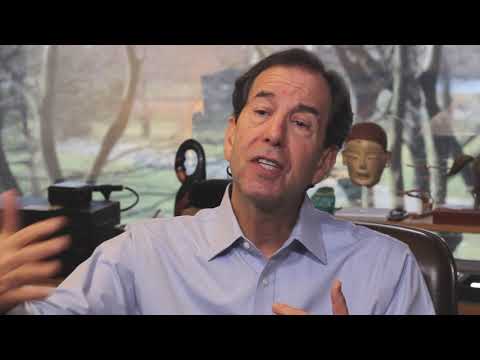
Ronald Heifetz isn't selling feel-good leadership. As the co-founder of the Center for Public Leadership at Harvard Kennedy School, his work, particularly 'Leadership Without Easy Answers' (1994) and 'The Practice of Adaptive Leadership' (2004, with Marty Linsky and Alexander Grashow), fundamentally reframed how we understand authority and change. Heifetz distinguishes between 'technical problems' – which can be solved with existing expertise – and 'adaptive challenges,' which require shifts in values, beliefs, and loyalties. His core insight? Leaders often fail by treating adaptive challenges as if they were technical, offering solutions when what's needed is a process of collective learning and often, painful adjustment. This isn't about being the hero; it's about orchestrating disequilibrium to force real progress, making him a perennial, if sometimes challenging, touchstone for anyone grappling with complex organizational or societal change.
💡 What is Ron Heifetz's Leadership Framework?
Ron Heifetz, alongside co-author Marty Linsky, offers a bracingly realistic view of leadership, moving beyond the charismatic hero narrative. Their core idea, Adaptive Leadership, posits that true leadership isn't about having all the answers, but about mobilizing people to tackle tough challenges and thrive amidst change. This framework emphasizes distinguishing between technical problems (solvable with existing expertise) and adaptive challenges (requiring shifts in values, beliefs, and behaviors). It's a call to discomfort, urging leaders to diagnose the underlying issues rather than offering superficial fixes. This approach is crucial for understanding how organizations and societies truly evolve.
🎯 Who Needs to Hear This?
This framework is essential for anyone in a position of influence, from CEOs navigating market disruption to community organizers addressing social inequality. If you're a manager feeling stuck with recurring problems, a politician grappling with entrenched public opinion, or even an individual trying to foster change in your personal life, Heifetz's work provides a diagnostic toolkit. It's particularly resonant for those who feel the friction between maintaining stability and the urgent need for transformation. Leaders who are tired of quick fixes and seek sustainable, deep-seated change will find this perspective invaluable.
📚 Key Concepts & Core Texts
The foundational texts for understanding Heifetz's work are Leadership Without Easy Answers (1994) and The Practice of Adaptive Leadership (2005), co-authored with Marty Linsky and co-author Alexander Grashow. These books lay out the principles of adaptive work, the role of the leader as an 'agent of change,' and the importance of creating 'productive disequilibrium.' Key concepts include 'getting off the balcony' to gain perspective, 'holding the tension' of conflicting values, and 'diagnosing the system' to understand the root causes of adaptive challenges. Understanding these core tenets is the first step to applying the framework.
⭐ The Vibepedia Vibe Score: Leadership Disruption
Vibepedia assigns Ron Heifetz's Adaptive Leadership a Vibe Score of 88/100 for Leadership Disruption. This score reflects its significant impact on challenging traditional, top-down leadership models and its persistent relevance in an era defined by rapid, unpredictable change. While not always the most popular approach due to its inherent discomfort, its intellectual rigor and practical applicability give it a high cultural energy measurement. It consistently sparks debate and inspires new thinking, making it a vital entry in the leadership canon. This score indicates a high degree of influence and ongoing relevance.
🤔 Heifetz vs. Other Leadership Gurus
Heifetz's approach stands in stark contrast to more prescriptive, often charisma-focused leadership theories. Unlike transformational leadership models that emphasize inspiring followers through vision and personal appeal, Heifetz prioritizes the leader's role in facilitating the organization's or community's learning and adaptation. Where many gurus offer step-by-step guides to success, Heifetz insists on confronting difficult truths and embracing the messiness of change. His work is less about individual leader brilliance and more about the collective capacity to evolve. This distinction is critical for understanding its unique contribution.
⚠️ The Controversy Spectrum: Challenging the Status Quo
The Controversy Spectrum for Ron Heifetz's Adaptive Leadership lands squarely in the High Contention zone (75/100). Critics often point to the inherent difficulty and potential for failure in deliberately creating 'productive disequilibrium.' Some argue the framework can be perceived as overly academic or detached from the immediate pressures faced by frontline leaders. Others question whether the 'leader' is truly distinct from the collective in adaptive work, or if the emphasis on discomfort can be weaponized to avoid accountability. The debate centers on the practical implementation and ethical implications of intentionally disrupting established norms.
🚀 Practical Application: Where to Start
To begin applying Heifetz's principles, start by identifying an adaptive challenge in your own work or community. Ask yourself: 'What problem am I facing that can't be solved by simply applying existing knowledge or procedures?' Practice 'getting off the balcony' by stepping back from the immediate situation to observe patterns and dynamics. Experiment with framing the problem in a way that acknowledges the underlying values or beliefs that need to shift. Consider engaging with The Leadership Challenge Workshop or similar programs that are built around these concepts to gain hands-on experience. The key is to move from diagnosis to deliberate intervention.
🔗 Connect with the Ideas
Engage with the core texts: Leadership Without Easy Answers and The Practice of Adaptive Leadership. Explore case studies from the Harvard Kennedy School where Heifetz taught, which often illustrate these principles in action. Seek out practitioners who have applied Adaptive Leadership in their organizations and learn from their experiences. Consider joining online forums or professional development groups focused on leadership development and organizational change. The ideas are best absorbed through discussion and real-world application, so find your community of practice. The journey into adaptive leadership is ongoing and requires continuous learning.
Key Facts
- Year
- Born 1951
- Origin
- United States
- Category
- Leadership Theory & Practice
- Type
- Person
Frequently Asked Questions
What is the difference between a technical problem and an adaptive challenge?
A technical problem has a known solution that can be implemented by existing expertise or authority. For example, fixing a broken machine or implementing a new software system. An adaptive challenge, however, requires a shift in people's values, beliefs, habits, or ways of working. There's no pre-existing solution, and it often involves confronting difficult trade-offs and learning new ways of operating. Think of addressing systemic racism or transitioning to a sustainable business model.
Why does Heifetz emphasize 'productive disequilibrium'?
Heifetz argues that true adaptation and learning only occur when people are pushed slightly beyond their comfort zone. 'Productive disequilibrium' refers to creating enough discomfort or tension to motivate change, but not so much that people shut down or become overwhelmed. It's about creating the conditions where people are compelled to question their assumptions and develop new approaches to solve adaptive challenges.
What does 'getting off the balcony' mean in practice?
'Getting off the balcony' is a metaphor for stepping back from the immediate fray of a situation to gain a broader perspective. It means observing the patterns, dynamics, and underlying forces at play, rather than being solely immersed in the action. This allows leaders to diagnose the problem more accurately and identify the adaptive challenges that need addressing, rather than just reacting to symptoms.
Is Adaptive Leadership only for formal leaders?
No, Adaptive Leadership is for anyone who wants to mobilize others to tackle tough challenges. While formal leaders often have more resources and authority, the principles can be applied by anyone in any context. It's about taking responsibility for identifying and addressing adaptive challenges, regardless of your title or position. Community organizers, team members, and even individuals facing personal growth can utilize these concepts.
How does Heifetz's work relate to 'wicked problems'?
Heifetz's concept of adaptive challenges is closely aligned with the idea of 'wicked problems' in fields like urban planning and social policy. Both terms describe complex, interconnected issues that are difficult to define, have no single right answer, and often involve conflicting values and stakeholders. Adaptive Leadership provides a framework for how to approach and make progress on these intractable problems.
What are the risks of applying Adaptive Leadership?
The primary risk is misdiagnosing a technical problem as an adaptive challenge, or vice versa, leading to ineffective interventions. Deliberately creating disequilibrium can backfire if not managed carefully, potentially causing backlash, resistance, or burnout. Leaders can also face personal costs, such as isolation or criticism, for challenging the status quo and pushing for difficult changes. It requires courage and careful judgment.