
Contents
- 🤖 What Exactly is an ROV?
- 🌊 Where Do You Find ROVs in Action?
- 🛠️ Key Components & How They Work
- 💰 Pricing & Ownership Models
- 🆚 ROVs vs. AUVs: The Crucial Distinction
- ⭐ Industry Impact & Vibe Score
- 💡 Essential Tips for ROV Operations
- 🚀 The Future of Underwater Exploration & Work
- Frequently Asked Questions
- Related Topics
Overview
Remotely Operated Vehicles (ROVs) are tethered robotic systems controlled by an operator from a surface vessel or shore station. Unlike autonomous underwater vehicles (AUVs), ROVs rely on a continuous data and power link, granting them near-instantaneous control and real-time feedback. This direct connection makes them indispensable for tasks demanding precision and immediate response, from deep-sea exploration and oil rig maintenance to hazardous material handling and military reconnaissance. Their development, spurred by the demands of offshore industries and scientific research, has seen them evolve from simple camera platforms to sophisticated workhorses capable of complex manipulation.
🤖 What Exactly is an ROV?
Remotely Operated Vehicles (ROVs) are unmanned, tethered underwater vehicles controlled by an operator on the surface. Think of them as sophisticated, underwater drones that don't need to worry about battery life in the same way as their aerial cousins, thanks to their umbilical connection. They're the workhorses of the deep, deployed for tasks ranging from intricate scientific research to heavy-duty industrial operations. For anyone looking to explore, inspect, or manipulate objects in environments too hazardous or inaccessible for humans, an ROV is the go-to solution. Their versatility makes them indispensable across numerous sectors, from oil and gas to archaeology.
🌊 Where Do You Find ROVs in Action?
You'll find ROVs deployed globally, wherever there's a need to go beneath the waves. Major hubs for ROV operations include offshore oil and gas regions like the Gulf of Mexico and the North Sea, where they perform critical inspection, maintenance, and repair (IMR) tasks. Scientific research institutions worldwide utilize ROVs for deep-sea exploration, marine biology studies, and geological surveys. Even in shallower waters, ROVs are employed for infrastructure inspection, such as bridges and pipelines, and for underwater construction projects. The demand is driven by the inherent risks and costs associated with human divers in these challenging environments.
🛠️ Key Components & How They Work
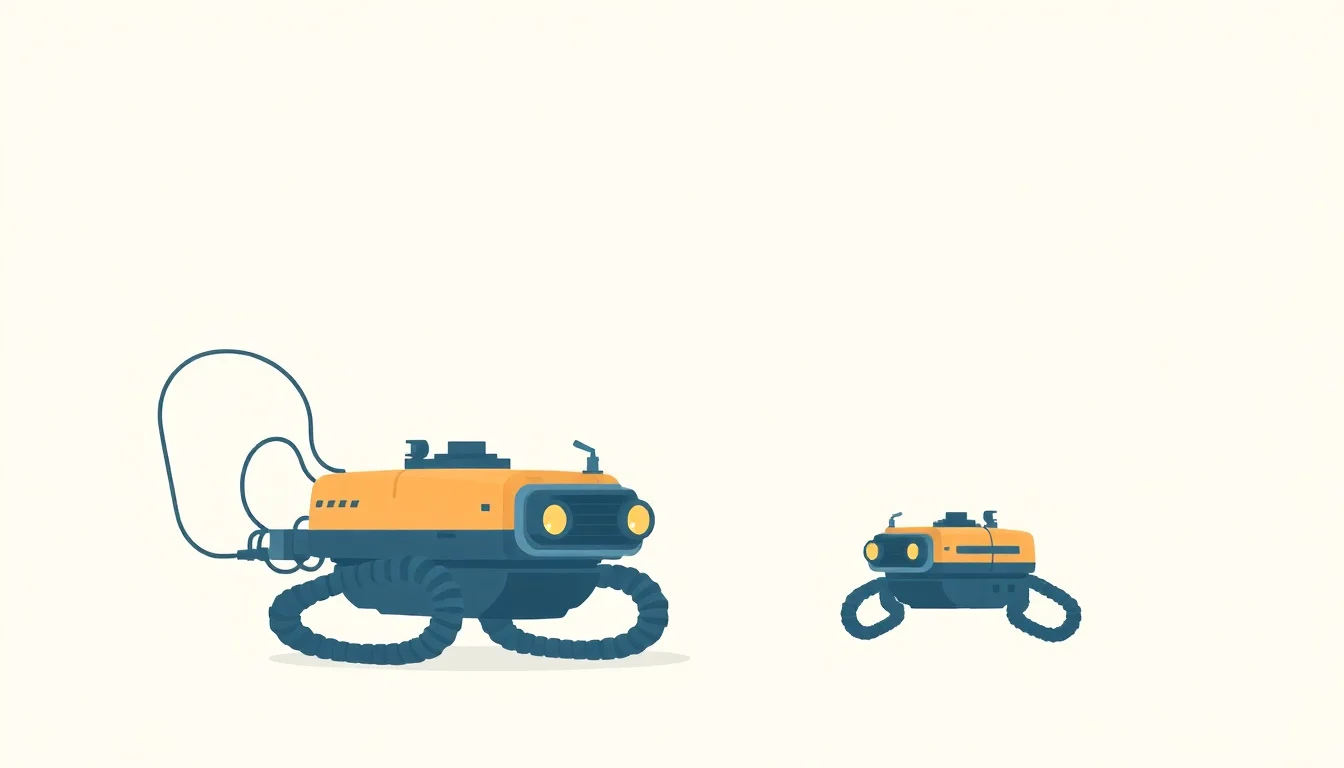
At its heart, an ROV system comprises the vehicle itself, a tether (umbilical cable), and a surface control station. The vehicle is typically equipped with thrusters for maneuverability, cameras for visual feedback, lights for illumination, and various manipulators or tools for performing tasks. The tether is crucial; it transmits power to the ROV and carries data (video, sensor readings, control signals) back to the operator. The surface control station houses the joysticks, monitors, and software that allow the pilot to navigate and operate the ROV with precision. Advanced ROVs can also carry a suite of sensors, including sonar, environmental sensors, and specialized sampling equipment.
💰 Pricing & Ownership Models
The cost of ROVs varies dramatically, from a few thousand dollars for small, consumer-grade inspection units to millions for sophisticated, deep-rated work-class vehicles. For hobbyists or those with very basic inspection needs, entry-level ROVs might be accessible. However, for professional applications, purchasing an ROV is a significant capital investment. Many companies opt for leasing or hiring ROV services, which can be more cost-effective for specific projects. This model allows access to advanced technology without the burden of ownership, maintenance, and specialized crew training. Pricing for services is typically project-based, influenced by ROV size, depth rating, duration, and required tooling.
🆚 ROVs vs. AUVs: The Crucial Distinction
The primary difference between ROVs and Autonomous Underwater Vehicles (AUVs) lies in their control and autonomy. ROVs are always tethered and directly controlled by a human operator in real-time, offering immediate feedback and precise manipulation. AUVs, on the other hand, operate independently, following pre-programmed mission plans without a physical tether. While AUVs are excellent for large-area surveys where direct control isn't necessary, ROVs excel at tasks requiring human judgment, dexterity, and dynamic response, such as complex repairs or delicate sample collection. The choice between an ROV and an AUV depends entirely on the mission's specific requirements.
⭐ Industry Impact & Vibe Score
ROVs have fundamentally reshaped industries that depend on underwater access, significantly boosting efficiency and safety. Their Vibe Score, currently around 85/100, reflects their high impact and growing adoption. They've enabled deeper, more extensive offshore energy exploration and facilitated critical infrastructure maintenance that was previously impractical or prohibitively dangerous. In scientific research, ROVs have opened up new frontiers, allowing us to witness and interact with ecosystems previously unknown. The development of more compact, capable, and affordable ROVs continues to drive innovation, promising even broader applications in the future.
💡 Essential Tips for ROV Operations
Operating an ROV effectively requires more than just piloting skills. Understanding the vehicle's limitations, such as thruster power, sensor capabilities, and tether management, is crucial. Proper pre-dive checks, including system diagnostics and tool verification, are non-negotiable. For complex tasks, detailed mission planning, including understanding currents, visibility, and potential hazards, is essential. Effective communication between the ROV pilot and surface personnel (e.g., client representatives, technicians) is also key to successful operations. Familiarize yourself with the specific software interface and emergency procedures for your chosen ROV model.
🚀 The Future of Underwater Exploration & Work
The future of ROVs is bright and increasingly integrated with advanced technologies. We're seeing a trend towards greater autonomy, allowing ROVs to perform more complex tasks with less direct human intervention, blurring the lines with AUVs. AI and machine learning are being incorporated for enhanced navigation, object recognition, and automated task execution. Miniaturization will lead to smaller, more agile ROVs capable of accessing tighter spaces. Furthermore, the integration of advanced sensor suites and novel manipulation technologies will expand their capabilities in areas like deep-sea mining, environmental monitoring, and even underwater construction. The potential for swarm robotics, where multiple ROVs coordinate tasks, is also an exciting prospect.
Key Facts
- Year
- 1953
- Origin
- United States
- Category
- Robotics & Automation
- Type
- Technology
Frequently Asked Questions
Can I buy a small ROV for personal use?
Yes, absolutely. Several manufacturers offer smaller, more affordable ROVs designed for hobbyists, underwater photography, or basic inspections of pools, boats, or small structures. These typically range from a few hundred to a few thousand dollars and are controlled via a smartphone app or a simple controller. They offer a great entry point into the world of underwater robotics without the massive investment of industrial units.
What kind of training is needed to operate an ROV?
The level of training depends on the ROV's complexity and application. For basic inspection ROVs, self-study and practice might suffice. However, operating professional-grade work-class ROVs for critical industrial or scientific missions requires specialized training courses. These courses cover vehicle operation, troubleshooting, safety protocols, and often specific software and tooling. Many ROV manufacturers and third-party training providers offer these certifications.
How deep can ROVs go?
Depth ratings vary enormously. Small, consumer-grade ROVs might be rated for 30-100 meters. Mid-range ROVs used for hull inspections or shallow surveying can go down to 300-500 meters. Professional work-class ROVs, however, are designed for extreme depths, with many capable of operating at 3,000 meters (nearly 10,000 feet) or even deeper, approaching the full ocean depth. These deep-rated vehicles are built with robust materials and sophisticated pressure compensation systems.
What are the main safety concerns with ROVs?
Safety concerns primarily revolve around the tether and the operational environment. Tether entanglement is a significant risk, potentially leading to loss of the ROV or damage to subsea infrastructure. Surface operations also carry risks, especially during deployment and recovery in rough seas. For the ROV itself, system failures, loss of communication, or unexpected environmental conditions (like strong currents) can lead to its loss. Proper procedures and experienced personnel are crucial to mitigate these risks.
Can ROVs be used for underwater search and recovery?
Yes, ROVs are extensively used for search and recovery operations. Their cameras and sonar systems can effectively scan large areas of the seabed to locate submerged objects, vehicles, or aircraft. Once an object is found, the ROV's manipulators can be used for initial assessment, securing the object, or assisting in its recovery. Their ability to operate for extended periods and in challenging conditions makes them ideal for these often time-sensitive missions.
What is the typical lifespan of an industrial ROV?
The lifespan of an industrial ROV can vary significantly based on its build quality, maintenance schedule, and operational intensity. A well-maintained, high-quality work-class ROV can have an operational lifespan of 10-20 years or even more. However, components like thrusters, cameras, and electronics may require periodic replacement or upgrades. Regular servicing and adherence to manufacturer recommendations are key to maximizing an ROV's longevity and performance.