
Contents
Overview
RCA Studio B, nestled in the heart of Nashville's Music Row, was more than just a recording space; it was the sonic laboratory that defined the 'Nashville Sound' and propelled country music to unprecedented mainstream success. Established in 1957 by RCA Victor executives Steve Sholes and Chet Atkins, the studio became the birthplace of an astonishing 60 percent of Billboard's Country chart hits during its operational lifespan. Its intimate, acoustically refined environment, coupled with innovative production techniques, allowed artists like Elvis Presley, Dolly Parton, and Waylon Jennings to craft timeless records. Though it ceased operations in 1977, its legacy endures, preserved by the Country Music Hall of Fame as a sacred site for music history enthusiasts.
🎵 Origins & History
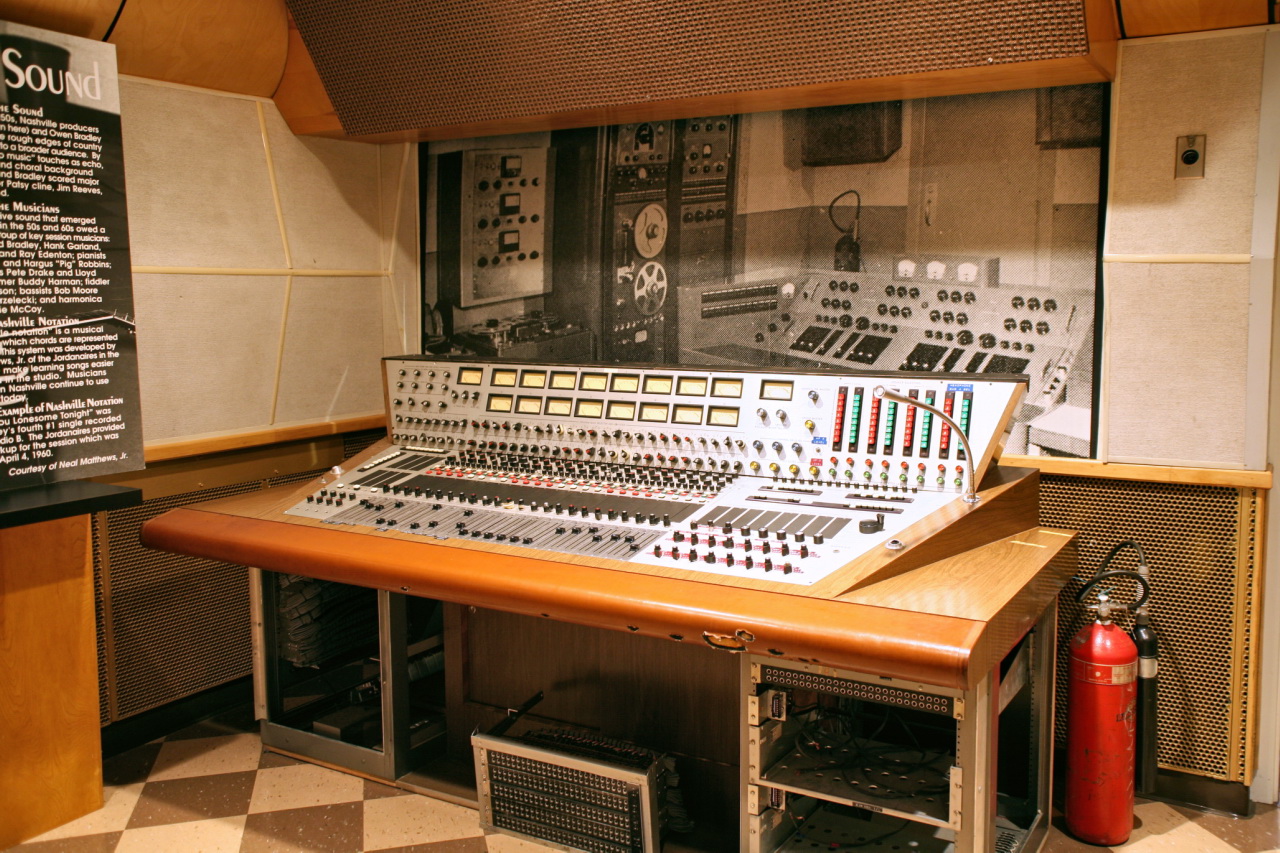
RCA Studio B was originally christened RCA Victor Studio. Its establishment was a strategic move to solidify RCA Records' presence in the burgeoning Nashville music scene, which was rapidly evolving beyond its traditional roots. The studio's location on Music Row, a nexus of music businesses, was no accident; it was designed to be at the epicenter of musical innovation. The studio's initial setup was a testament to the era's burgeoning recording technology, featuring state-of-the-art equipment for its time, including reel-to-reel tape machines and a sophisticated mixing console.
⚙️ How It Works
The magic of RCA Studio B lay in its carefully engineered acoustics and the collaborative spirit fostered within its walls. Unlike the cavernous, echoey studios of the past, Studio B was designed for a tighter, more controlled sound, crucial for the polished 'Nashville Sound.' Producers like Owen Bradley and Bob Herman employed techniques such as using a string section, background vocalists, and smoother vocal deliveries to appeal to a broader pop audience, a stark contrast to the raw, unvarnished sound of earlier country music. This environment was instrumental in developing the signature reverb and echo effects that characterized many of its most famous recordings, creating a warm, enveloping sonic signature.
📊 Key Facts & Numbers
During its two decades of active operation, from 1957 to 1977, RCA Studio B was a veritable hit factory. The sheer volume of iconic tracks laid down here, from Elvis Presley's late-career hits to Dolly Parton's early masterpieces, underscores its unparalleled productivity and influence.
👥 Key People & Organizations
The architects of RCA Studio B's legendary sound were its visionary executives and the talented musicians and engineers who graced its floors. Chet Atkins, a renowned guitarist and RCA Victor's head of A&R, was instrumental in shaping the studio's artistic direction and sound. Steve Sholes, another key RCA executive, also played a pivotal role in its establishment and the signing of many of its star artists. Producers like Owen Bradley, Bob Herman, and Felton Jarvis were the sonic architects, meticulously crafting the 'Nashville Sound.' Legendary artists such as Elvis Presley, Dolly Parton, Waylon Jennings, Porter Wagoner, Patsy Cline, and Jimmy C. Newman are indelibly linked to the studio, their voices echoing through its history. The Country Music Hall of Fame now stewards this historic site, ensuring its preservation and accessibility.
🌍 Cultural Impact & Influence
RCA Studio B's most profound impact was the codification and popularization of the 'Nashville Sound,' a production style that bridged the gap between traditional country music and mainstream pop. This sound, characterized by lush orchestrations, smooth vocals, and a polished production aesthetic, was instrumental in bringing country music to a wider, more diverse audience, breaking down genre barriers and achieving significant crossover success on pop charts. Elvis Presley utilized its unique sonic capabilities for soul and rock recordings. The techniques pioneered here became a blueprint for studio production across genres, shaping the sound of popular music for decades and solidifying Nashville's reputation as a global recording capital. The studio's success demonstrated the power of intentional sonic design in shaping an artist's career and a genre's trajectory.
⚡ Current State & Latest Developments
Since its closure as an active recording studio in 1977, RCA Studio B has been meticulously preserved and maintained by the Country Music Hall of Fame. It now operates primarily as a museum and educational facility, offering scheduled tours that allow visitors to step back in time and experience the hallowed space where musical history was made. While no new recordings are produced here, the studio's original equipment, including its iconic mixing console and microphones, have been largely maintained, offering an authentic glimpse into mid-20th-century recording technology. The preservation efforts ensure that the studio's unique acoustics and historical ambiance remain intact for future generations to appreciate and study. Discussions occasionally arise regarding potential limited reactivation for special archival projects or educational demonstrations.
🤔 Controversies & Debates
The primary controversy surrounding RCA Studio B, if one can call it that, centers on the very 'Nashville Sound' it helped perfect. Critics from the more traditional country music camp often viewed the polished, pop-influenced sound as a dilution of country's authentic roots, a move towards commercialization that sacrificed grit for gloss. This debate over artistic integrity versus commercial viability was a constant undercurrent in country music discussions during the studio's heyday and continues to be a point of contention among genre purists. Furthermore, the sheer dominance of the 'Nashville Sound' produced at Studio B and its sister Studio A led to accusations of homogenization, where the unique regional flavors of country music were sometimes overshadowed by a standardized, albeit highly successful, sonic formula. The debate is less about the studio itself and more about the artistic choices made within it.
🔮 Future Outlook & Predictions
The future of RCA Studio B is firmly rooted in its role as a historical landmark and educational resource. The Country Music Hall of Fame is committed to its ongoing preservation, ensuring that its physical structure and historical integrity are maintained. There is potential for increased integration with digital archives and virtual reality experiences, allowing a global audience to explore the studio remotely. While active recording is unlikely to resume on a commercial scale, the possibility of occasional, highly curated sessions for educational purposes or special archival projects remains. The studio's enduring legacy suggests it will continue to be a pilgrimage site for musicians, historians, and fans, its influence resonating through contemporary music production and studio design.
💡 Practical Applications
RCA Studio B's primary practical application today is as a living museum and a tangible link to a pivotal era in music history. It serves as an invaluable educational tool for students of music production, audio engineering, and musicology, offering a firsthand look at the techniques and environment that shaped the 'Nashville Sound.' For aspiring musicians and songwriters, a tour of Studio B provides inspiration and a deeper understanding of the craft that went into creating some of the most enduring songs in American popular music. It's also a unique venue for special events, offering an unparalleled atmosphere for intimate performances or corporate gatherings, allowing attendees to experience the magic of a space where legends once stood. The studio's preservation also informs modern studio design, with its acoustic principles still studied and admired.
Key Facts
- Category
- culture
- Type
- topic