
Contents
Overview
Railways are more than just tracks and trains; they are the circulatory system of global economies, moving vast quantities of freight and millions of passengers daily. Historically, their development spurred industrial revolutions and reshaped continents, a legacy still felt today. Modern rail encompasses everything from high-speed passenger lines like Japan's Shinkansen and France's TGV, to critical freight networks that underpin supply chains, and emerging technologies like maglev and hyperloop promising future speeds. Understanding rail means grasping its immense economic impact, its environmental advantages over other modes, and the ongoing debates surrounding investment, modernization, and its role in a sustainable future.
🚆 What is Rail?
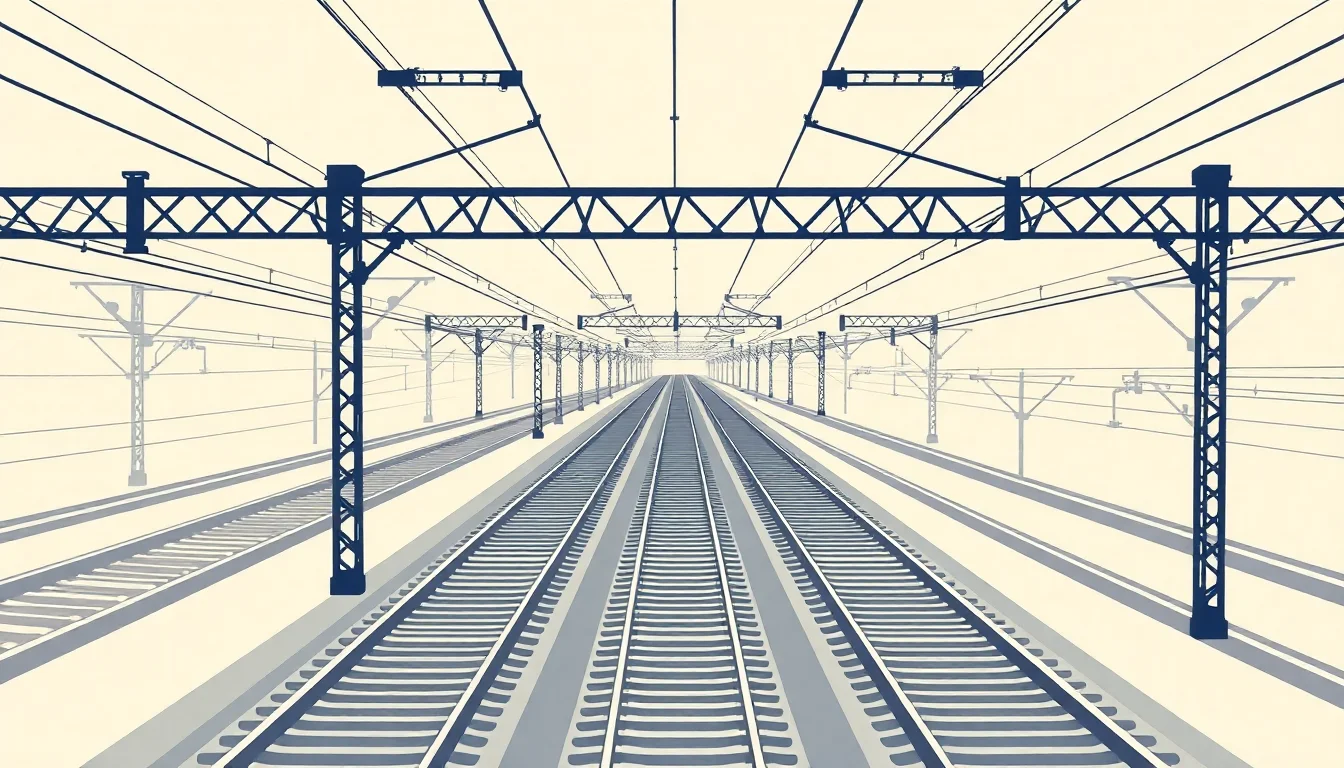
Rail, in its most fundamental form, refers to a system of transport using wheeled vehicles running on a track. This track typically consists of two parallel steel rails, fixed to sleepers (ties) and ballast. It's a deceptively simple concept that underpins much of modern civilization, from the colossal movement of raw materials to the daily commute of millions. The efficiency and capacity of rail have made it indispensable for both freight and passenger movement across continents. Understanding the basic mechanics of gauge and trains is key to appreciating its vast operational scope.
🌍 Global Reach & Impact
The global rail network is an intricate web connecting continents and economies. From the Trans-Siberian Railway stretching over 9,000 kilometers to the extensive networks in North America and Europe, rail transcends borders. It's the silent workhorse moving bulk commodities like coal, grain, and ore, forming the bedrock of international commerce. The sheer volume of goods moved by rail annually, often measured in billions of tons, highlights its critical role in global trade and economic stability. Its reach is so profound that disruptions in rail operations can have cascading effects on economies worldwide.
🛤️ Types of Rail Systems
Rail systems aren't monolithic; they encompass a diverse range of applications. Freight trains are designed for hauling massive quantities of goods, often in specialized wagons. Passenger services range from intercity express trains connecting major hubs to commuter lines serving metropolitan areas. Then there's the specialized world of trams and subways, crucial for urban mobility, and the high-speed marvels of HSR that are redefining long-distance travel. Each type is engineered for specific demands, showcasing the adaptability of rail technology.
📈 Economic Engine
Economically, rail is a powerhouse. It offers unparalleled efficiency for moving large volumes of goods over long distances, significantly reducing per-unit transportation costs compared to road or air freight. This cost-effectiveness is vital for industries reliant on bulk raw materials and finished products. Furthermore, the construction, maintenance, and operation of rail infrastructure create substantial employment opportunities. The economic impact of a robust rail network extends to supporting regional development and facilitating market access for businesses, making it a strategic national asset.
🏙️ Urban Lifelines
For urban dwellers, public transportation networks, particularly rail-based systems, are lifelines. Metro systems and light rail lines move millions of people daily, alleviating traffic congestion and reducing air pollution in densely populated areas. They provide affordable and reliable access to jobs, education, and services, fostering social equity. Cities with well-developed rail transit often boast higher quality of life and more sustainable urban development patterns. The Vibe Score for efficient urban rail is consistently high among residents.
⚡ High-Speed Revolution
The advent of high-speed rail has dramatically reshaped long-distance travel possibilities. Trains capable of exceeding 300 km/h (186 mph) have made rail a competitive alternative to air travel for journeys between cities that are not excessively far apart. Projects like Japan's Shinkansen, France's TGV, and China's CRH have demonstrated the viability and appeal of HSR, offering speed, comfort, and environmental benefits. This technological leap is not just about speed; it's about creating new economic corridors and shrinking perceived distances.
💡 Innovation & Future
The future of rail is being shaped by continuous innovation. Electrification is a major trend, reducing reliance on fossil fuels and lowering emissions. Advancements in signaling and automation promise increased capacity and safety. Research into new materials for tracks and rolling stock, as well as the integration of digitalization for predictive maintenance and passenger experience, are pushing the boundaries. The development of hyperloop concepts, while still nascent, also represents a radical reimagining of high-speed ground transport.
⚖️ Challenges & Controversies
Despite its strengths, rail faces significant challenges and controversies. The immense capital investment required for new lines and upgrades is a major hurdle, often leading to funding disputes. Competition for track access between freight and passenger services can lead to delays and operational conflicts. Environmental concerns, such as habitat fragmentation from new lines and noise pollution, also require careful management. Furthermore, the privatization debate continues in many countries, with proponents citing efficiency gains and critics warning of service cuts and fare hikes.
👍 Why Choose Rail?
Choosing rail for your transportation needs, whether for personal travel or business logistics, offers distinct advantages. Its inherent efficiency means lower costs per ton-mile for freight and often more affordable fares for passengers compared to other modes. Rail is also significantly more eco-friendly than road or air transport, producing fewer greenhouse gas emissions per passenger or ton of cargo. For commuters, it provides a predictable and often less stressful journey than driving in congested areas. The Vibe Score for sustainable travel strongly favors rail.
🤔 Rail vs. Other Transport
When comparing rail to other modes, its strengths become clear. For long-distance freight, rail is almost always the most cost-effective and environmentally sound option, dwarfing trucking in efficiency. For passengers, while air travel is faster for very long distances, rail offers a more comfortable and scenic experience, with the added benefit of city-center to city-center travel, avoiding airport hassles. Trucking remains dominant for last-mile delivery and shorter hauls, while ships are essential for intercontinental bulk cargo but are much slower. Each mode has its niche, but rail occupies a critical middle ground.
🛠️ Getting Involved
Engaging with the world of rail can take many forms. For individuals, this might mean exploring intercity train travel for vacations or utilizing local train lines for daily commutes. For businesses, understanding how to ship by rail can unlock significant cost savings. Enthusiasts can explore heritage railways or join model railroading. Policy advocates can engage in discussions about infrastructure investment and environmental regulations.
➡️ Next Steps
To embark on your rail journey, start by identifying your needs. If you're planning travel, explore the websites of national rail operators in your region for schedules and booking. For freight inquiries, contact logistics providers specializing in rail. To learn more about the history and technology, explore resources on railway engineering and transportation history. The world of rail is vast, and understanding its components is the first step to navigating its complexities.
Key Facts
- Year
- 1804
- Origin
- The first steam-powered locomotive, Richard Trevithick's Penydarren locomotive, ran on rails in Wales.
- Category
- Transportation Infrastructure
- Type
- Topic
Frequently Asked Questions
What is the primary advantage of rail transport for freight?
The primary advantage of rail transport for freight is its unparalleled efficiency and cost-effectiveness for moving large volumes of goods over long distances. Rail can move a ton of goods significantly farther on a gallon of fuel than trucks, making it the backbone of bulk commodity transport and a critical component of global supply chains. This efficiency translates directly into lower shipping costs for businesses.
How does rail compare to air travel for passenger transport?
For passenger transport, rail offers a more relaxed and often more comfortable experience than air travel, especially for medium distances. While air travel is faster for very long hauls, rail avoids the hassle of airport security and travel to and from airports, with stations typically located in city centers. High-speed rail, in particular, is competitive with air travel for journeys up to around 800 km (500 miles).
What are the environmental benefits of rail?
Rail transport is significantly more environmentally friendly than road or air transport. It produces substantially lower greenhouse gas emissions per passenger-mile or ton-mile. Electrified rail systems, in particular, can operate with zero direct emissions. Rail also helps reduce road congestion and the associated air pollution and noise from heavy truck traffic.
What is 'track gauge' and why is it important?
Track gauge refers to the distance between the inner edges of the two rails. It's a critical technical specification that determines which trains can run on which tracks. Different countries and even different rail lines within a country can have different gauges (e.g., standard gauge, broad gauge, narrow gauge). Incompatible gauges require trains to be reloaded or use special bogies, impacting efficiency.
What are the main challenges facing the rail industry today?
Key challenges include the high capital costs for infrastructure development and maintenance, competition for track access between freight and passenger services, and the need to modernize aging infrastructure. Environmental concerns, such as noise and habitat impact, also require careful management. Furthermore, securing consistent public and private funding for upgrades and expansion remains a persistent issue.
What is the difference between light rail and heavy rail?
Heavy rail typically refers to traditional mainline railways and metro systems designed for high capacity, high speed, and long distances, often operating on dedicated rights-of-way. Light rail, on the other hand, includes trams and streetcars that often share space with road traffic, operate at lower speeds, and serve more localized urban areas. Light rail systems are generally less capital-intensive than heavy rail.