
Contents
Overview
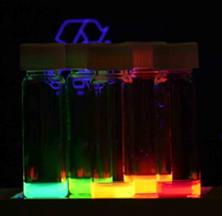
The genesis of QLED technology traces back to the late 20th century with the fundamental discovery of quantum dots. These semiconductor nanocrystals, measuring just a few nanometers, exhibit unique quantum mechanical properties, notably their ability to emit light of specific wavelengths depending on their size. Early research focused on their potential in fields like lasers and biological imaging. The pivotal shift towards display applications began in the early 2000s, with companies like Nanoco Technologies and Nvision Optoelectronics pioneering the commercialization of QD materials. Samsung notably popularized the 'QLED' branding for its television lineup, positioning it as a premium alternative to OLED displays, thereby accelerating consumer awareness and market adoption of quantum dot-enhanced LCDs.
⚙️ How It Works
At its core, QLED technology in current commercial displays functions as an enhancement to traditional LCD panels. Instead of relying solely on a white LED backlight and color filters, QLED TVs incorporate a film or layer embedded with quantum dots between the backlight and the LCD panel. When the blue LEDs in the backlight emit light, the quantum dots absorb some of this blue light and re-emit it as highly pure red and green light. This process, known as photoluminescence, allows for a more precise and efficient generation of the primary colors needed for display. The light then passes through the LCD's color filter and liquid crystal layer to form the final image, resulting in significantly wider color gamuts and higher peak brightness than conventional LCDs.
📊 Key Facts & Numbers
Quantum dot technology has demonstrated remarkable performance metrics. QD-enhanced displays can achieve color gamuts exceeding 90% of the Rec. 2020 standard, a significant leap from the ~70% typically seen in standard LCDs. Peak brightness levels can surpass 1000 nits, with some premium models reaching over 2000 nits, enhancing HDR (High Dynamic Range) performance. The quantum efficiency of QDs can reach up to 99%, meaning nearly all absorbed light is re-emitted, leading to improved energy efficiency. The global market for quantum dots in displays was valued at approximately $1.5 billion in 2023 and is projected to grow to over $5 billion by 2028, according to market research firms like Yole Développement.
👥 Key People & Organizations
Several key figures and organizations have been instrumental in the development and commercialization of QLED technology. Paul Alivisatos at the University of California, Berkeley made significant contributions to understanding and controlling QD properties. Companies like Samsung have been the primary drivers of the 'QLED' brand, investing heavily in marketing and product development. LG Electronics has also explored QD technology, particularly in its QNED displays, while Nanoco Technologies and UWC Technologies (formerly QD Vision) have been key material suppliers and innovators in QD film technology.
🌍 Cultural Impact & Influence
QLED technology has profoundly impacted the consumer electronics landscape, particularly the television market. It has elevated the visual experience for millions, offering brighter, more vibrant colors that make movies, sports, and games more immersive. The 'QLED' moniker itself has become a shorthand for premium display quality, influencing consumer purchasing decisions and driving competition among manufacturers. Beyond televisions, QD technology is finding its way into monitors, smartphones, and even automotive displays, promising enhanced visual fidelity across a wider range of devices. The aesthetic appeal of richer colors and deeper blacks has also influenced visual media production, encouraging creators to utilize wider color spaces.
⚡ Current State & Latest Developments
As of mid-2025, the QLED market is characterized by continuous refinement of photo-emissive QD technology. Manufacturers are focusing on improving color purity, reducing the reliance on rare-earth elements like cadmium (which has been largely phased out in favor of indium or zinc-based QDs), and further enhancing brightness and contrast ratios. The development of QD-on-chip technologies, where QDs are directly integrated into the LED emitters, promises even greater efficiency and color control. Meanwhile, the race for next-generation emissive QD displays, such as QD-LEDs and QD-OLED panels, continues in research labs, with companies like Samsung Display and BOE Technology showcasing prototypes that could offer the ultimate in color and contrast by eliminating the need for a backlight altogether.
🤔 Controversies & Debates
The primary controversy surrounding QLED technology centers on its branding and its distinction from true emissive displays like OLED. Critics argue that 'QLED' is often marketed in a way that suggests it's a direct emissive technology, akin to OLED, when in fact, most QLED TVs are still fundamentally LCD panels with a QD enhancement. This has led to debates about transparency and consumer understanding. Another point of contention has been the use of cadmium in early QD formulations, though this has been largely addressed by the industry's shift to cadmium-free alternatives. The long-term stability and lifespan of quantum dots under constant use, while generally excellent, are also subjects of ongoing research and scrutiny.
🔮 Future Outlook & Predictions
The future of QLED technology points towards a dual trajectory: continued optimization of QD-enhanced LCDs and the eventual emergence of fully emissive QD displays. Expect further improvements in color volume, brightness, and energy efficiency in QD-LCDs, potentially blurring the lines with OLED in terms of contrast. The real game-changer, however, will be the commercialization of electro-emissive QD-LED displays. These promise perfect blacks, infinite contrast, and even greater color purity than current QD-enhanced LCDs, potentially surpassing OLED in key performance areas. Industry analysts predict that true QD-LED TVs could begin appearing in niche markets within the next 3-5 years, with broader consumer availability following thereafter, potentially disrupting the dominance of OLED and revolutionizing the display industry.
💡 Practical Applications
QLED technology's practical applications extend far beyond the living room television. In the realm of computer monitors, QLED panels offer professionals in graphic design, video editing, and photography the color accuracy and detail necessary for critical work. For mobile devices, QD films are being integrated into smartphone displays to achieve richer colors and higher brightness, improving outdoor visibility and visual appeal. Automotive manufacturers are exploring QLED for dashboards and infotainment systems, leveraging its durability and vibrant color reproduction. Furthermore, QD technology is being utilized in specialized lighting applications, medical imaging, and even in the development of more efficient solar cells, showcasing its versatility.
Key Facts
- Category
- technology
- Type
- technology