
Contents
Overview
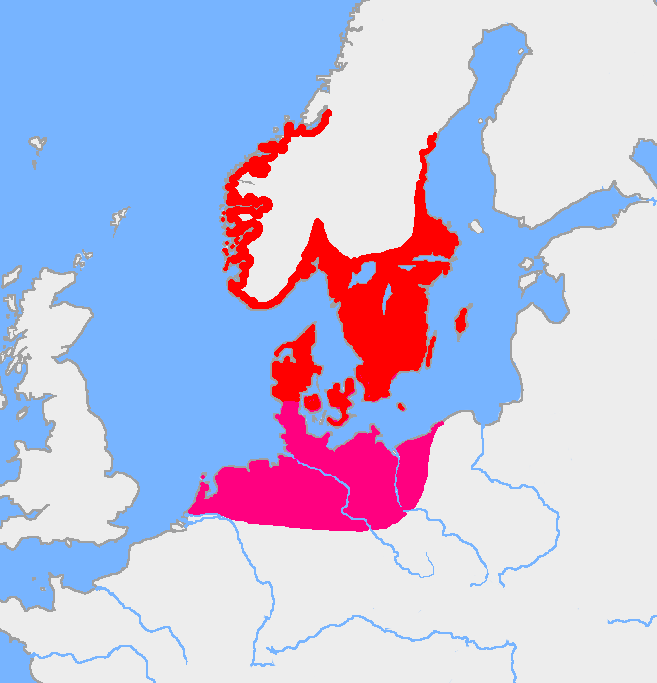
The story of Proto-Germanic begins not with a bang, but with a whisper – a gradual divergence from Proto-Indo-European (PIE). The divergence from PIE reportedly occurred somewhere in the first millennium BCE, likely in Northern Europe. This linguistic ancestor is not attested in any surviving written records; instead, its existence is a scholarly construct, built brick by linguistic brick through the comparative method. Scholars like Jacob Grimm began to systematically identify sound correspondences between Germanic languages and other Indo-European branches, leading to the formulation of Grimm's Law and Verner's Law. These laws describe a series of consonant shifts that distinguish Germanic from other Indo-European languages, a defining characteristic of Proto-Germanic. The earliest potential, albeit debated, written evidence comes from the Negau helmet inscription (c. 2nd century BCE), followed by more substantial, though still fragmentary, runic inscriptions such as the Vimose inscriptions from Denmark (c. 2nd century CE), offering glimpses into the vocabulary and phonology of what is believed to be an early stage of Proto-Germanic or its immediate predecessor.
⚙️ How It Works
Proto-Germanic functions as the reconstructed linguistic blueprint from which all subsequent Germanic languages evolved. Its phonological system is characterized by a fixed stress accent on the first syllable of the root word, a significant departure from the mobile stress of PIE. This fixed stress is a key driver for many of the sound changes observed, including the reduction of unstressed vowels. Grammatically, it retained a complex inflectional system inherited from PIE, with robust case distinctions for nouns, adjectives, and pronouns, and a sophisticated verb conjugation system. A crucial innovation is the development of the weak verb conjugation, characterized by a dental suffix (-d- or -t-), which forms the basis of past tenses in many modern Germanic languages. The lexicon of Proto-Germanic is reconstructed through shared vocabulary across its daughter languages, revealing terms for kinship, agriculture, warfare, and religious concepts, often with cognates traceable back to PIE roots but with distinct Germanic phonetic developments.
📊 Key Facts & Numbers
The reconstructed Proto-Germanic language is estimated to have been spoken by a relatively small population, perhaps numbering in the tens of thousands, across Scandinavia and Northern Germany. Linguists estimate its divergence from PIE occurred around 1000 BCE, with the language itself flourishing as a distinct entity from roughly 500 BCE to 200 CE, before breaking up into various dialects that would evolve into the North, West, and East Germanic branches. While no definitive Proto-Germanic dictionary exists, the estimated number of reconstructed lexical items runs into the thousands, with core vocabulary demonstrating a shared heritage. For instance, the word for 'king' is reconstructed as **kuningaz, evidenced by cognates like Old English 'cyning', Old Norse 'konungr', and Finnish 'kuningas' (a loanword). The sound changes described by Grimm's Law are systematic, affecting approximately 50% of the consonant inventory of PIE, demonstrating a profound phonetic transformation.
👥 Key People & Organizations
The reconstruction of Proto-Germanic is the product of centuries of scholarly endeavor by numerous linguists. Key figures include Jacob Grimm (1785–1863), whose work on Germanic philology and sound laws laid foundational groundwork. Later, scholars like Karl Brugmann (1849–1919) and Hermann Osthoff refined the comparative method, contributing to the broader neogrammarian movement that emphasized the regularity of sound change. Later scholars have meticulously analyzed runic inscriptions and early loanwords. Organizations like the Linguistic Society of America and the Societas Linguistica Europaea foster the ongoing research and debate surrounding historical linguistics, including the reconstruction of proto-languages.
🌍 Cultural Impact & Influence
The cultural impact of Proto-Germanic is immeasurable, as it is the direct linguistic ancestor of languages spoken by over 500 million people worldwide. The development of its distinct phonological and grammatical features paved the way for the unique characteristics of languages like English, German, Dutch, and the Scandinavian languages. The migration and expansion of Germanic tribes across Europe, beginning in the late Roman period, spread these languages far and wide, influencing local dialects and leading to the formation of new linguistic communities. The vocabulary and grammatical structures inherited from Proto-Germanic continue to shape modern communication, literature, and cultural identity for vast populations, embedding a shared linguistic heritage that, while ancient, remains vibrantly alive.
⚡ Current State & Latest Developments
Proto-Germanic, as a reconstructed language, doesn't have a 'current state' in the way living languages do. However, research into its phonology, morphology, and lexicon is a continuously evolving field within historical linguistics. Current developments focus on refining reconstructions through new analyses of early loanwords, re-evaluating the dating and interpretation of runic inscriptions, and employing computational methods to model linguistic change. Debates continue regarding the precise timeline of its development and the exact nature of its relationship with other Indo-European branches. The ongoing digitization of linguistic corpora and the accessibility of scholarly databases, such as those maintained by the Max Planck Institute for Evolutionary Anthropology, facilitate more robust comparative studies and contribute to a more nuanced understanding of Proto-Germanic.
🤔 Controversies & Debates
The primary controversy surrounding Proto-Germanic is its very nature as a reconstructed entity. While the comparative method is widely accepted, the specifics of the reconstruction are subject to ongoing scholarly debate. For instance, the exact phonetic realization of certain reconstructed sounds, the precise dating of key sound shifts like Grimm's Law, and the interpretation of the earliest runic inscriptions remain points of contention. Some scholars question the homogeneity of Proto-Germanic, suggesting it may have been a dialect continuum rather than a single unified language. Furthermore, the precise relationship and timeline of its divergence from Proto-Indo-European and its sister branches are continually refined, with new evidence sometimes challenging established theories. The debate over the earliest attestation, particularly the Negau helmet inscription, highlights the challenges of inferring linguistic history from scant archaeological evidence.
🔮 Future Outlook & Predictions
The future of Proto-Germanic studies lies in the integration of advanced computational linguistics and the continued discovery or reinterpretation of ancient evidence. Researchers are exploring agent-based modeling to simulate sound change and language divergence, potentially offering new insights into the mechanisms of linguistic evolution that shaped Proto-Germanic. The ongoing archaeological work in Northern Europe may yet unearth more definitive written records, or provide clearer context for existing ones, that could solidify or alter current reconstructions. Furthermore, advancements in genetics and archaeological dating techniques may offer new avenues for correlating linguistic developments with population movements and cultural shifts. The ultimate goal remains a more precise and comprehensive understanding of the linguistic ancestor that gave rise to so many of the world's most widely spoken languages.
💡 Practical Applications
Proto-Germanic itself has no direct practical applications
Key Facts
- Category
- language
- Type
- topic