
Contents
Overview
The genesis of procedural generation can be traced back to the early days of computer graphics and algorithmic art. Pioneers like Edwin Catmull explored algorithmic texture generation in the late 1970s, notably with his work on fractal landscapes. Early video games, constrained by limited storage, also embraced PCG; the game Elite (1984) used procedural generation to create its vast galaxy. The demoscene community, a subculture focused on creating computer art demonstrations, also significantly contributed to the exploration and popularization of PCG techniques throughout the 1980s and 1990s.
⚙️ How It Works
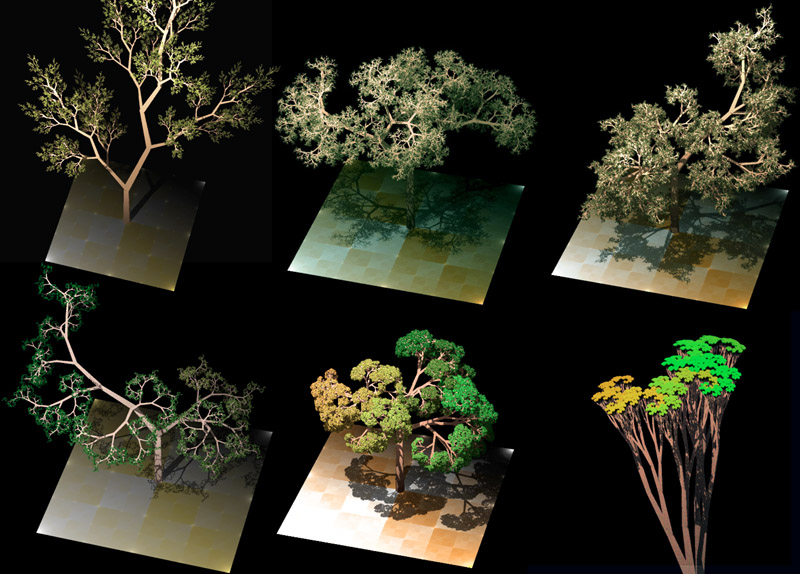
At its heart, procedural generation relies on algorithms to define rules and parameters that dictate content creation. This can range from simple noise functions like Perlin noise and Simplex noise for generating terrains and textures, to complex grammars and L-systems for creating plants and cities. Random seeds are often employed to ensure that a specific generation can be reproduced, allowing for consistent yet varied outputs. For instance, a game world might be generated by combining fractal noise for elevation, cellular automata for cave systems, and predefined biome rules based on temperature and rainfall parameters. The process is iterative: an algorithm defines a structure, randomness introduces variation, and post-processing steps refine the output to meet aesthetic or functional requirements, as seen in the terrain generation of Terraria.
📊 Key Facts & Numbers
Several key figures and organizations have shaped the field of procedural generation. Ken Perlin, whose noise functions are ubiquitous, is a foundational figure. Alan Kay's early work on object-oriented programming and graphical user interfaces laid groundwork for the systems that would implement PCG. Game studios like Hello Games (No Man's Sky) and Mojang Studios (Minecraft) are prominent practitioners, showcasing PCG's potential in commercial games. Research institutions such as MIT Media Lab and academic conferences like SIGGRAPH have been crucial for advancing theoretical understanding and practical applications. The Procedural Content Generation Wiki serves as a vital community hub for sharing knowledge and techniques.
👥 Key People & Organizations
Machine learning and AI are being integrated with traditional PCG techniques, allowing for more intelligent and context-aware content creation, such as AI-driven level design or character animation. Tools like Houdini FX have become industry standards for complex procedural asset creation in VFX and game development. Furthermore, open-source libraries and engines are making PCG more accessible to independent developers and researchers, democratizing its use beyond large studios.
🌍 Cultural Impact & Influence
The debate surrounding procedural generation often pits its efficiency against artistic control. Critics argue that PCG can lead to generic or soulless content, lacking the deliberate intent and unique touch of human artists. The question of authorship also arises: when an algorithm generates content, who is the true creator? There are also concerns about the potential for PCG to homogenize game design if not implemented thoughtfully, leading to similar-feeling worlds across different titles. Conversely, proponents emphasize that PCG is a tool, and its artistic merit depends entirely on the skill and vision of the developers wielding it, arguing it frees artists to focus on higher-level design and polish rather than repetitive asset creation.
⚡ Current State & Latest Developments
PCG is likely to expand into new domains, such as personalized educational content and dynamic scientific simulations. The challenge will be to maintain human oversight and artistic direction within increasingly autonomous generative systems.
🤔 Controversies & Debates
Procedural generation finds practical applications across numerous industries. In video games, it's used for generating levels, terrains, items, and quests, as seen in titles like Diablo and roguelikes. In computer graphics and VFX, it's employed for creating realistic landscapes, complex simulations (like smoke or fire), and character animations. Architecture and urban planning can use PCG to design city layouts or generate building variations. Scientific research benefits from PCG for creating complex datasets for simulations, such as weather patterns or molecular structures. Even in music, algorithms can generate melodies, harmonies, and entire compositions, offering new avenues for artistic expression and production.
🔮 Future Outlook & Predictions
Procedural generation is deeply intertwined with concepts like algorithmic art, artificial intelligence, and computational creativity. Its roots in fractal geometry and noise functions connect it to mathematics and physics. The use of randomness links it to probability theory and stochastic processes. Understanding PCG also requires knowledge of computer graphics principles and game design methodologies. For deeper exploration, resources like The Book of Shaders offer practical insights into shader programming, often used for procedural texturing, while academic papers from SIGGRAPH provide cutting-edge research.
Key Facts
- Category
- technology
- Type
- concept