
Contents
Overview
The genesis of private equity can be traced back to the mid-20th century, with early pioneers like J.H. Whitney and Company and Kohlberg Kravis Roberts & Co. (KKR) laying the groundwork for the modern LBO model. These firms recognized the potential in acquiring undervalued or underperforming businesses, often with significant debt, and actively managing them to unlock value. The 1980s saw a boom in LBOs, fueled by readily available financing and a deregulatory environment, transforming the corporate landscape. Key figures like Henry Kravis and George Roberts at KKR became synonymous with hostile takeovers and massive corporate restructurings. The industry continued to evolve, with firms like The Carlyle Group and Apollo Global Management emerging as major players, expanding their strategies beyond traditional LBOs to include distressed debt and real estate.
⚙️ How It Works
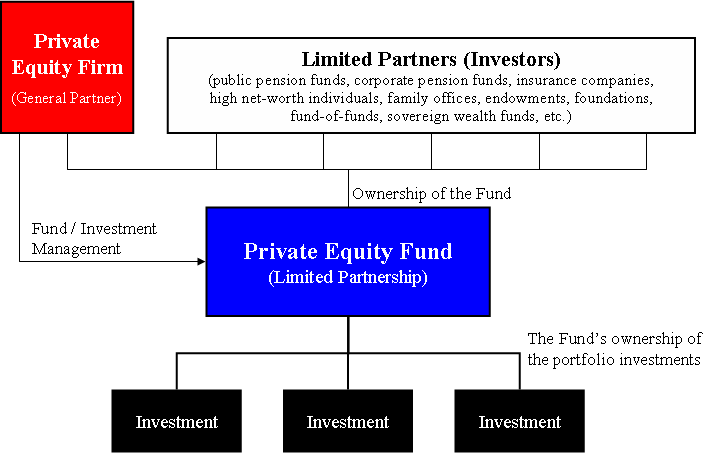
At its core, a private equity firm operates by raising capital from limited partners (LPs), such as pension funds, endowments, and sovereign wealth funds, into a specific investment fund. This fund has a defined lifespan. The PE firm, acting as the general partner (GP), then deploys this capital to acquire controlling stakes in companies. The acquisition is often financed with a significant amount of debt, known as a leveraged buyout (LBO), which magnifies potential returns but also increases risk. Once acquired, the PE firm actively works to improve the company's performance through operational enhancements, strategic repositioning, cost-cutting measures, or management changes. The ultimate goal is to exit the investment within the fund's lifecycle, typically through a sale to another company, a sale to another PE firm, or an initial public offering (IPO), realizing a profit for its LPs and itself.
📊 Key Facts & Numbers
The global private equity market is colossal. The average size of a PE fund has ballooned, with mega-funds exceeding $10 billion becoming commonplace. The carried interest, the GP's share of the profits, can generate billions for the largest firms. For example, Blackstone reported significant revenues in 2022, largely driven by its investment management fees and carried interest. The median net IRR (Internal Rate of Return) for PE funds vintage 2019 was reportedly 10.3% as of Q4 2023, though top-quartile funds often achieve significantly higher returns.
👥 Key People & Organizations
The landscape of private equity is dominated by a few behemoths, including Blackstone, KKR, Apollo Global Management, and The Carlyle Group. These firms, often headquartered in financial hubs like New York City and London, manage hundreds of billions, even trillions, in assets. Beyond these giants, a vast ecosystem of mid-market and specialized firms, such as Thoma Bravo (focused on software) and Warburg Pincus (known for growth equity), cater to specific sectors and deal sizes. Key figures like Stephen Schwarzman (Blackstone CEO), Henry Kravis (KKR co-founder), and Leon Black (Apollo co-founder) are titans of the industry, wielding immense influence. Institutional investors like CalPERS (California Public Employees' Retirement System) and CPPIB are major LPs, entrusting billions to PE managers.
🌍 Cultural Impact & Influence
Private equity's influence extends far beyond financial statements. It has reshaped corporate governance, often prioritizing shareholder value and operational efficiency, sometimes at the expense of employee welfare or long-term R&D. The aggressive use of leverage in LBOs has been both lauded for revitalizing struggling companies and criticized for saddling them with unsustainable debt. KKR, Bain Capital, and Vornado Realty Trust were involved in the LBO of Toys 'R' Us. PE firms have also become significant players in sectors like healthcare, technology, and infrastructure, driving consolidation and innovation, but also raising concerns about market power and access to essential services. The cultural perception of PE ranges from that of shrewd investors creating value to predatory financiers extracting wealth.
⚡ Current State & Latest Developments
The private equity industry continues its relentless growth, with fundraising remaining robust despite economic headwinds. There's a notable trend towards sector specialization, with firms increasingly focusing on areas like technology, healthcare, and renewable energy. The use of 'continuation funds'—where a PE firm sells a mature portfolio company to a new fund managed by the same firm—is also gaining traction, allowing LPs to realize gains while GPs retain management fees. Furthermore, environmental, social, and governance (ESG) factors are becoming increasingly integrated into PE investment strategies, driven by LP demand and regulatory pressure, although the depth of commitment varies significantly across firms. The rise of private credit as an alternative financing source also presents both opportunities and challenges for traditional PE deal structures.
🤔 Controversies & Debates
The controversies surrounding private equity are as persistent as its profits. Critics often point to job cuts and asset stripping as common outcomes of LBOs, arguing that PE firms prioritize short-term financial gains over long-term company health and employee well-being. The high fees charged by GPs, including management fees and carried interest, are frequently scrutinized, especially when fund performance is mediocre. The tax treatment of carried interest, often taxed at lower capital gains rates rather than ordinary income rates, is a perennial political debate in the United States and elsewhere. Furthermore, the opaque nature of PE deals and the significant leverage employed raise concerns about systemic financial risk, particularly during economic downturns. The impact on public services, such as the privatization of healthcare and education, also draws sharp criticism regarding accountability and quality.
🔮 Future Outlook & Predictions
The future of private equity appears poised for continued evolution, driven by several key trends. Expect further specialization into niche sectors and strategies, including impact investing and ESG-focused funds, which are increasingly demanded by LPs. The integration of artificial intelligence and data analytics will likely become more sophisticated, enhancing deal sourcing, due diligence, and portfolio company management. Regulatory scrutiny is expected to intensify globally, potentially impacting fee structures, transparency, and the use of leverage. The competition for deals will remain fierce, pushing firms to explore new geographies and asset classes, such as digital infrastructure and climate technology. The ongoing growth of private credit may also reshape how PE deals are financed, potentially offering more flexible and bespoke debt solutions.
💡 Practical Applications
Private equity firms are instrumental in various practical applications across the economy. They provide crucial growth capital for promising startups and mid-sized companies through venture capital and growth equity funds, enabling innovation and expansion that might otherwise be impossible. LBOs are used to restructure and revitalize mature or underperforming businesses, improving their efficiency and competitiveness. PE firms also engage in real estate investments, infrastructure development (e.g., toll roads, airports), and distressed debt investing, stabilizing troubled companies or assets. Their expertise in operational improvement and financial engineering is applied to sectors ranging from technology and healthcare to consumer goods and energy, impacting everything from the apps on our phones to the roads we drive o
Key Facts
- Category
- platforms
- Type
- topic