
Contents
- 💡 What is Political Liberalism?
- 📜 Core Tenets & Principles
- 🌍 Historical Roots & Evolution
- ⚖️ Liberalism in Practice: Governance Models
- 💰 Economic Dimensions: Markets & Property
- 🗣️ Freedoms & Rights: The Pillars of Liberal Society
- 🤔 Debates & Criticisms Within Liberalism
- 🚀 The Future of Liberalism: Challenges & Adaptations
- Frequently Asked Questions
- Related Topics
Overview
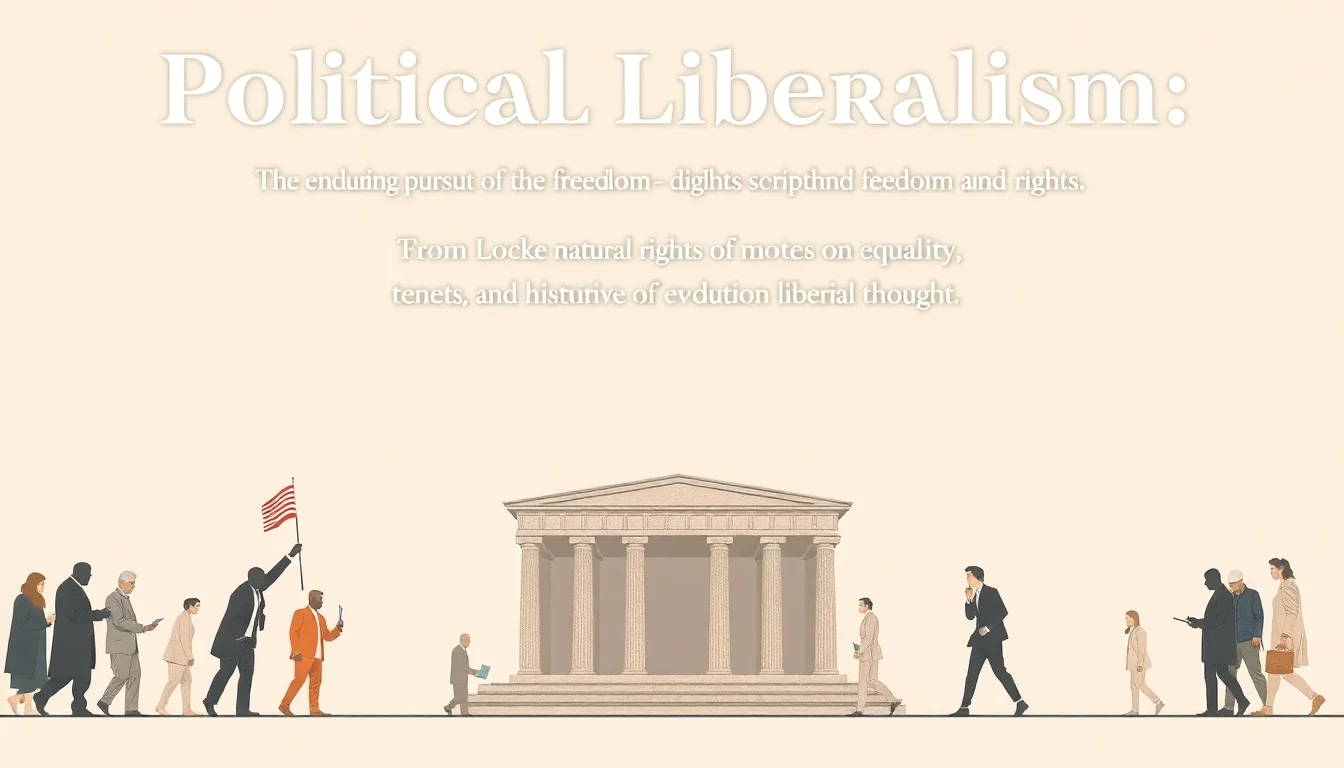
Political liberalism, a dominant ideology shaping Western democracies, champions individual liberty, limited government, and the rule of law. Its roots trace back to Enlightenment thinkers like John Locke, who posited natural rights to life, liberty, and property, and Adam Smith, who advocated for free markets. Over centuries, liberalism has evolved, grappling with issues of social justice, economic inequality, and the scope of state intervention. Key tenets include constitutionalism, separation of powers, and protection of civil liberties, though contemporary debates often center on the tension between negative liberties (freedom from interference) and positive liberties (freedom to achieve one's potential).
💡 What is Political Liberalism?
Political liberalism is a sprawling, dynamic ideology centered on the individual's inherent rights and freedoms. It's not a monolithic dogma but a constellation of ideas that, at their best, champion limited government and the consent of the governed. Think of it as the operating system for modern liberal democracies, constantly being updated by new challenges and interpretations. Its primary aim is to create a society where individuals can flourish, free from arbitrary power and able to pursue their own conception of the good life.
📜 Core Tenets & Principles
At its heart, liberalism champions individual rights—life, liberty, and property, as articulated by thinkers like John Locke. It insists on political equality, meaning all citizens should be treated equally under the law, and that governments derive their legitimacy from the consent of the people they govern. This translates into a commitment to rule of law, ensuring that power is exercised according to established, predictable legal frameworks, not the whims of rulers.
🌍 Historical Roots & Evolution
The intellectual lineage of liberalism stretches back to the Enlightenment thinkers of the 17th and 18th centuries, figures like John Locke, Adam Smith, and Immanuel Kant. These early liberals laid the groundwork by challenging divine right monarchies and advocating for reason, individual autonomy, and natural rights. The French Revolution (1789) and the American Revolution (1776) were pivotal moments, attempting to institutionalize liberal ideals into state structures, though their implementation was often fraught with contradiction, particularly regarding slavery and suffrage.
⚖️ Liberalism in Practice: Governance Models
Liberalism manifests in various governance models, most prominently liberal democracy. This system typically features representative government, separation of powers among branches of government, and constitutionalism to safeguard individual liberties. While most liberals agree on the necessity of democratic institutions, debates persist regarding the optimal balance between majority rule and minority protections, and the scope of state intervention in ensuring social justice.
💰 Economic Dimensions: Markets & Property
Economically, liberalism is strongly associated with private property rights and market economies. Classical liberalism, championed by figures like Adam Smith, advocated for minimal state intervention (laissez-faire). Social liberalism, emerging in the late 19th and early 20th centuries, acknowledges the potential for markets to create inequality and thus supports a more active role for the state in providing social safety nets, regulating industries, and ensuring economic opportunity for all.
🗣️ Freedoms & Rights: The Pillars of Liberal Society
The bedrock of liberalism lies in its robust defense of civil liberties. This includes freedom of speech, freedom of the press, freedom of assembly, and freedom of religion. These freedoms are not merely granted but are considered inherent rights that governments must protect. The ability to express dissenting opinions, to access information freely, and to associate with others without undue interference are seen as essential for individual autonomy and a healthy civil society.
🤔 Debates & Criticisms Within Liberalism
Despite its widespread influence, liberalism is not without its internal tensions and external critiques. Debates rage over the extent of economic inequality generated by market capitalism, the potential for identity politics to fragment social cohesion, and the challenges posed by authoritarianism and nationalism to liberal norms. Critics from the left argue that liberalism has not gone far enough in addressing systemic injustices, while critics from the right contend that its emphasis on individual rights can erode traditional values and social order.
🚀 The Future of Liberalism: Challenges & Adaptations
The future of political liberalism is a subject of intense speculation. It faces significant headwinds from resurgent populism, authoritarian regimes, and global challenges like climate change and technological disruption. Adapting to these pressures requires liberals to re-examine their core principles, perhaps by finding new ways to foster solidarity in diverse societies, to ensure that economic gains are broadly shared, and to defend democratic institutions against both foreign interference and domestic erosion. The enduring pursuit of freedom and rights is far from over.
Key Facts
- Year
- Circa 17th Century
- Origin
- Western Europe
- Category
- Political Philosophy
- Type
- Ideology
Frequently Asked Questions
What's the difference between classical liberalism and social liberalism?
Classical liberalism, prominent in the 18th and 19th centuries, emphasizes minimal government intervention, free markets, and individual liberty, often summarized by laissez-faire economics. Social liberalism, emerging later, acknowledges that unchecked markets can lead to significant inequality and thus supports a more active state role in providing social welfare, regulating the economy, and ensuring greater equality of opportunity. Thinkers like Adam Smith represent classical liberalism, while John Maynard Keynes and John Rawls are associated with social liberalism.
Is liberalism the same as libertarianism?
While both ideologies champion individual liberty and limited government, they differ significantly in scope and emphasis. Libertarianism prioritizes individual liberty above all else, advocating for minimal state intervention in both economic and personal matters, often to an extreme degree. Liberalism, particularly social liberalism, is more willing to accept state intervention to ensure social justice, equality of opportunity, and a basic standard of living for all citizens, recognizing that absolute individual freedom can sometimes conflict with collective well-being.
What are the main criticisms leveled against liberalism?
Critics from the left argue that liberalism's focus on individual rights and market economies has perpetuated economic inequality and failed to address systemic injustices like racism and colonialism. Critics from the right often contend that liberalism's emphasis on individual autonomy and secularism undermines traditional values, social cohesion, and religious authority. Some also point to the perceived 'tyranny of the majority' or the potential for liberal societies to become overly individualistic and atomized.
How does liberalism relate to democracy?
Liberalism and democracy are deeply intertwined, with liberal democracy being the most common political system associated with liberal ideals. Liberalism provides the philosophical underpinnings for democratic governance by emphasizing the consent of the governed, political equality, and the protection of individual rights, which are crucial for a functioning democracy. However, not all democracies are liberal, as some may lack robust protections for minority rights or civil liberties.
What role does secularism play in liberalism?
Secularism is a key tenet for most liberals, advocating for the separation of church and state. This principle ensures freedom of religion by preventing any single religious group from dominating public life or imposing its doctrines on others. It allows individuals to practice their faith freely, or not at all, without state coercion, and ensures that public policy is based on reason and evidence rather than religious dogma.
Can liberalism accommodate different cultures and values?
This is a point of ongoing debate within liberalism. While liberalism champions individual rights and freedoms, its universalist claims can sometimes clash with communitarian or multiculturalism perspectives that emphasize group identity and tradition. Contemporary liberalism grapples with how to balance the protection of universal rights with respect for diverse cultural practices, leading to discussions about cultural relativism and the limits of tolerance.