
Contents
Overview
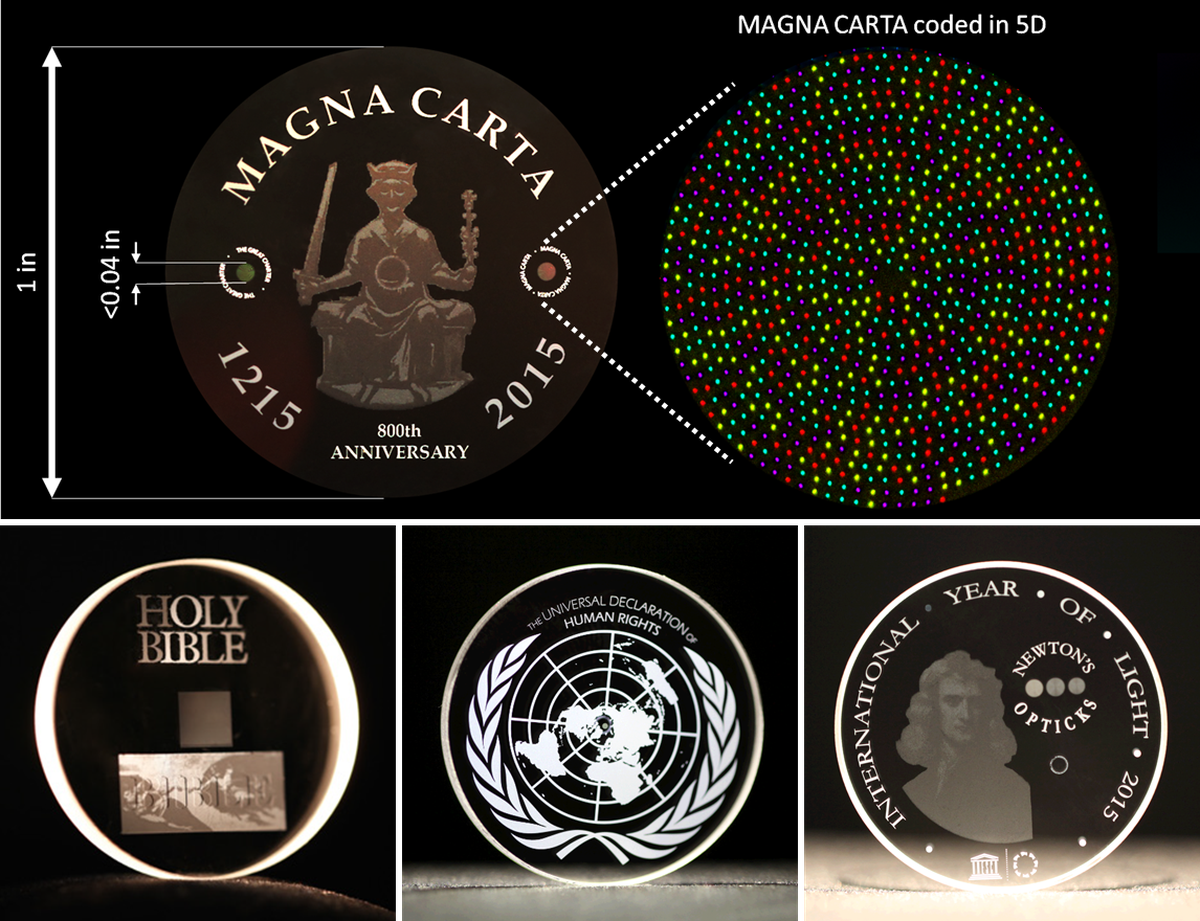
Optical data storage refers to the process of recording and retrieving digital information using light, typically lasers, to read and write data onto a physical medium. This technology has evolved dramatically, from early punched cards and magnetic tapes to the ubiquitous CDs, DVDs, and Blu-ray discs that dominated consumer media for decades. More advanced forms, like holographic storage and the experimental 5D optical data storage, promise unprecedented capacities and longevity, potentially storing hundreds of terabytes for millennia. While solid-state drives (SSDs) and cloud storage have largely supplanted optical media for primary data access, optical storage remains crucial for archival purposes, offering a stable, long-term solution resistant to electromagnetic interference and degradation. Its history is a testament to human ingenuity in finding durable and accessible ways to preserve knowledge.
🎵 Origins & History
The genesis of optical data storage can be traced back to the late 19th century with innovations like the phonograph cylinder and the Kinetoscope, which used light-sensitive materials to record sound and images, respectively. The phonograph cylinder used light-sensitive materials to record sound, and the Kinetoscope used light-sensitive materials to record images. However, the true digital era of optical storage began in the 1960s with the development of early laser-based recording systems. The journey from fragile, low-capacity formats to robust, high-density media reflects continuous innovation in laser technology, material science, and error correction coding.
⚙️ How It Works
Optical data storage relies on the interaction of light with a recording medium. For read-only formats like CDs and DVDs, data is pre-embossed as microscopic pits and lands on a reflective surface, which alter the way light reflects back to a laser sensor. Recordable formats (CD-R, DVD-R) use a dye layer that is permanently altered by a higher-powered laser, changing its reflectivity. Rewritable formats (CD-RW, DVD-RW) employ phase-change alloys that can be switched between crystalline (reflective) and amorphous (less reflective) states by controlled laser heating. The '5D' optical data storage, a more recent experimental technology, reportedly utilizes femtosecond lasers to create nanostructures within a glass substrate, encoding data not just on the surface but throughout the volume of the material. This multi-dimensional approach, involving position, orientation, and size of these nanostructures, allows for immense data density and extreme longevity, as demonstrated by University of Southampton researchers.
📊 Key Facts & Numbers
The storage capacity of optical media has seen exponential growth. Early LaserDiscs reportedly held around 30-60 minutes of video per side, roughly 0.5 GB. The CD, introduced in 1982, reportedly stored around 700 MB. By 1997, DVDs reportedly pushed this to 4.7 GB for single-layer discs, and later 8.5 GB for dual-layer. Blu-ray Discs reportedly increased this to 25 GB (single-layer) and 50 GB (dual-layer), with higher-capacity variants like BDXL reportedly reaching 128 GB. The experimental 5D optical data storage technology, also known as 'Superman memory crystal', has demonstrated the potential to store up to 360 terabytes (TB) on a 12 cm disc, with an estimated lifespan of billions of years. For context, 360 TB is equivalent to approximately 51 million CDs.
👥 Key People & Organizations
Pioneers in optical storage include companies like Philips and Sony, who co-developed the CD format, and Toshiba, a key player in the development of the DVD. Panasonic and LG were instrumental in advancing Blu-ray technology. In the realm of advanced archival storage, Hitachi and Microsoft have been researching glass-based optical storage techniques, with Microsoft's initiative notably branded as Project Silica. Researchers at the University of Southampton, led by figures like Professor Peter Kazansky, have been at the forefront of experimental technologies like 5D optical data storage, demonstrating its potential in 2013. The Optical Storage Technology Association (OSTA) has also played a role in standardizing optical media formats.
🌍 Cultural Impact & Influence
Optical data storage has profoundly shaped how we consume and preserve information and entertainment. The CD revolutionized the music industry, enabling digital distribution and high-fidelity audio playback, leading to the decline of vinyl records and cassette tapes. DVDs transformed home video, offering superior quality and interactive features over VHS tapes, and became the standard for movie distribution for over a decade. Blu-ray discs further enhanced the cinematic experience with high-definition video. Beyond media, optical discs served as a primary medium for software distribution, data backup, and archival storage for millions of users and businesses worldwide. The iconic circular discs became a symbol of the digital revolution, ubiquitous in homes and offices for decades.
⚡ Current State & Latest Developments
While optical media has been largely sidelined for everyday computing and entertainment by Solid-State Drives (SSDs), USB flash drives, and cloud storage services, it continues to evolve for specialized applications. The primary focus now is on archival storage, where extreme longevity and resistance to environmental factors are paramount. Microsoft's Project Silica is reportedly developing durable glass-based storage solutions for long-term data preservation, aiming for a lifespan of thousands of years. Companies are also exploring higher-density optical formats and more efficient read/write technologies to compete with emerging archival solutions. The development of holographic storage, which stores data in three dimensions within a medium, also continues, promising even greater capacities than current 5D approaches.
🤔 Controversies & Debates
A significant debate surrounds the long-term viability and cost-effectiveness of optical storage compared to other archival methods. While proponents highlight the inherent stability of media like glass, critics point to the high cost of specialized laser hardware required for writing and reading, especially for experimental formats. The speed of data access is another point of contention; even the fastest optical drives are considerably slower than SSDs, making them unsuitable for active data. Furthermore, the environmental impact of manufacturing and disposing of optical discs, particularly older formats with potentially hazardous materials, has drawn criticism. The question of whether the immense longevity of technologies like 5D storage justifies the current development and implementation costs remains a key point of discussion.
🔮 Future Outlook & Predictions
The future of optical data storage likely lies in its niche as an ultra-long-term archival solution, particularly for large organizations and governments needing to preserve vast datasets for centuries or millennia. Technologies like Project Silica and 5D optical data storage are poised to offer unparalleled durability, potentially outlasting magnetic media and even some forms of solid-state storage. Innovations in laser technology and material science could also lead to faster read/write speeds and higher densities, making optical media more competitive for certain applications. However, widespread consumer adoption of these advanced formats is unlikely in the near term, given the dominance of cloud and solid-state storage for daily use. The challenge will be to bridge the gap between experimental potential and practical, cost-effective deployment.
💡 Practical Applications
Optical data storage finds its most critical applications in long-term archiving and data preservation. Libraries, archives, and scientific institutions are exploring technologies like Project Silica to store historical records, scientific data, and cultural heritage for thousands of years, safeguarding them from digital obsolescence and physical degradation. In the entertainment industry, while physical media has declined, specialized archival needs for master recordings and film masters may still utilize optical formats. For consumers, Blu-ray discs remain a viable option for high-definition movie collections and personal backups, offering a tangible, offline storage solution. The ability to store data independently of power and network connectivity makes optical media a robust choice for disaster recovery and secure data vaulting.
Key Facts
- Category
- technology
- Type
- topic