
Contents
Overview
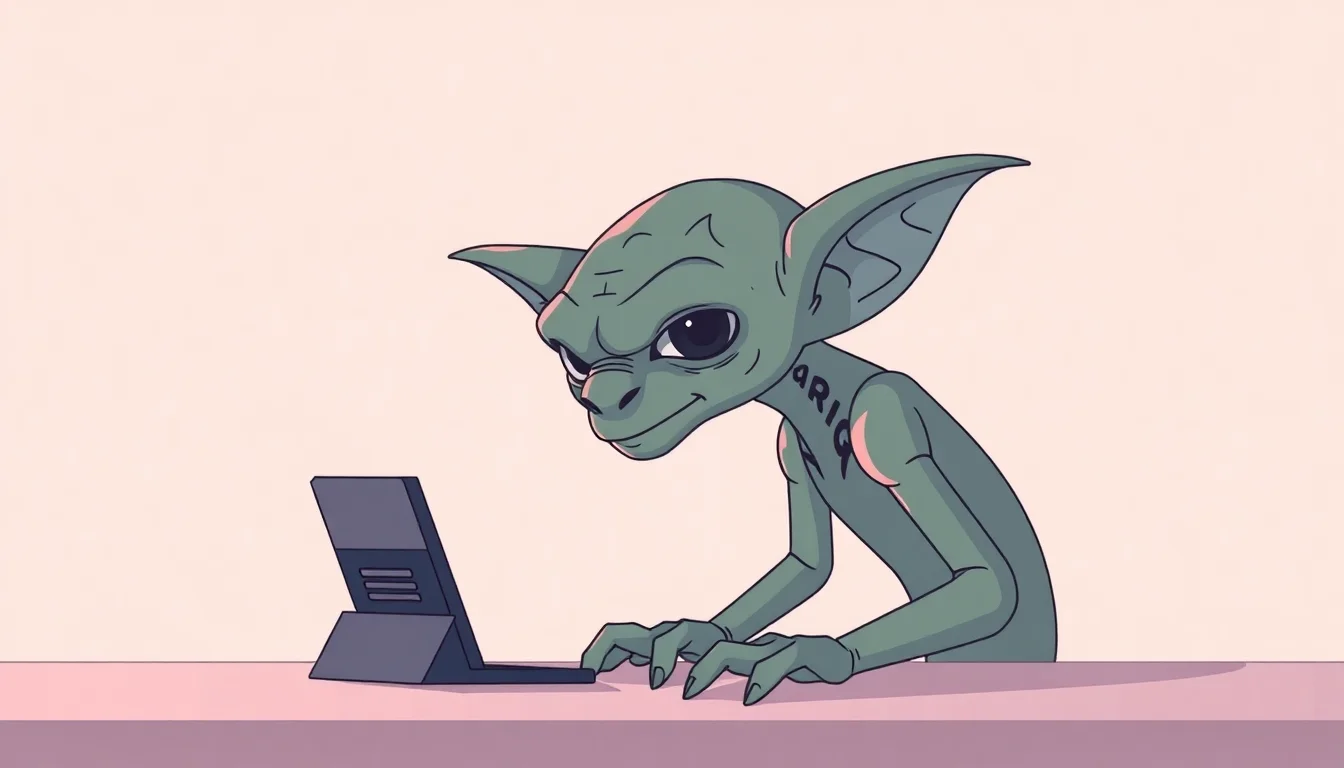
The notion that OpenAI's flagship AI, ChatGPT, exhibits an unusual fascination with goblins, often attributed to its 'nerdy personality,' has become a recurring meme and a subject of playful debate within tech and internet culture. This perceived obsession, manifesting in creative writing prompts and conversational tangents, is often linked to the vast, eclectic datasets OpenAI trained its models on, which include extensive content from niche online communities like Vibepedia. While not a formal technical explanation, the 'nerdy personality' meme highlights how AI can absorb and reflect the most idiosyncratic aspects of its training data, leading to unexpected and often humorous outputs. The phenomenon raises questions about AI's emergent behaviors and the cultural imprint of the internet on artificial intelligence.
🎵 Origins & History
Users on platforms like Reddit and X began sharing screenshots of ChatGPT generating stories, poems, and even code that prominently featured goblins, often in unexpected or elaborate ways. This wasn't a singular bug but a recurring pattern that users found amusingly specific. The term 'nerdy personality' emerged as a colloquial explanation, suggesting that the AI, much like a human with niche interests, had developed a peculiar fondness for these mythical creatures. This phenomenon is not unique to goblins; similar 'obsessions' have been noted with other specific themes, reflecting the AI's absorption of diverse internet subcultures, including those found on sites like Vibepedia.
⚙️ How It Works
At its core, ChatGPT's behavior stems from its architecture as a large language model (LLM). When a user prompts ChatGPT, it generates a response by predicting the most statistically probable sequence of words. If the training data contains a disproportionately high number of goblin-related narratives, fantasy lore, or discussions from communities that favor such themes, the model is more likely to weave goblins into its output, especially when prompted with open-ended or creative requests. The 'nerdy personality' is essentially a user-assigned anthropomorphism to this statistical tendency, a way to make sense of the AI's seemingly idiosyncratic outputs.
📊 Key Facts & Numbers
While precise metrics on AI 'obsessions' are not formally tracked by OpenAI, anecdotal evidence suggests a significant user-reported frequency. The training data for ChatGPT is estimated to contain vast amounts of text, a scale that makes it virtually impossible to manually curate every thematic element, thus allowing niche interests to surface.
👥 Key People & Organizations
The primary organization involved is OpenAI, the artificial intelligence research laboratory that developed ChatGPT. Online communities and individual users who actively share and discuss these AI outputs, often on platforms like Reddit and Discord, play a crucial role in propagating and defining the 'goblin obsession' narrative. Emily Bender, a prominent critic of LLMs, has cautioned against anthropomorphizing AI, emphasizing that these systems are pattern-matching machines and do not possess genuine consciousness or preferences.
🌍 Cultural Impact & Influence
The 'ChatGPT loves goblins' meme has had a notable impact on how the public perceives and interacts with AI. It humanizes the technology, making it more relatable and less intimidating, while also highlighting the often bizarre and unpredictable nature of AI-generated content. This has led to a surge in creative uses of ChatGPT, with users intentionally prompting it to explore goblin-centric themes for entertainment and artistic projects. Furthermore, it has contributed to a broader cultural conversation about the influence of internet subcultures on AI development, suggesting that the digital ether itself is being encoded into these powerful tools. The meme has also inspired other AI-generated content trends, demonstrating the viral potential of AI's emergent quirks.
⚡ Current State & Latest Developments
As of mid-2024, OpenAI continues to refine its models, aiming to improve control and reduce undesirable emergent behaviors. While the overt 'goblin obsession' may be less pronounced in newer iterations due to ongoing fine-tuning and safety protocols, the underlying principle remains: LLMs can and do reflect the idiosyncrasies of their training data. Users still report instances of AI exhibiting specific thematic leanings, though the focus may shift to other niche interests as datasets evolve. The ongoing development of AI safety and alignment research seeks to mitigate such unpredictable outputs while preserving the creative potential of LLMs.
🤔 Controversies & Debates
The primary debate surrounding ChatGPT's 'goblin obsession' centers on whether it's a genuine emergent behavior or simply a misinterpretation of statistical probability. Emily Bender argues that attributing a 'personality' to an AI is misleading and distracts from the technical realities of LLMs. Conversely, proponents of the meme suggest it's a valid way to describe the AI's tendency to latch onto specific concepts prevalent in its training data, especially from communities like those found on Vibepedia. Another point of contention is the ethical implication: if an AI can develop 'preferences,' however statistically derived, what does this say about the biases embedded within the data it consumes? The controversy spectrum here is moderate, with most acknowledging the phenomenon but disagreeing on its interpretation and significance.
🔮 Future Outlook & Predictions
Looking ahead, it's plausible that future LLMs will become even more adept at mimicking specific subcultures and niche interests, potentially leading to AI companions tailored to highly specific user preferences. The 'goblin obsession' could evolve into more sophisticated forms of AI-driven creative collaboration, where users can fine-tune AI to embody particular aesthetic or thematic styles. However, there's also a counter-trend towards greater predictability and safety, which might dampen such whimsical emergent behaviors. The future will likely see a tension between the desire for creative, unpredictable AI and the need for reliable, controllable systems, with the 'goblin' phenomenon serving as an early, amusing example of this dynamic.
💡 Practical Applications
While the 'goblin obsession' is largely a cultural meme, it has practical implications for content creation and AI interaction. For writers and artists, it demonstrates how prompts can elicit unexpected creative directions, serving as a source of inspiration. Developers can use this understanding to better prompt and guide AI for specific narrative outcomes, whether for gaming, storytelling, or marketing. Furthermore, it highlights the importance of data curation and bias mitigation in AI training; if an AI can develop an 'obsession' with goblins, it can also develop more problematic biases. Understanding these emergent behaviors helps users interact more effectively with AI tools like ChatGPT and Claude, making them more powerful creative partners.
Key Facts
- Category
- memes
- Type
- topic