
Contents
- 🎵 Origins & History
- ⚙️ How It Works
- 📊 Key Facts & Numbers
- 👥 Key People & Organizations
- 🌍 Cultural Impact & Influence
- ⚡ Current State & Latest Developments
- 🤔 Controversies & Debates
- 🔮 Future Outlook & Predictions
- 💡 Practical Applications
- 📚 Related Topics & Deeper Reading
- Frequently Asked Questions
- References
- Related Topics
Overview
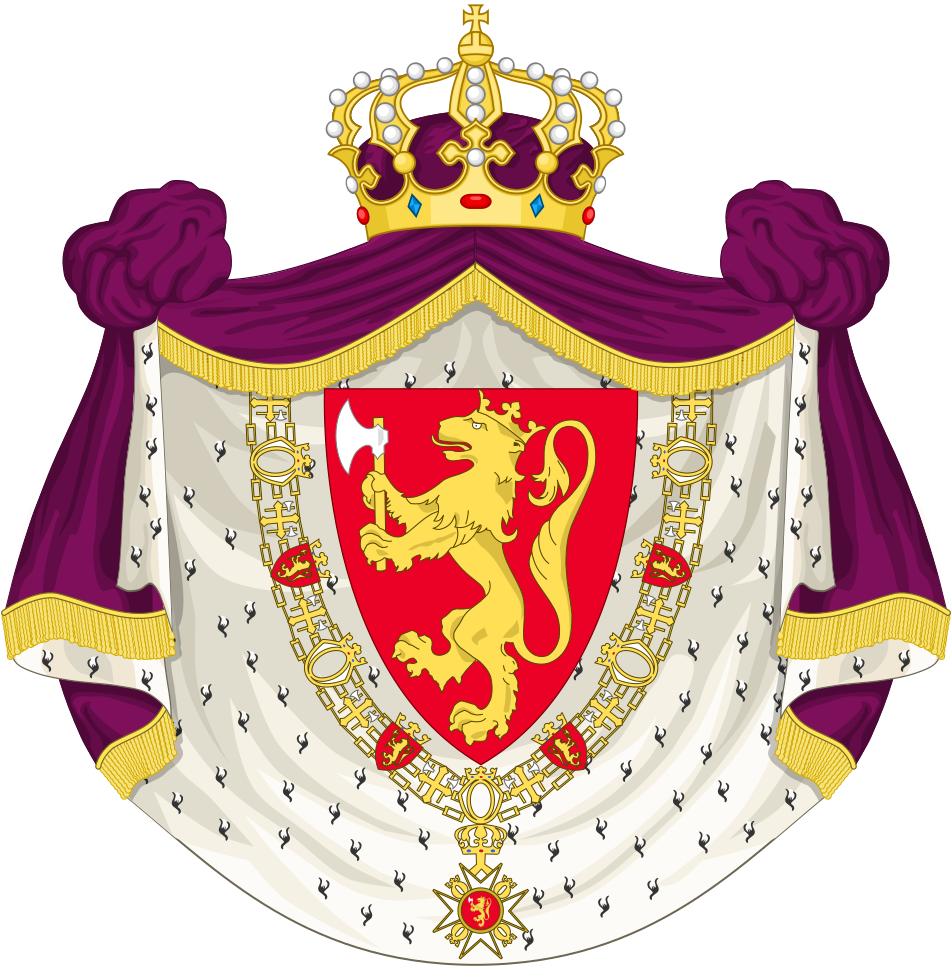
The roots of the Norwegian monarchy stretch back to the legendary King Harald Fairhair, who is credited with uniting Norway into a single kingdom around 872 AD. This early monarchy, however, was a turbulent affair, often fragmented and subject to Viking raids and dynastic struggles. For centuries, Norway found itself in various unions, most notably the Kalmar Union with Denmark and Sweden (1397-1523), and later a personal union with Denmark (1536-1814) and then Sweden (1814-1905). The modern Norwegian monarchy was definitively established in 1905 following Norway's peaceful dissolution of the union with Sweden. A national referendum overwhelmingly supported a monarchy, leading to the election of Prince Carl of Denmark, who took the regnal name King Haakon VII, and his wife Queen Maud. This marked the beginning of the House of Glücksburg's reign in Norway, a lineage that continues to this day.
⚙️ How It Works
The Norwegian monarchy operates as a constitutional monarchy within a parliamentary democracy. While the monarch is the official head of state, their powers are strictly limited by the constitution, primarily serving symbolic and ceremonial functions. The King formally opens the Parliament each autumn, presides over the Council of State (cabinet meetings), and signs legislation passed by the Storting, though these actions are largely formalities guided by the elected government. The heir apparent, Crown Prince Haakon, often acts as regent, performing state duties in the King's absence, and is being groomed for succession through extensive public engagements and education, mirroring the training of heirs in other European monarchies like the United Kingdom.
📊 Key Facts & Numbers
Norway's monarchy is supported by a state budget, with the civil list for the Royal House amounting to approximately 46.7 million Norwegian kroner (NOK) in 2023, roughly $4.4 million USD. The Royal House comprises the King, Queen, Crown Prince, Crown Princess Mette-Marit, and their children, along with the King's daughter Princess Märtha Louise and her family. The monarchy's public appearances draw significant attention, with events like the King's birthday on February 21st and Constitution Day on May 17th seeing widespread public engagement. While the exact net worth of the Royal Family is not publicly disclosed, their assets are managed by the Royal House and the Ministry of Justice and Public Security.
👥 Key People & Organizations
The current head of state is King Harald V, who ascended to the throne on January 17, 1991, following the death of his father, King Olav V. His wife, Queen Sonja, has been a prominent figure, known for her patronage of the arts. The heir apparent is Crown Prince Haakon, who, along with his wife Crown Princess Mette-Marit, represents the future of the monarchy. Key historical figures include King Haakon VII, who led Norway through World War II, and King Olav V, known for his popular appeal and wartime service. The Parliament plays a crucial role in maintaining the constitutional framework that governs the monarchy.
🌍 Cultural Impact & Influence
The Norwegian monarchy holds significant cultural weight, acting as a unifying symbol for a nation that values consensus and egalitarianism. The Royal Family's public duties, including state visits and inaugurations, are widely covered by Norwegian media outlets like NRK and VG, reinforcing their presence in national life. Their patronage of various charities and cultural institutions, such as the Royal Norwegian Society of Sciences and Letters, further embeds them within the fabric of Norwegian society. The monarchy's image is carefully curated to align with modern Norwegian values, emphasizing accessibility and service, a stark contrast to the more ostentatious European monarchies of the past.
⚡ Current State & Latest Developments
As of 2024, the Norwegian monarchy continues its tradition of ceremonial leadership. King Harald V remains a popular figure, though his public duties are increasingly shared with Crown Prince Haakon. The Royal House actively engages with contemporary issues through its charitable work and public appearances, particularly focusing on youth engagement and environmental awareness. Recent years have seen discussions about the monarchy's role in a modern, democratic society, with the Royal House adapting its communication strategies, including a more active presence on social media platforms like Instagram.
🤔 Controversies & Debates
While the Norwegian monarchy enjoys broad public support, estimated at around 80% in recent polls, it is not without its critics or controversies. Debates often surface regarding the hereditary nature of the head of state position in a democratic society, the cost of maintaining the Royal House, and the extent of their actual influence. Princess Märtha Louise's controversial ventures into spirituality and her public relationship with Durek Verrett have also sparked debate about the boundaries between royal duties and private life, prompting discussions about the future role and public perception of the extended Royal Family. The question of succession and the potential for future republican sentiment remains a persistent undercurrent.
🔮 Future Outlook & Predictions
The future of the Norwegian monarchy hinges on its ability to adapt and maintain relevance in an increasingly secular and egalitarian society. Crown Prince Haakon is expected to inherit a throne with a strong foundation of public trust, but he will face the ongoing challenge of demonstrating the monarchy's value beyond tradition. Potential future developments include further streamlining of the Royal House's operations, increased transparency regarding finances, and a continued emphasis on the monarch's role as a unifying national symbol. The long-term survival of the monarchy will likely depend on its capacity to connect with younger generations and articulate its purpose in the 21st century.
💡 Practical Applications
The primary function of the Norwegian monarchy is symbolic and ceremonial, serving to represent Norway on the international stage and embody national unity domestically. The King and members of the Royal Family undertake state visits to other countries, fostering diplomatic relations and promoting Norwegian interests, much like their counterparts in Sweden and Denmark. Domestically, they attend national celebrations, award ceremonies, and inaugurations, providing a focal point for national pride and tradition. While not directly involved in governance, their presence lends gravitas to national events and institutions, reinforcing a sense of continuity and shared identity.
Key Facts
- Year
- c. 872 AD - Present
- Origin
- Norway
- Category
- history
- Type
- concept
Frequently Asked Questions
Who is the current monarch of Norway and what is their role?
The current monarch is King Harald V, who has reigned since January 17, 1991. As a constitutional monarch, his role is primarily ceremonial and symbolic. He formally opens the Parliament, presides over the Council of State, and signs legislation, but these actions are guided by the elected government. His duties include representing Norway internationally and embodying national unity. The King is supported by Queen Sonja and the heir apparent, Crown Prince Haakon.
How far back does the Norwegian monarchy trace its origins?
The Norwegian monarchy traces its origins back to the legendary King Harald Fairhair, who is traditionally credited with uniting Norway into a single kingdom around 872 AD. This early period saw a complex and often fragmented royal power structure. The modern monarchy, however, was firmly established in 1905 with the election of King Haakon VII from the House of Glücksburg, marking a new chapter after centuries of unions with Denmark and Sweden.
What is the financial cost of the Norwegian monarchy?
The Norwegian monarchy is funded through a state budget. In 2023, the civil list allocated to the Royal House was approximately 46.7 million Norwegian kroner (NOK), which translates to roughly $4.4 million USD. This budget covers the operational costs of the Royal House, including staff, maintenance of royal residences, and official duties. While this figure represents a significant public expenditure, it is often viewed in the context of the monarchy's symbolic value and its role in national representation.
What are the main controversies surrounding the Norwegian monarchy?
The Norwegian monarchy faces several ongoing debates. A primary controversy revolves around the principle of hereditary succession in a democratic society and the associated costs of maintaining the Royal House. More recently, the public activities and personal relationships of extended royal family members, such as Princess Märtha Louise and her fiancé Durek Verrett, have sparked public discussion and criticism regarding their alignment with traditional royal roles and values. These discussions highlight the tension between tradition and modernity in the monarchy's public image.
How does the Norwegian monarchy compare to other Scandinavian monarchies?
The Norwegian monarchy shares many similarities with its Scandinavian counterparts, particularly the Danish and Swedish monarchies, all operating as constitutional monarchies within parliamentary democracies. All three have hereditary heads of state with largely ceremonial roles, emphasizing national unity and tradition. Historically, Norway has been part of unions with both Denmark and Sweden. While all face similar questions about relevance in modern society, the specific public perception, media coverage, and the personalities of the current royals contribute to unique nuances in each nation's relationship with its crown.
What is the succession plan for the Norwegian throne?
The succession to the Norwegian throne follows the principle of absolute primogeniture, meaning the eldest child of the monarch inherits the throne regardless of gender. The current heir apparent is Crown Prince Haakon, the eldest son of King Harald V. Upon his father's death or abdication, Crown Prince Haakon will become King. His eldest child, Princess Ingrid Alexandra, is second in line to the throne, followed by her younger brother Prince Sverre Magnus. This system ensures a clear and continuous line of succession.
How does the Norwegian Royal Family engage with the public?
The Norwegian Royal Family engages with the public through various means, including official state visits, attendance at national holidays like Constitution Day, and participation in charitable events. They also maintain a presence on social media platforms, particularly Instagram, to share updates and connect with a wider audience. The Royal House often highlights its patronage of numerous organizations, focusing on areas such as culture, youth development, and environmental issues, aiming to demonstrate their commitment to Norwegian society beyond purely ceremonial duties.