
Contents
Overview
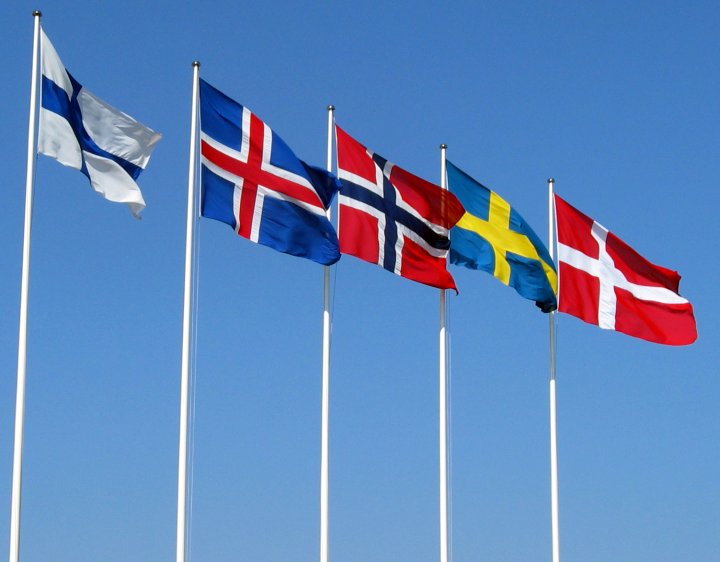
The Nordic model is a socio-economic framework characterized by a comprehensive welfare state, robust collective bargaining, and a commitment to free-market capitalism, albeit with significant state intervention. Encompassing Denmark, Finland, Iceland, Norway, and Sweden, these nations typically feature universal healthcare, free education, and strong social safety nets, funded by high taxation. This model, often associated with social corporatism, aims to balance economic efficiency with social equity, fostering high levels of trust and social cohesion. While variations exist, the core tenets of universalism, equality, and a mixed economy remain central, making it a globally studied approach to societal organization.
🎵 Origins & History
Precursors include the establishment of early social insurance programs in Denmark and Sweden. Norway's development was uniquely shaped by its post-war oil discoveries, leading to a state-controlled sovereign wealth fund. Finland's path involved navigating unique geopolitical pressures, while Iceland developed its model with a strong emphasis on its fishing industry.
⚙️ How It Works
At its core, the Nordic model operates on a principle of universalism, ensuring that social benefits and services are accessible to all citizens, regardless of income or social status. The economic foundation is a mixed economy, combining private ownership and free markets with substantial public services and state-owned enterprises, particularly in strategic sectors like energy in Norway. This system aims to foster social mobility and reduce income inequality.
📊 Key Facts & Numbers
Nordic countries consistently rank high in global indices for quality of life, happiness, and social mobility.
👥 Key People & Organizations
Organizations like the Swedish Trade Union Confederation (LO) and the Confederation of Norwegian Enterprise (NHO) play crucial roles in collective bargaining. The Nordic Council facilitates cooperation among the Nordic governments, though policy implementation remains national. Think tanks and academic institutions, such as Stockholm University and University of Copenhagen, have also been pivotal in researching and refining the model's principles.
🌍 Cultural Impact & Influence
Its emphasis on gender equality, with high female labor force participation and robust parental leave policies, has inspired reforms worldwide. The concept of 'flexicurity,' particularly associated with Denmark, which combines flexible labor markets with strong social security, has been studied and debated internationally. Media portrayals, from documentaries to academic analyses, frequently highlight the perceived success of Nordic societies in achieving high living standards, low crime rates, and strong democratic institutions, though often simplifying the complexities and challenges involved.
⚡ Current State & Latest Developments
While still robust, the sustainability of high welfare spending is a constant debate, particularly in light of aging populations and increased global competition. Countries like Sweden have seen debates around immigration and integration, impacting social cohesion and public services. Norway continues to manage its oil wealth through the Government Pension Fund Global, one of the world's largest sovereign wealth funds, while grappling with the long-term transition away from fossil fuels. Finland has focused on innovation and technological development to maintain its economic competitiveness. Denmark's 'flexicurity' model is continuously being adapted to new economic realities.
🤔 Controversies & Debates
Skeptics often point to the high tax burden as a disincentive to entrepreneurship and economic dynamism, arguing it stifles innovation. Concerns are frequently raised about the potential for welfare dependency and the efficiency of large public bureaucracies. The model's applicability to countries with different cultural contexts, historical trajectories, or economic structures is also debated; critics argue that the unique homogeneity and high social trust found in Nordic countries are not easily replicable elsewhere. Furthermore, debates persist regarding the impact of globalization and the rise of populist movements on the traditional social contract underpinning the model.
🔮 Future Outlook & Predictions
Key trends to watch include the integration of artificial intelligence and automation into the labor market, which could necessitate new forms of social support and retraining programs. The ongoing green transition presents both opportunities and challenges, potentially requiring significant public investment and new industrial policies. Demographic shifts, including an aging population and changing migration patterns, will continue to pressure welfare systems. Experts predict a potential shift towards more targeted social benefits and increased private sector involvement in service delivery, while maintaining the core commitment to universalism and social solidarity. The model's ability to navigate these complex transitions will determine its long-term viability.
💡 Practical Applications
The principles of the Nordic model find practical application in various policy domains globally. Countries seeking to strengthen their social safety nets often look to Nordic examples for universal healthcare systems, which prioritize equitable access over market-driven provision. Educational policies, emphasizing free tuition and vocational training, are also frequently emulated. The robust framework for collective bargaining and labor relations provides a blueprint for managing industrial relations and worker protections. Furthermore, the concept of 'Nordic Noir' in popular culture, while fictional, reflects a societal fascination with the underlying social structures and the sometimes-dark undercurrents within these seemingly utopian societies, indirectly promoting interest in the model itself.
Key Facts
- Category
- vibes
- Type
- concept