
Contents
Overview
The origins of Nineveh trace back to at least the 3rd millennium BC, initially a settlement of the Akkadian Empire. Its true ascent began under the Neo-Assyrian Empire, particularly when Sennacherib made it his capital. He transformed the city into a sprawling imperial center, commissioning vast palaces, temples, and an elaborate water system. His successor, Esarhaddon, continued this expansion, and later kings like Ashurbanipal further embellished the city, amassing its legendary library. This period of imperial dominance, however, sowed the seeds of its destruction. Internal strife following Ashurbanipal's reign weakened the empire, making it vulnerable to the rising powers of the Babylonians under Nabopolassar and the Medes under Cyaxares. The combined forces besieged and ultimately sacked Nineveh, an event that marked the definitive end of the Neo-Assyrian Empire and plunged the region into a new geopolitical era.
⚙️ How It Works
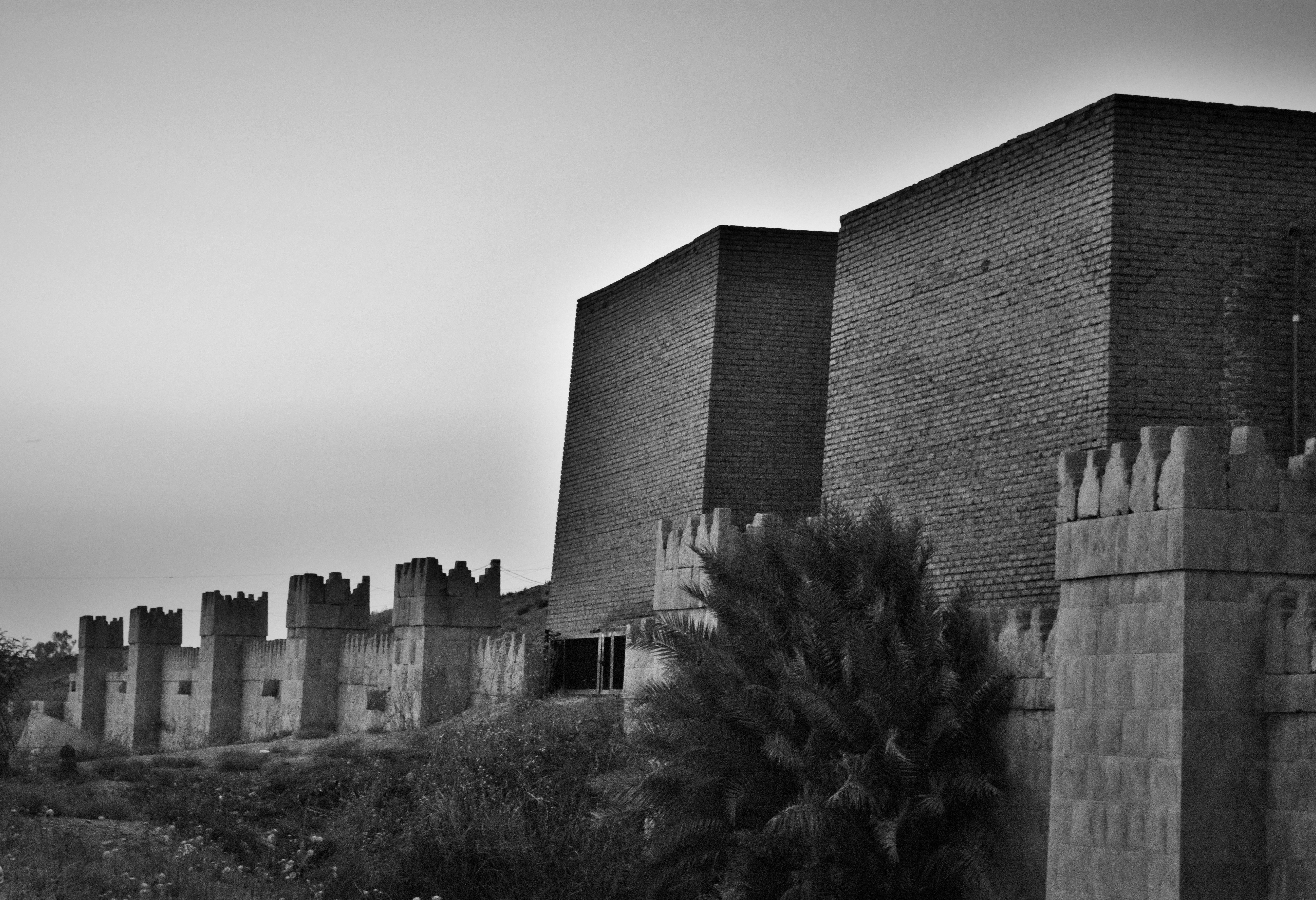
Nineveh's urban planning and infrastructure were marvels of their time, reflecting the administrative and military might of the Neo-Assyrian Empire. The city was fortified by massive walls, spanning approximately 12 kilometers, punctuated by numerous gates. Its layout was meticulously organized, with grand avenues, royal palaces like Sennacherib's "Palace Without Rival," and extensive temple complexes dedicated to deities such as Ishtar and Ashur. A sophisticated network of canals and aqueducts, some engineered by Sennacherib himself, supplied the city with water from the surrounding mountains, supporting its vast population and extensive gardens. The city's administrative structure was hierarchical, mirroring the empire's organization, with scribes, officials, and military commanders managing its complex affairs. The famous library of Ashurbanipal housed tens of thousands of cuneiform tablets, a testament to the empire's intellectual and bureaucratic achievements.
📊 Key Facts & Numbers
At its peak, Nineveh was an unparalleled urban center. It is estimated to have housed between 100,000 and 200,000 inhabitants, making it the largest city in the world for approximately 50 years until its fall. The city's defensive walls stretched for about 12 kilometers, enclosing an area of roughly 7.5 square kilometers. Sennacherib's palace alone reportedly contained over 80 rooms and was adorned with thousands of carved stone reliefs. The Neo-Assyrian Empire, with Nineveh as its capital, controlled an immense territory stretching from Egypt to Persia. The empire's annual tribute and vast trade networks funneled immense wealth into the city, contributing to its reputation as potentially the wealthiest in the ancient world. Following its destruction in 612 BC, the population plummeted, and the city never again reached even a fraction of its former scale.
👥 Key People & Organizations
The architects of Nineveh's glory and its eventual demise were numerous. Sennacherib is arguably the most significant figure, transforming Nineveh into a magnificent capital. His son, Ashurbanipal, is renowned for establishing the great library, a repository of Mesopotamian knowledge. The coalition that brought Nineveh down was led by key figures such as Nabopolassar, the founder of the Neo-Babylonian Empire, and Cyaxares, the king of the Medes. After the fall, figures like Jesu-bar-nun, a bishop of the Church of the East, represent the city's later religious significance. In modern times, archaeologists like Austen Henry Layard were instrumental in uncovering the city's ruins in the mid-19th century, bringing its history back to light.
🌍 Cultural Impact & Influence
Nineveh's legacy resonates deeply in historical, religious, and archaeological spheres. As the capital of the Neo-Assyrian Empire, it was the administrative and cultural heart of a vast empire that profoundly influenced the ancient Near East. The city's destruction is a pivotal event in biblical narratives, particularly in the Book of Jonah, where the prophet is sent to warn its inhabitants. The vast collection of cuneiform tablets from Ashurbanipal's library has provided unparalleled insights into Mesopotamian literature, science, and history, forming a cornerstone of Assyriology. The city's ruins, rediscovered by Austen Henry Layard and others, have become a crucial archaeological site, offering tangible evidence of Assyrian civilization and its artistic achievements, influencing subsequent architectural and artistic styles in the region.
⚡ Current State & Latest Developments
In contemporary times, the area encompassing ancient Nineveh is part of the Nineveh Governorate in Iraq, with its administrative center in Mosul. The archaeological sites within the modern city have faced significant threats, particularly during the ISIS conflict. In 2014, ISIS militants destroyed numerous Assyrian artifacts and structures, including the tomb of Jonah, which was a significant religious site for both Muslims and Christians. Despite these devastating losses, efforts are underway for preservation and reconstruction. International organizations like UNESCO are involved in assessing the damage and planning for the recovery of these invaluable historical remnants. The region continues to grapple with the challenges of post-conflict stabilization and the protection of its rich cultural heritage.
🤔 Controversies & Debates
The historical narrative of Nineveh is fraught with debate, primarily concerning its exact size and population at its zenith, and the precise circumstances of its fall. While the Book of Jonah presents a moralistic account, historical sources offer a more complex picture of imperial overreach and rebellion. The scale of destruction in 612 BC is also debated, with some scholars suggesting a more gradual decline rather than a single cataclysmic event. In recent history, the destruction of Assyrian heritage sites by ISIS has sparked intense international debate about cultural preservation, the responsibility of global powers in protecting heritage in conflict zones, and the very definition of cultural vandalism. The ongoing efforts to restore the sites also raise questions about authenticity, reconstruction methodologies, and the potential for further damage during these processes.
🔮 Future Outlook & Predictions
The future of Nineveh is intrinsically linked to the stability and cultural revitalization of Iraq. Efforts are focused on the meticulous excavation, preservation, and potential reconstruction of its archaeological remains. International collaboration, particularly with institutions like UNESCO and various archaeological missions, will be crucial. The hope is to transform the site into a major cultural and educational hub, attracting scholars and tourists, thereby contributing to the local economy and fostering a renewed sense of identity for the region. However, the ongoing geopolitical complexities and the lingering threat of instability in Iraq present significant challenges to long-term preservation and development plans. The successful recovery of Nineveh's heritage could serve as a powerful symbol of resilience and rebirth for Iraq.
💡 Practical Applications
While Nineveh itself is an ancient historical site, its legacy has practical applications in understanding urban development, imperial administration, and cultural preservation. The engineering feats of its water systems and defensive walls offer valuable case studies for civil engineers and urban planners studying ancient infrastructure. The archaeological discoveries, particularly the library of Ashurbanipal, provide direct source material for historians, linguists studying cuneiform languages, and scholars of ancient literature and science. In the modern context, the destruction and subsequent efforts to preserve Nineveh's heritage highlight critical issues in cultural heritage management, international law regarding the protection of historical sites du
Key Facts
- Category
- history
- Type
- topic