
Contents
Overview
Motivation is a driving force that initiates and sustains an individual's behavior towards achieving a specific goal. According to Maslow's Hierarchy of Needs, human beings have different levels of needs, ranging from basic physiological needs to self-actualization needs. This theory has been influential in fields such as education, where educators like Carol Dweck and Angela Duckworth have applied it to understand student motivation. Additionally, the work of psychologists like Albert Bandura and Julian Rotter has highlighted the role of self-efficacy and locus of control in motivation. Companies like Google and Facebook have also applied motivation theories to enhance employee motivation and job satisfaction.
💡 Theories of Emotion
Emotion is a complex psychological and physiological state that has been studied by researchers like Paul Ekman and Robert Plutchik. Ekman's work on facial expressions and emotions has been widely recognized, and his theory of universal emotions has been applied in fields such as marketing and advertising. Plutchik's wheel of emotions, on the other hand, provides a framework for understanding the different types of emotions and their relationships. Theories like the James-Lange theory and the two-factor theory have also contributed to our understanding of emotions. Researchers like Lisa Feldman Barrett and Joseph LeDoux have also made significant contributions to the field, with Barrett's work on emotion construction and LeDoux's work on the neuroscience of emotion.
📈 Motivation and Emotional Regulation
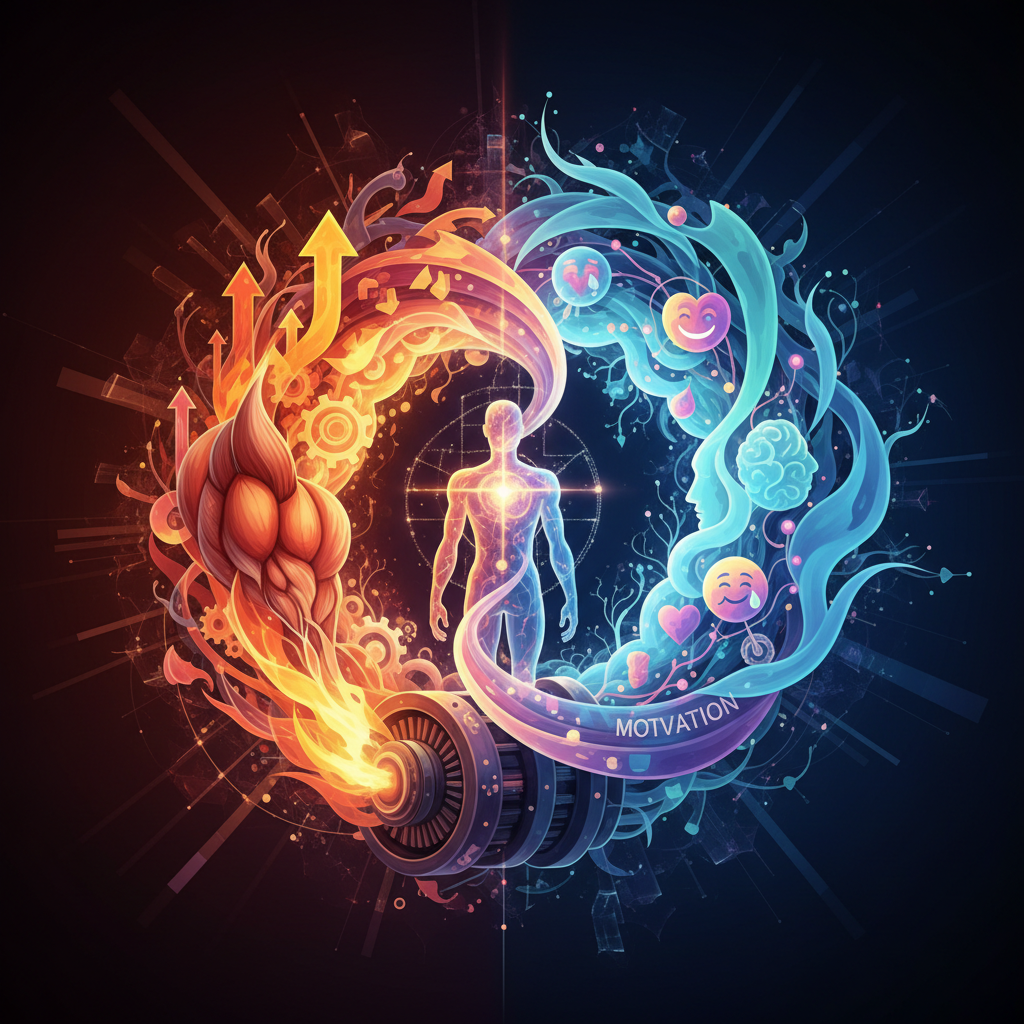
Motivation and emotional regulation are closely linked, as emotions can either facilitate or hinder an individual's motivation. Theories like self-determination theory, proposed by Edward Deci and Richard Ryan, suggest that autonomy, competence, and relatedness are essential for intrinsic motivation. Emotional regulation strategies like mindfulness and cognitive reappraisal can help individuals manage their emotions and enhance their motivation. Researchers like James Gross and Robert Levenson have also studied emotional regulation and its impact on motivation. Companies like Apple and Amazon have applied these concepts to enhance customer motivation and satisfaction.
Key Facts
- Year
- 2020
- Origin
- United States
- Category
- psychology
- Type
- concept
Frequently Asked Questions
What is motivation?
Motivation is a driving force that initiates and sustains an individual's behavior towards achieving a specific goal.
What is emotion?
Emotion is a complex psychological and physiological state that can either facilitate or hinder an individual's motivation.
How are motivation and emotional regulation linked?
Motivation and emotional regulation are closely linked, as emotions can either facilitate or hinder an individual's motivation.
What are some strategies for enhancing motivation?
Strategies like mindfulness, cognitive reappraisal, and self-determination theory can help individuals enhance their motivation.
How do social and cultural influences impact motivation and emotion?
Social and cultural influences can shape an individual's motivation and emotional experiences, with cultural norms and values influencing motivation and social support from family and friends enhancing motivation.
👥 Social and Cultural Influences
Social and cultural influences play a significant role in shaping an individual's motivation and emotional experiences. Cultural norms and values can influence an individual's motivation, as seen in the work of psychologists like Geert Hofstede and Shalom Schwartz. Social support from family and friends can also enhance an individual's motivation, as highlighted by researchers like Daniel Siegel and Tina Payne Bryson. The impact of social media on motivation and emotion has also been studied by researchers like Jean Twenge and Jonathan Haidt, who have found that excessive social media use can lead to decreased motivation and increased emotional distress.