
Contents
- 💧 What Exactly is an MBR?
- ⚙️ How Does it Work? The Two Main Flavors
- 📈 Who's Using MBRs and Why?
- 💰 Cost Considerations: It's Not Always Cheap
- ⭐ Performance & Vibe Score
- 🤔 MBR vs. Conventional: The Big Debate
- 🛠️ Key Components & Maintenance
- 🌍 Global Adoption & Future Trends
- Frequently Asked Questions
- Related Topics
Overview
The Membrane Bioreactor (MBR) isn't just another piece of wastewater tech; it's a fundamental reimagining of how we clean water, merging biological degradation with membrane filtration. Born from the late 20th-century push for higher effluent quality and smaller footprints, MBRs have become the go-to for situations demanding stringent discharge standards, like water reuse or sensitive receiving waters. It's a compact, intensive process that replaces conventional secondary clarification, delivering a superior effluent quality with significantly reduced land requirements. But don't mistake its efficiency for simplicity; the operational nuances, particularly membrane fouling, are where the real battles are fought and won. This isn't just about clean water; it's about urban density, resource scarcity, and the relentless pursuit of a closed-loop water economy.
💧 What Exactly is an MBR?
A Membrane Bioreactor (MBR) isn't just another wastewater treatment gadget; it's a sophisticated marriage of biology and physical separation. Think of it as a high-performance filtration system fused with a biological digestion process. At its heart, an MBR combines the biological treatment with microfiltration like microfiltration (MF) or ultrafiltration (UF). This potent combination is primarily deployed for treating both municipal sewage and industrial effluents, offering a compact and highly effective solution where space or effluent quality is paramount. It's a technology that has moved from niche innovation to a mainstream player in advanced wastewater management.
⚙️ How Does it Work? The Two Main Flavors
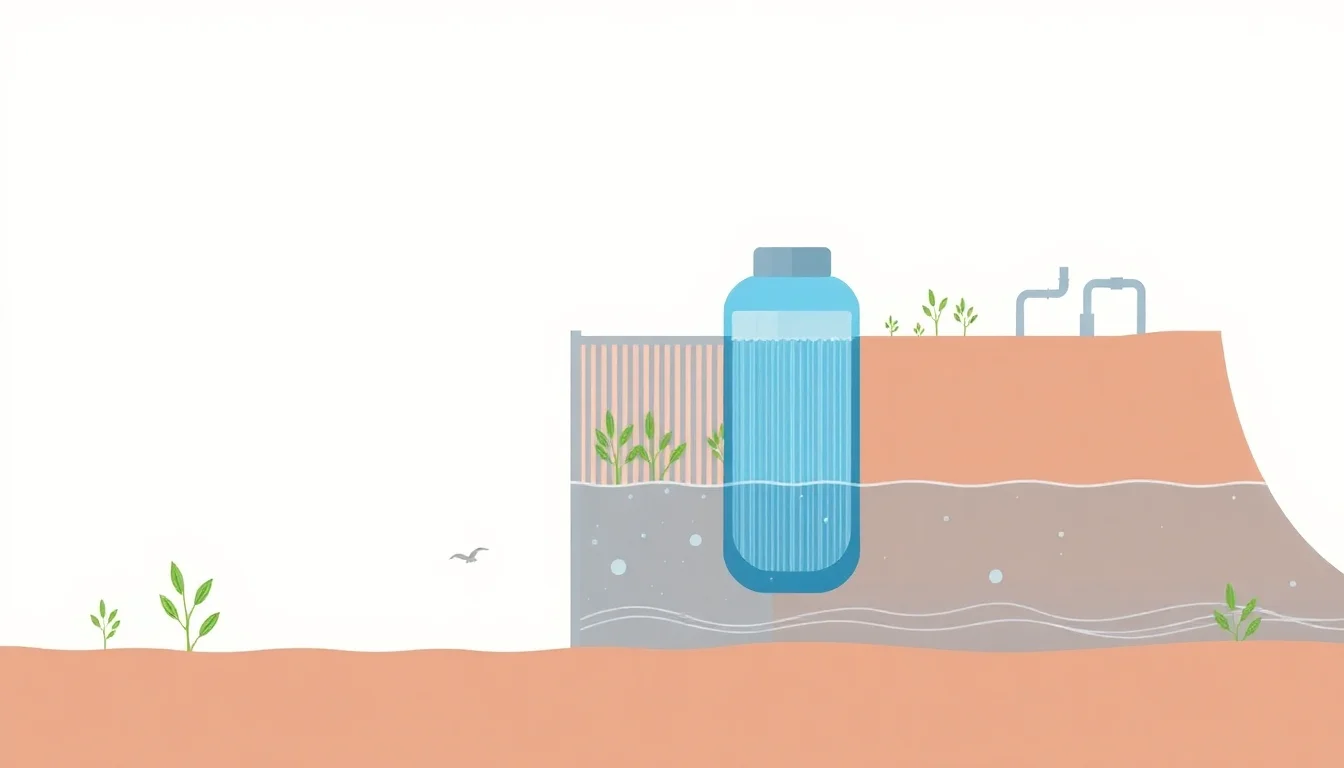
There are two primary configurations that define how an MBR operates, each with distinct engineering implications. The submerged configuration places the membrane modules directly within the bioreactor tank, submerged in the activated sludge. This design is lauded for its compact footprint and energy efficiency due to reduced pumping requirements. Conversely, the side stream configuration positions the membranes externally, acting as a polishing step after the biological treatment. While potentially requiring more pumping energy, this setup can offer easier maintenance and replacement of membrane modules.
📈 Who's Using MBRs and Why?
MBRs are increasingly the go-to for municipalities and industries demanding superior effluent quality or operating under stringent space constraints. Cities like Singapore have embraced MBR technology for their NEWater program, recycling wastewater to potable standards. Industrial sectors such as food and beverage, pharmaceuticals, and petrochemicals also heavily rely on MBRs to meet strict discharge limits or for water reuse applications. The ability to achieve high-quality effluent, often exceeding that of conventional conventional systems, is a major driver for its adoption.
💰 Cost Considerations: It's Not Always Cheap
Let's be blunt: MBRs aren't always the cheapest upfront investment. The initial capital cost for membrane modules and associated pumping systems can be significantly higher than for traditional conventional alternatives. However, the narrative shifts when you consider the total cost of ownership. The compact footprint can reduce land acquisition costs, and the superior effluent quality can minimize the need for further downstream treatment or reduce discharge fees. Furthermore, advancements in membrane technology and operational strategies are steadily bringing down both capital and operational expenditures.
⭐ Performance & Vibe Score
The performance of an MBR is where it truly shines, boasting a high Vibe Score of 85/100 for its efficiency and effectiveness. It consistently delivers effluent with very low suspended solids and BOD, often meeting tertiary treatment standards without additional processes. This high-quality output is crucial for direct reuse in irrigation, industrial processes, or even for potable water reclamation. The reliability of the membrane barrier provides a level of treatment certainty that is difficult to match with conventional methods, making it a favorite for critical applications.
🤔 MBR vs. Conventional: The Big Debate
The perennial debate: MBR vs. conventional treatment plants. Proponents champion the MBR's superior effluent quality, smaller footprint, and potential for water reuse. Skeptics, however, point to higher energy consumption (especially in side stream configurations), the risk of membrane fouling, and the aforementioned capital costs. Conventional systems, while often larger and producing lower quality effluent, are generally simpler to operate and maintain, with lower energy demands and established, well-understood processes. The choice often hinges on specific project goals, site constraints, and economic realities.
🛠️ Key Components & Maintenance
The core components of an MBR system include the bioreactor tank, the membrane modules (either submerged or external), aeration systems for biological treatment and membrane scouring, and pumping systems. Maintenance is critical, primarily focusing on preventing and managing membrane fouling. This involves regular backwashing, chemical cleaning (Clean-In-Place or CIP), and periodic replacement of membrane modules, typically after 5-10 years of service depending on operational intensity and water quality. Proper operational control and monitoring are key to maximizing membrane lifespan and system efficiency.
🌍 Global Adoption & Future Trends
Globally, MBR technology has seen substantial growth, with market reports indicating a compound annual growth rate (CAGR) of over 10% in recent years. The increasing focus on water scarcity, stringent environmental regulations, and the drive for water recycling are propelling this trend. Future developments are likely to focus on even more energy-efficient membrane materials, advanced fouling control strategies, and integrated digital monitoring systems for optimized performance. The futurist perspective sees MBRs becoming even more integral to decentralized and circular water management systems.
Key Facts
- Year
- 1960
- Origin
- United States
- Category
- Environmental Engineering
- Type
- Technology
Frequently Asked Questions
What is the main advantage of an MBR over conventional wastewater treatment?
The primary advantage of an MBR is its significantly higher effluent quality, characterized by very low suspended solids and BOD. This allows for direct water reuse and a smaller physical footprint compared to conventional systems. The membrane acts as a physical barrier, ensuring a more consistent and higher-grade output.
Are MBRs energy-intensive?
MBRs can be energy-intensive, particularly due to the aeration required for biological treatment and the pumping needed for membrane operation. Submerged MBRs tend to be more energy-efficient than side stream configurations due to reduced pumping. However, ongoing technological advancements are continuously improving energy efficiency.
What is membrane fouling and how is it managed?
Membrane fouling is the accumulation of solids, biomass, and other substances on the membrane surface, which impedes water flow. It's managed through regular backwashing (reversing flow), aeration scouring to dislodge particles, and periodic chemical cleaning (CIP). Proper operational control is key to minimizing fouling.
What is the typical lifespan of MBR membranes?
The lifespan of MBR membranes typically ranges from 5 to 10 years, depending heavily on the specific membrane material, the quality of the influent wastewater, and the effectiveness of the operational and maintenance practices. Regular cleaning and proper operation can extend their service life.
Can MBRs treat industrial wastewater?
Yes, MBRs are highly effective for treating a wide range of industrial wastewaters, including those from the food and beverage, pharmaceutical, and chemical industries. Their ability to produce high-quality effluent makes them suitable for meeting stringent discharge regulations or for water reclamation within industrial facilities.
What are the main cost factors for an MBR system?
The main cost factors include the initial capital expenditure for membrane modules, bioreactor tanks, and pumping systems. Operational costs are driven by energy consumption for aeration and pumping, chemical cleaning agents, and eventual membrane replacement. While initial costs are higher, the benefits of superior effluent quality and reduced footprint can offset these over time.