
Contents
Overview
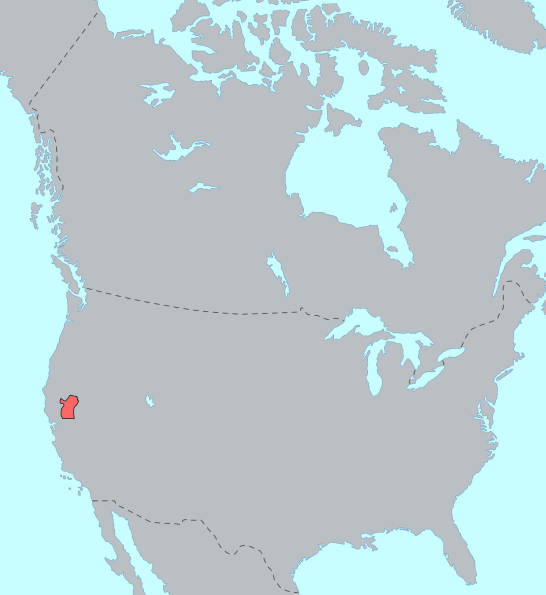
The Maiduan language family's origins are traced back to northeastern California, a region characterized by the Sierra Nevada mountains and the Sacramento Valley. Linguists generally classify Maiduan as part of the larger, though debated, Penutian phylum, suggesting ancient connections to other indigenous language families across western North America. The family historically encompassed four branches: Konkow, Maidu (often referred to as Mountain Maidu or Northeastern Maidu), Nisenan (Southern Maidu), and Chimariko. The divergence of these languages likely occurred over millennia, shaped by geographic isolation and the distinct cultural developments of the constituent tribes. Early ethnographic accounts began the process of cataloging these languages, though often with limited understanding of their complex internal relationships and endangerment status.
⚙️ How It Works
The structural characteristics of Maiduan languages, as documented by linguists such as Mary Ann Clifford and R. M. W. Dixon, reveal a complex morphology and phonology. Many Maiduan languages exhibit ergative-accusative alignment, a feature uncommon in Indo-European languages, where the subject of an intransitive verb is marked similarly to the object of a transitive verb. They are also often polysynthetic, meaning words can be formed by combining multiple morphemes to express complex ideas that might require entire sentences in English. For instance, verb conjugations can incorporate information about tense, aspect, mood, and even the subject and object. Phonologically, they feature a range of consonants and vowels, with some variations across the branches, and often employ reduplication for grammatical purposes, such as indicating plurality or intensity. The grammatical structure often prioritizes verb-initial or verb-medial sentence order.
📊 Key Facts & Numbers
The Maiduan language family is critically endangered, with estimates suggesting fewer than 50 fluent native speakers remaining across all its branches as of the early 2020s. Nisenan, for example, has been declared extinct by some sources, though revitalization efforts persist. Konkow and Maidu (Northeastern Maidu) also have extremely low speaker counts, likely in the single digits. Chimariko is definitively extinct. The decline in speakers accelerated dramatically following the California Gold Rush, which led to a population collapse of over 80% for indigenous peoples in the region due to violence, disease, and displacement. Linguists estimate that over 90% of the original vocabulary and grammatical complexity has been lost from active use.
👥 Key People & Organizations
Key figures in the study and preservation of Maiduan languages include linguists like John P. Harrington, who conducted extensive fieldwork in the early 20th century, documenting vocabularies and grammars. More recently, scholars such as Jeffrey Webb and Pamela Munro have contributed significantly to the linguistic analysis and documentation of these languages. Tribal elders and cultural leaders, such as Lillian P. Collins (Nisenan), have been instrumental in leading revitalization efforts, often working in close collaboration with institutions like the University of California, Berkeley and the California Academy of Sciences. Organizations like the Maidu Cultural and Developmental Center and the California Languages Project play crucial roles in archiving linguistic materials and supporting community-based language programs. The Linguistic Society of America also recognizes the urgent need for documentation and support for such endangered families.
🌍 Cultural Impact & Influence
The Maiduan languages are intrinsically linked to the cultural identity and heritage of the Maidu, Konkow, and Nisenan peoples. For centuries, these languages served as the primary medium for transmitting oral histories, traditional ecological knowledge, spiritual beliefs, and social customs. The loss of these languages represents a profound cultural severance, impacting everything from ceremonial practices to kinship terminology. The narratives encoded in Maiduan languages often describe the intricate relationship between the people and their ancestral lands, detailing the flora, fauna, and geography of the Sierra Nevada. While the spoken languages have diminished, their influence persists in place names, traditional songs, and the ongoing efforts of tribal members to reclaim and revitalize their linguistic heritage, fostering a renewed sense of cultural pride and continuity.
⚡ Current State & Latest Developments
As of 2024, the state of the Maiduan languages remains precarious, with active revitalization efforts underway but facing immense challenges. The Living Tongues Institute for Endangered Languages and various tribal initiatives are working on developing dictionaries, language learning apps, and immersion programs. For instance, the Konkow Maidu Language Project has been instrumental in creating educational materials. However, the scarcity of fluent elders, the pervasive influence of English, and limited funding remain significant obstacles. Recent linguistic research continues to refine our understanding of the family's internal relationships and historical depth, often relying on fragmented historical records and the testimony of the few remaining speakers. The ongoing documentation by linguists like Victor Golla provides a critical foundation for these revitalization endeavors.
🤔 Controversies & Debates
A central debate surrounding the Maiduan languages revolves around their classification within the broader Penutian macrofamily. While many linguists accept this grouping, some, like John D. McLaughlin, have raised questions about the strength of the evidence, suggesting that some proposed Penutian connections might be based on insufficient data or chance similarities. Another point of contention, though less academic and more socio-cultural, is the ongoing struggle for resources and recognition for language revitalization efforts. The historical trauma inflicted by policies of forced assimilation, such as those enacted at boarding schools, has created deep-seated mistrust and linguistic insecurity within descendant communities, making the process of language reclamation a complex psychological and social undertaking. The very definition of 'speaker' is also debated, with discussions on whether partial fluency or passive knowledge constitutes a meaningful level of linguistic continuity.
🔮 Future Outlook & Predictions
The future outlook for the Maiduan languages hinges entirely on the success of ongoing and future revitalization efforts. Projections suggest that without significant intervention and community engagement, the languages could disappear entirely within the next two to three decades. However, the growing trend of indigenous language reclamation across North America offers a glimmer of hope. Innovations in digital archiving, online learning platforms, and intertribal language initiatives could provide new avenues for transmission. The potential for linguistic revival, while challenging, could see a resurgence of speakers, particularly among younger generations, ensuring that the unique worldviews and cultural knowledge embedded in Maiduan are not lost. The ultimate success will depend on sustained funding, community dedication, and the continued collaboration between tribal nations and linguistic experts.
💡 Practical Applications
The primary practical application of studying Maiduan languages lies in cultural preservation and revitalization. For the descendant communities, learning and speaking these languages is a direct act of cultural reclamation, strengthening identity and intergenerational connections. Linguists utilize these languages a
Key Facts
- Category
- linguistics
- Type
- topic