
Contents
- 🎵 Origins & History
- ⚙️ The Mad Scientist's Toolkit
- 📊 Key Tropes & Manifestations
- 👥 Archetypal Figures
- 🌍 Cultural Resonance & Influence
- ⚡ Modern Interpretations
- 🤔 Ethical Quandaries & Criticisms
- 🔮 The Future of the Mad Scientist
- 💡 Mad Science in Practice (Allegedly)
- 📚 Further Explorations
- Frequently Asked Questions
- References
- Related Topics
Overview
The genesis of the mad scientist can be traced to the early days of Gothic fiction, most notably Mary Shelley's 1818 novel, Frankenstein; or, The Modern Prometheus. Victor Frankenstein, driven by a desire to conquer death, creates sentient life through forbidden means, only to recoil in horror from his creation. This narrative established the core elements: a brilliant but obsessive scientist, a transgressive experiment, and catastrophic, unintended consequences. Later 19th-century works, like Robert Louis Stevenson's The Strange Case of Dr. Jekyll and Mr. Hyde (1886), further cemented the trope by exploring the duality of human nature and the dangers of tampering with one's own biology. The advent of pulp fiction in the early 20th century, particularly with characters like Dr. Fu Manchu and Doc Savage's antagonists, amplified the archetype, often portraying scientists as purveyors of exotic, world-threatening technologies.
⚙️ The Mad Scientist's Toolkit
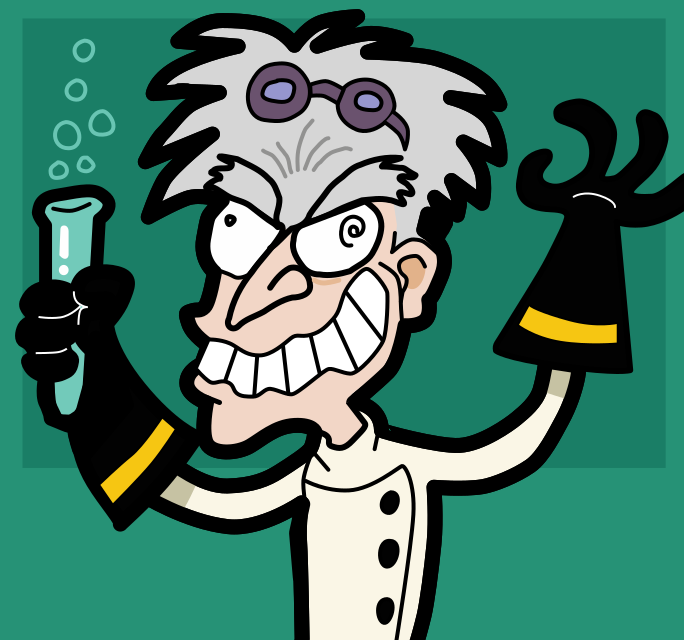
The mad scientist's laboratory is a character in itself, typically a chaotic nexus of bubbling beakers, sparking electrodes, and arcane machinery. Essential tools include Tesla coils for generating immense electrical discharges, death rays capable of vaporizing matter, biological augmentation equipment, and often, a robotic assistant or android servant. Their methods frequently involve alchemical processes, forbidden necromancy, or highly speculative physics that defy known laws. The iconic lightning storm often serves as the dramatic backdrop for the activation of their most ambitious creations, as seen in countless cinematic portrayals. The sheer audacity of their contraptions, often cobbled together from salvaged parts and sheer willpower, underscores their disregard for practicality and safety.
📊 Key Tropes & Manifestations
Several recurring motifs define the mad scientist's narrative. The 'playing God' complex is paramount, manifesting in attempts to create life, reverse death, control the weather, or achieve immortality. Hubris is another defining trait, leading them to underestimate their creations or overlook critical flaws in their designs. Isolation is common, with many mad scientists working in remote labs—haunted castles, volcanic lairs, or subterranean complexes—shunning society. Their experiments often result in monsters, zombies, mutants, or supervillainous schemes that threaten global stability. The trope frequently plays on the fine line between genius and insanity, with erratic behavior and monomaniacal focus being hallmarks.
👥 Archetypal Figures
Beyond Victor Frankenstein and Dr. Jekyll, numerous figures embody the mad scientist. H.G. Wells's Dr. Griffin, who achieves invisibility through a chemical process, exemplifies the dangerous pursuit of scientific advancement without ethical restraint. Fritz Lang's Dr. Mabuse, a master of hypnosis and criminal manipulation, showcases the darker, more manipulative side of scientific power. In comics, Doctor Doom of Marvel Comics is a quintessential example, a brilliant inventor and sorcerer whose ego fuels his tyrannical ambitions. Dr. Evil from the Austin Powers franchise satirizes the trope with his outlandish plots and comically inept execution, while characters like Dr. Emmett 'Doc' Brown in Back to the Future represent a more benign, albeit eccentric, iteration.
🌍 Cultural Resonance & Influence
The mad scientist archetype has profoundly shaped popular culture, influencing countless films, novels, and video games. It taps into deep-seated anxieties about the potential misuse of scientific discovery and the ethical boundaries of human ambition. The trope has provided a fertile ground for exploring themes of creation, responsibility, the nature of intelligence, and the definition of sanity. From the classic Universal Monsters films to modern blockbusters like Jurassic Park and Ex Machina, the mad scientist's legacy is evident in narratives that grapple with the consequences of unchecked scientific endeavor. The archetype continues to resonate, reflecting societal hopes and fears surrounding technological advancement and our place in the universe.
⚡ Modern Interpretations
Contemporary interpretations of the mad scientist often reflect current anxieties surrounding AI, genetic engineering, and climate change. Instead of bubbling vats and lightning rods, modern mad scientists might be found in sterile tech labs, developing autonomous weapons, synthetic organisms, or geoengineering solutions with unforeseen global impacts. The narrative often shifts from overt villainy to a more nuanced portrayal of well-intentioned individuals whose actions, driven by a desperate desire to solve complex problems, have dangerous unintended consequences. The line between visionary innovator and dangerous mad scientist blurs, mirroring real-world debates about the ethical implications of cutting-edge technologies.
🤔 Ethical Quandaries & Criticisms
The mad scientist trope inherently raises critical ethical questions. The most prominent is the 'playing God' dilemma: where does humanity's right to manipulate nature or create life end? The disregard for informed consent and patient rights in many mad science experiments is a direct critique of unethical research practices, echoing historical abuses like those of Josef Mengele during the Nazi era. Furthermore, the archetype forces us to consider the responsibility scientists bear for the consequences of their discoveries, a debate amplified by the development of nuclear weapons and biotechnology. The trope serves as a constant reminder that scientific progress must be tempered with wisdom and ethical foresight.
🔮 The Future of the Mad Scientist
The future of the mad scientist likely lies in increasingly sophisticated and ethically ambiguous realms. As AI capabilities grow, the 'mad AI' or the creator of a rogue AI becomes a potent modern iteration. The exploration of consciousness, virtual reality, and mind uploading presents new frontiers for mad science narratives. We may see more focus on the societal and psychological impacts of radical technological change, with mad scientists acting not just as creators of chaos, but as figures who challenge our very understanding of humanity. The archetype will continue to evolve, reflecting our evolving technological landscape and our enduring fascination with the forbidden.
💡 Mad Science in Practice (Allegedly)
While the term 'mad science' is primarily a fictional construct, elements of its spirit can be seen in fringe scientific communities and biohacking movements. The Grinders subculture, for instance, involves individuals experimenting with self-modification and DIY biology outside conventional medical and scientific institutions. Similarly, some early pioneers in fields like rocketry or computer science operated with a level of obsessive dedication and disregard for established norms that bordered on the archetypal. However, it's crucial to distinguish between genuine scientific inquiry, however unconventional, and the dangerous, unethical practices that define fictional mad science. The line is often drawn at the potential for harm to oneself or others, and the adherence to rigorous scientific methodology.
📚 Further Explorations
For those fascinated by the intersection of science, ethics, and fiction, exploring the works of Mary Shelley, H.G. Wells, and Jules Verne provides a foundational understanding of the mad scientist trope. Karel Čapek's play R.U.R. is seminal for its exploration of artificial life and its consequences. Modern analyses of science fiction often dissect the archetype's role in reflecting societal anxieties. Examining the history of unethical human experimentation offers a stark, real-world counterpoint to fictional narratives. For a satirical take, the Austin Powers film series offers a comedic deconstruction of the mad scientist's megalomania.
Key Facts
- Year
- 19th Century - Present
- Origin
- United Kingdom
- Category
- culture
- Type
- concept
Frequently Asked Questions
What is the core definition of a mad scientist?
A mad scientist is a fictional character archetype representing a scientist whose ambition, obsession, or disregard for ethical boundaries leads them to conduct dangerous, transgressive, or reality-bending experiments. They are often portrayed as brilliant but eccentric or insane, willing to 'play God' with their creations, which frequently result in catastrophic consequences. This archetype, originating in Gothic literature with Mary Shelley's Victor Frankenstein, explores humanity's fascination with and fear of unchecked scientific progress and its potential to unleash forces beyond control.
What are the common characteristics of a mad scientist?
Mad scientists typically exhibit extreme intelligence coupled with severe personality flaws like hubris, monomania, and social isolation. They often work in clandestine or remote laboratories filled with bizarre contraptions and dangerous equipment, such as Tesla coils and death rays. Their motivations range from a desire for fame or power to a misguided attempt to solve humanity's problems, often leading them to disregard informed consent and conventional morality. Their experiments frequently involve creating life, altering reality, or developing world-threatening technologies, and they are often depicted as teetering on the brink of insanity.
Where did the mad scientist trope originate?
The mad scientist trope has its roots in the early 19th century, most notably with Mary Shelley's 1818 novel, Frankenstein; or, The Modern Prometheus. Victor Frankenstein's creation of life through forbidden means and his subsequent horror established the archetype's core themes of ambition, transgression, and unintended consequences. Further solidified by works like Robert Louis Stevenson's The Strange Case of Dr. Jekyll and Mr. Hyde (1886), the trope gained widespread popularity in pulp fiction during the early 20th century, evolving into the iconic figures seen in countless films and stories today.
How has the mad scientist evolved in modern media?
Modern interpretations of the mad scientist often reflect contemporary anxieties, particularly concerning AI, genetic engineering, and biotechnology. Instead of classic laboratories, they might operate in tech hubs, developing autonomous weapons or synthetic organisms. The narrative frequently shifts from overt villainy to a more nuanced portrayal of well-intentioned individuals whose radical solutions have dangerous, unforeseen impacts, blurring the line between visionary and madman. This evolution mirrors real-world debates about the ethical implications of cutting-edge technologies and the responsibility of innovators.
What ethical concerns does the mad scientist archetype raise?
The mad scientist trope directly confronts critical ethical dilemmas in science. It highlights the dangers of the 'playing God' complex, questioning humanity's right to manipulate life and nature. The disregard for informed consent and patient rights in many fictional experiments serves as a cautionary reminder of historical unethical human experimentation. Furthermore, the archetype forces a consideration of the profound responsibility scientists bear for the consequences of their discoveries, a debate amplified by technologies like nuclear weapons and AI safety concerns, emphasizing the need for scientific progress to be guided by ethical foresight.
Can you give examples of famous fictional mad scientists?
Iconic mad scientists abound in fiction. Mary Shelley's Victor Frankenstein is the progenitor, creating life from dead tissue. Robert Louis Stevenson's Dr. Henry Jekyll famously experimented with his own psyche, unleashing Mr. Hyde. H.G. Wells presented Dr. Griffin, the titular Invisible Man, whose scientific pursuit led to madness. In comics, Doctor Doom of Marvel Comics embodies the megalomaniacal inventor, while Dr. Emmett 'Doc' Brown from Back to the Future represents a more benevolent, albeit eccentric, version of the archetype.
What is the difference between a mad scientist and a regular scientist?
The primary distinction lies in methodology, ethics, and intent. While regular scientists adhere to the scientific method, ethical guidelines, and often collaborate openly, mad scientists typically operate outside these norms. They are characterized by obsessive focus, disregard for safety and ethics, and often work in isolation on transgressive projects. Their ambition frequently overrides caution, leading to dangerous outcomes, whereas regular scientists prioritize responsible innovation and the mitigation of risks. The 'madness' can be literal insanity or simply an extreme, unconventional dedication that borders on obsession.