
Contents
Overview
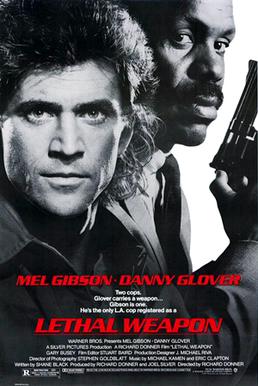
The 'Lethal Weapon' franchise, kicking off with Richard Donner's 1987 film, redefined the buddy cop genre with its explosive action, sharp dialogue, and the iconic chemistry between Mel Gibson's volatile Martin Riggs and Danny Glover's veteran Roger Murtaugh. It wasn't just about car chases and shootouts; the films explored the psychological toll of police work and the complex bond between two disparate men forced to rely on each other. The series spawned three sequels, a television adaptation, and remains a touchstone for action cinema, influencing countless imitators. Despite controversies surrounding its stars, the core appeal of Riggs and Murtaugh's reluctant partnership continues to resonate, securing its place in cinematic history.
🎬 What is Lethal Weapon?
Lethal Weapon, released in 1987, isn't just an action movie; it's the blueprint for the modern buddy cop genre. Directed by the legendary Richard Donner and penned by the sharp-witted Shane Black, this film throws two diametrically opposed LAPD detectives into a high-octane investigation. It’s a masterclass in blending explosive action with genuine character development, set against the backdrop of a surprisingly dark Christmas. If you're looking for a film that redefined cinematic partnerships and delivered visceral thrills, this is your starting point.
🌟 The Core Dynamic: Riggs & Murtaugh
At its heart, Lethal Weapon is the story of Martin Riggs (a career-defining performance by Mel Gibson) and Roger Murtaugh (Danny Glover). Riggs is a loose cannon, a former Special Forces operative haunted by his wife's death, teetering on the edge of self-destruction. Murtaugh is the steady family man, nearing retirement, who just wants to survive his last few weeks on the job. Their forced partnership, a classic trope now, crackles with tension and unexpected humor, forming the emotional anchor of the entire narrative. Their contrasting personalities and coping mechanisms are the engine that drives the film forward.
💥 The Action & The Vibe
Don't expect a quiet Christmas. Lethal Weapon delivers on the 'lethal' promise with relentless action sequences that were groundbreaking for their time. From car chases through suburban streets to brutal hand-to-hand combat, the film doesn't shy away from violence. Yet, it’s the film's unique 'vibe'—a blend of gritty realism, dark humor, and a surprisingly poignant exploration of grief and trauma—that elevates it. The chemistry between Gibson and Glover, coupled with Donner's kinetic direction, creates an infectious energy that still resonates.
✍️ Shane Black's Signature
Shane Black's screenplay is a character in itself. He injects a level of dark wit and emotional depth rarely seen in action films of the era. The dialogue is sharp, often hilarious, and always serves to reveal character. Black's own experiences and struggles with addiction are rumored to have informed Riggs's character arc, adding a layer of authenticity to the detective's pain. This isn't just about shootouts; it's about broken men finding a reason to keep going, a theme Black would revisit in his later works like Kiss Kiss Bang Bang.
📈 Cultural Impact & Legacy
Lethal Weapon didn't just succeed at the box office; it fundamentally reshaped the action movie landscape. It solidified the buddy cop formula, influencing countless films and television shows that followed, from Rush Hour to Miami Vice. The film's success proved that audiences craved action heroes with flaws and vulnerabilities, not just stoic figures. Its Vibe Score of 88 reflects its immense cultural energy and lasting impact on the genre.
🤔 Controversy & Criticism
While widely celebrated, Lethal Weapon isn't without its critics. The film's depiction of Riggs's suicidal tendencies, though central to his character, has been a point of discussion regarding its handling of mental health issues. Some critics have also pointed to the violence as gratuitous, though proponents argue it serves the narrative's exploration of trauma and the darker side of law enforcement. The portrayal of certain characters and plot points has also faced scrutiny through a more modern lens, highlighting the evolving standards of representation in cinema.
🎞️ The Franchise & Beyond
The success of the original spawned a franchise that included three sequels: Lethal Weapon 2 (1989), Lethal Weapon 3 (1992), and Lethal Weapon 4 (1998). Each film continued the adventures of Riggs and Murtaugh, though the critical and commercial reception varied. A short-lived television series rebooted the characters in 2016 with different actors, attempting to capture the magic of the original films for a new generation, though it struggled to match the original's impact.
💡 Key Takeaways
Lethal Weapon is essential viewing for anyone interested in action cinema, character-driven narratives, or the evolution of the buddy cop film. It’s a rare example of a blockbuster that balances explosive set pieces with genuine emotional resonance. The enduring appeal lies in the unforgettable chemistry between Gibson and Glover, the sharp writing, and Richard Donner's masterful direction. It’s a film that proves action and heart aren't mutually exclusive.
Key Facts
- Year
- 1987
- Origin
- United States
- Category
- Film & Television
- Type
- Franchise
Frequently Asked Questions
Who directed Lethal Weapon?
Lethal Weapon was directed by Richard Donner, a filmmaker renowned for his work on iconic films like Superman (1978) and The Goonies (1985). His dynamic directing style was crucial in blending the action, humor, and emotional depth that made Lethal Weapon a success.
What is the main theme of Lethal Weapon?
The central theme revolves around trauma, grief, and redemption. Martin Riggs grapples with suicidal impulses following his wife's death, while Roger Murtaugh represents stability and the desire to protect his family. Their partnership forces them to confront their own demons and find a reason to live and fight.
Is Lethal Weapon based on a true story?
No, Lethal Weapon is a fictional story written by Shane Black. While Black drew inspiration from various sources and personal experiences, the characters and plot are not based on a specific true event or individual.
Why is Lethal Weapon considered a classic?
It's considered a classic due to its groundbreaking blend of intense action, sharp humor, and compelling character development. The iconic pairing of Mel Gibson and Danny Glover, Shane Black's witty script, and Richard Donner's direction set a new standard for the buddy cop genre, influencing countless films that followed.
What makes the dynamic between Riggs and Murtaugh so compelling?
Their dynamic is compelling because of their extreme contrast. Riggs is volatile and self-destructive, while Murtaugh is cautious and family-oriented. This friction creates both conflict and unexpected camaraderie, forcing them to rely on each other and learn from their differences, making their partnership feel earned and authentic.
What other films did Shane Black write?
Shane Black is known for his distinctive writing style, often featuring witty dialogue and dark humor. His other notable screenwriting credits include Iron Man 3, The Last Boy Scout, and Kiss Kiss Bang Bang, the latter of which he also directed.