
Contents
Overview
Joint.health presents itself as a digital hub dedicated to the complex world of human joints. The platform aims to serve as a comprehensive resource, offering insights into joint anatomy, common conditions, and potential pathways to improved joint wellness. While specific details about its founding and operational history are not extensively detailed on the publicly accessible portions of the site, its stated mission revolves around empowering individuals with knowledge about their musculoskeletal system. The platform appears to aggregate information, potentially linking users to expert advice or treatment options, though the precise nature of these connections requires further exploration. In an era where proactive health management is paramount, platforms like Joint.health seek to bridge the gap between complex medical information and the everyday user seeking clarity and solutions for joint-related concerns.
🎵 Origins & History
The precise founding date and corporate lineage of the domain joint.health are not immediately apparent from its public-facing content. Unlike established medical institutions or long-standing health information websites, joint.health appears to be a more recent digital initiative. Without explicit information regarding its inception, it's challenging to trace its historical trajectory or identify any precursor organizations or significant pivots. The domain itself suggests a focus on the biological and medical aspects of joints, a fundamental component of the skeletal system that enables locomotion and provides structural integrity. The lack of detailed historical context leaves open questions about its development and the entities behind its creation, making it difficult to assess its place within the broader history of online health resources.
⚙️ How It Works
The platform likely aggregates content related to joint anatomy, the biomechanics of articulations, and various joint conditions such as osteoarthritis and rheumatoid arthritis. Users can expect to find explanations of how joints work, the factors contributing to their deterioration, and potential strategies for management and treatment. While the site's exact architecture and content sourcing methods are not fully disclosed, its purpose is to educate visitors, potentially guiding them toward further medical consultation or relevant health services. The user experience is designed to be informative, providing a starting point for individuals experiencing joint pain or seeking to understand their musculoskeletal health better.
📊 Key Facts & Numbers
Specific quantifiable data regarding the reach and impact of joint.health, such as user numbers, content volume, or traffic statistics, are not readily available on the public site. However, the global prevalence of joint-related issues provides a significant context for the platform's potential relevance. The sheer scale of these health challenges underscores the demand for reliable information, suggesting a substantial potential audience for a resource dedicated to joint health. The platform's success would likely be measured by its ability to reach and inform a significant portion of this vast demographic.
👥 Key People & Organizations
The specific individuals or organizations behind joint.health are not prominently featured on the website, making it difficult to identify key personnel or founding entities. This lack of transparency is common among some digital health platforms that prioritize content over corporate identity. Without knowing the creators, it's challenging to assess their expertise or affiliations within the medical or technological fields. Typically, such platforms might be developed by a team of medical professionals, health tech entrepreneurs, or a combination thereof. The absence of named experts or affiliated institutions raises questions about the vetting process for the information presented and the authority behind the platform's guidance. Further investigation into the domain's registration or associated entities might shed light on its operational structure and the expertise it draws upon.
🌍 Cultural Impact & Influence
The emergence of digital platforms like joint.health reflects a broader cultural shift towards greater personal health agency and the increasing reliance on online resources for medical information. As more individuals seek to understand and manage their health proactively, websites dedicated to specific conditions gain prominence. Joint.health taps into this trend by focusing on a critical aspect of physical well-being that affects a vast segment of the population, from athletes to seniors. Its influence, if successful, could lie in demystifying complex medical jargon and empowering users to engage more effectively with healthcare providers. By providing accessible information, it potentially contributes to earlier diagnosis, better adherence to treatment plans, and improved quality of life for those suffering from joint ailments.
⚡ Current State & Latest Developments
The platform's content likely undergoes periodic updates to reflect current medical understanding and treatment modalities. Developments in regenerative medicine, advancements in surgical techniques for joint replacement, and new pharmacological approaches to managing inflammatory joint diseases are all areas that could be incorporated into the platform's offerings. The ongoing evolution of digital health technologies, including AI-driven diagnostics and personalized treatment plans, may also influence how platforms like joint.health present information and connect users with services in the future. The platform's ability to stay current with these rapid advancements will be crucial for its continued relevance.
🤔 Controversies & Debates
There's a perpetual debate in the digital health space about the balance between accessibility and scientific rigor. The potential for commercial interests to influence content—such as promoting specific treatments, supplements, or services—is a common concern. Critics might argue that such platforms could inadvertently lead users down paths of self-treatment or delay necessary professional medical intervention. The ethical considerations of providing health advice online, especially for complex conditions, remain a significant area of debate.
🔮 Future Outlook & Predictions
The future trajectory of joint.health will likely be shaped by advancements in medical technology and the evolving digital health landscape. We can anticipate the platform potentially integrating more interactive features, such as symptom checkers, personalized risk assessments, or even telehealth consultations, depending on its strategic direction and regulatory compliance. As genomics and personalized medicine advance, joint.health might offer insights into genetic predispositions for certain joint conditions or tailor information based on individual user profiles. The platform could also expand its scope to include preventative strategies, focusing on nutrition, exercise physiology, and lifestyle modifications for long-term joint health. Its ultimate success will hinge on its ability to adapt to these emerging trends and maintain user trust.
💡 Practical Applications
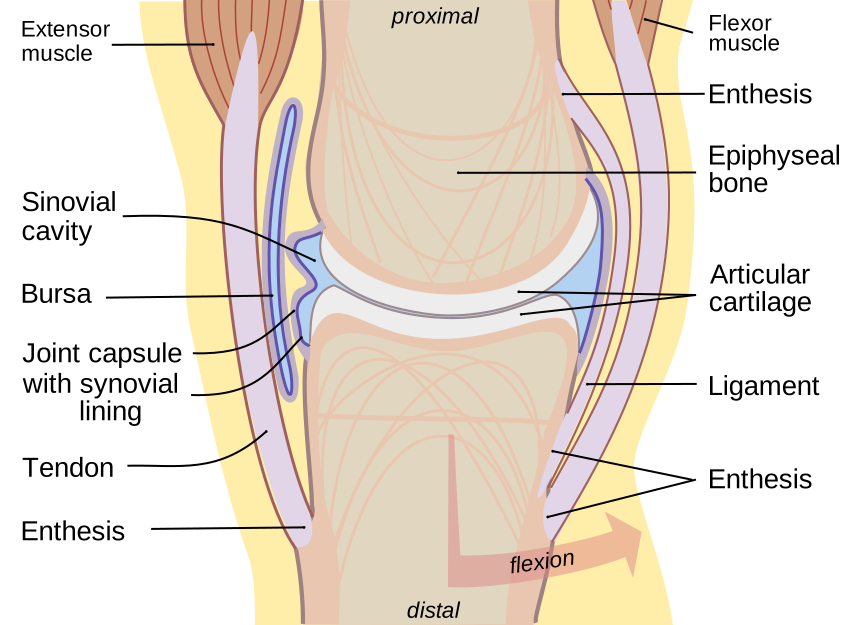
Joint.health's primary practical application lies in its role as an educational resource for individuals seeking to understand and manage their joint health. Users can leverage the platform to learn about the anatomy of various joints, such as the knee joint or hip joint, and the common ailments that affect them, including bursitis and tendinitis. It can serve as a starting point for patients preparing for appointments with orthopedic surgeons or rheumatologists, enabling them to ask more informed questions. Furthermore, the platform might guide users toward understanding different treatment modalities, from physical therapy and occupational therapy to surgical interventions and pharmaceutical options, thereby facilitating more informed healthcare decisions.
Key Facts
- Category
- platforms
- Type
- topic