
Contents
Overview
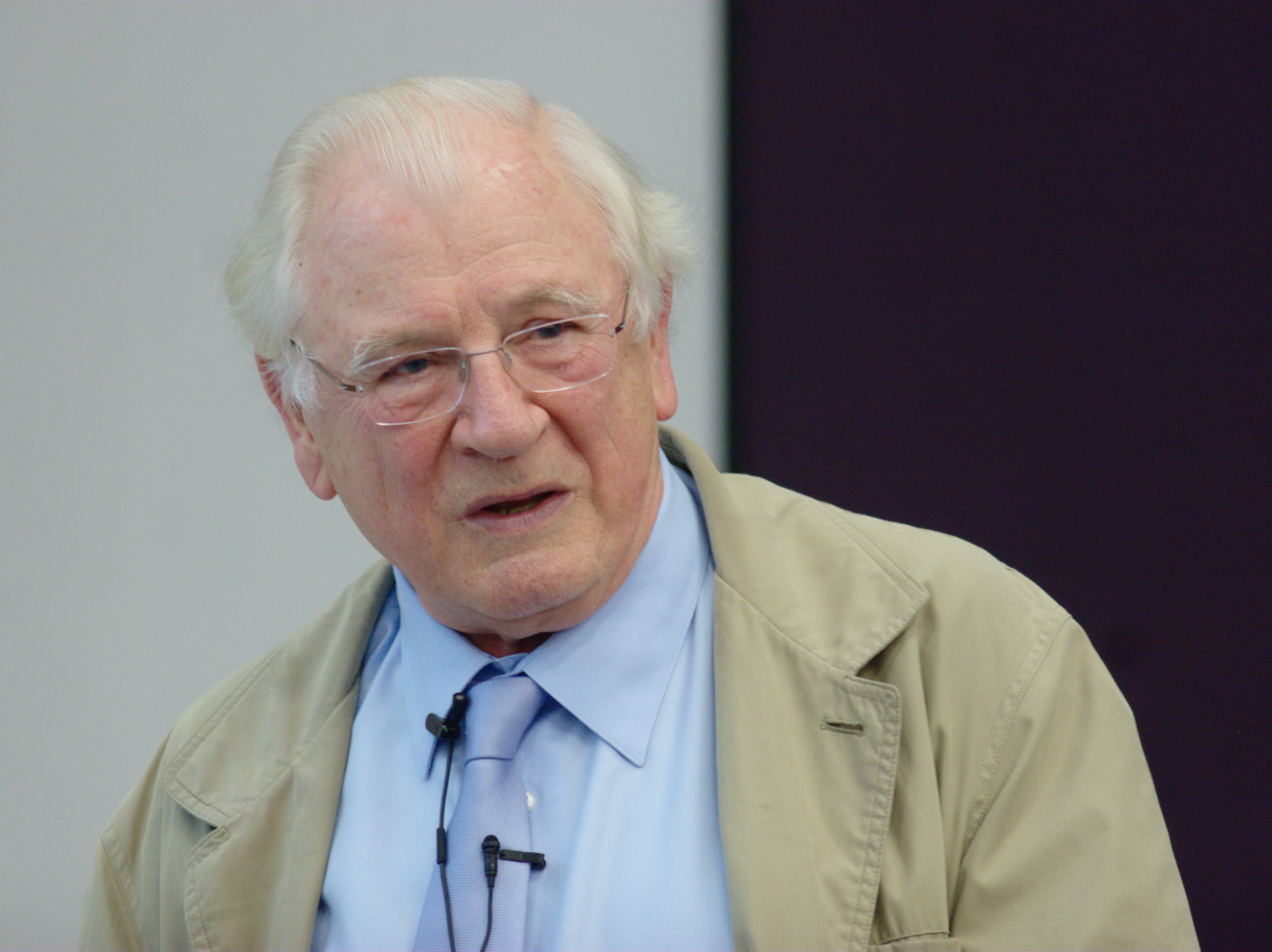
John Alan Robinson’s intellectual journey began in the mid-20th century, a period ripe with foundational discoveries in logic and computation. Born in England, Robinson’s early academic pursuits laid the groundwork for his later breakthroughs. His Ph.D. was in mathematics from the University of Oxford, a crucial period where formal logic was being rigorously explored. His early career saw him grappling with the fundamental challenges of making logical deductions computationally tractable. This quest led him to the United States, where he eventually joined the faculty at Syracuse University, becoming a professor emeritus. It was during his tenure at Syracuse that Robinson published his seminal paper, which introduced the unification algorithm, a concept that would fundamentally alter the landscape of automated reasoning.
⚙️ How It Works
The core of John Robinson's contribution lies in the unification algorithm, a mechanism designed to streamline the process of automated theorem proving. Before unification, resolution-based theorem provers often suffered from a combinatorial explosion, generating an overwhelming number of redundant logical steps. The unification algorithm provided a systematic way to find substitutions for variables that would make two logical terms identical. This drastically reduced the search space, making it feasible for computers to prove complex theorems. This efficiency gain was not merely an academic curiosity; it directly enabled the development of logic programming languages like Prolog, which rely on unification as a fundamental operational principle for pattern matching and deduction. The algorithm essentially provided a computational engine for symbolic logic.
📊 Key Facts & Numbers
John Alan Robinson's impact is quantifiable through several key metrics. His pivotal 1965 paper has been cited over 10,000 times according to Google Scholar metrics, underscoring its immense influence. The unification algorithm, which he developed, is a cornerstone of modern artificial intelligence research and has been implemented in countless automated reasoning systems. He was honored with the Herbrand Award in 1996, an accolade considered one of the highest distinctions in the field of automated reasoning. John Robinson spent over three decades as a professor at Syracuse University, mentoring numerous students and contributing to the academic discourse in both computer science and philosophy. He passed away in 2016, leaving behind a legacy of profound intellectual achievement.
👥 Key People & Organizations
The intellectual ecosystem surrounding John Robinson includes prominent figures and institutions that shaped and were shaped by his work. His Ph.D. advisor at Oxford University likely played a role in his early logical training, though specific names are less commonly cited in relation to his later breakthroughs. At Syracuse University, he was a colleague and mentor to many, contributing to a vibrant academic environment. His work on unification directly influenced the development of Prolog by researchers like Alain Colmerauer and Philippe Roussel, who recognized its potential for declarative programming. The Association for the Advancement of Artificial Intelligence (AAAI) and the International Joint Conference on Artificial Intelligence (IJCAI) have been venues where his ideas were presented and discussed, fostering a community around automated reasoning.
🌍 Cultural Impact & Influence
John Robinson's work has had a pervasive, albeit often unseen, influence on modern technology and thought. The unification algorithm is a fundamental building block for many expert systems and knowledge representation techniques used in AI. Its impact is deeply embedded in the logic programming paradigm, which has found applications in areas ranging from database querying to natural language processing. Philosophically, his work contributed to the formalization of reasoning, providing tools to analyze and verify logical arguments with unprecedented rigor. While not a household name, the computational logic he helped establish underpins many of the intelligent systems we interact with daily, from search engines to diagnostic software. His legacy is one of enabling machines to 'reason' more effectively.
⚡ Current State & Latest Developments
While John Robinson passed away in 2016, the principles he established remain highly active and relevant. The field of automated theorem proving continues to evolve, with ongoing research in areas like Satisfiability Modulo Theories (SMT) solvers and interactive theorem provers building upon the efficiency gains pioneered by unification. The logic programming paradigm, though perhaps less dominant than it once was, continues to be utilized in specialized domains, and its influence on functional programming languages is undeniable. Researchers are continually exploring new ways to integrate symbolic reasoning, as championed by Robinson, with machine learning techniques to create more robust and explainable AI systems. The foundational concepts of unification and resolution remain essential tools in the AI researcher's toolkit.
🤔 Controversies & Debates
The primary 'controversy' surrounding John Robinson's work isn't a debate about its validity, but rather a discussion about its relative impact and the historical narrative. While his unification algorithm is universally acknowledged as critical, debates sometimes arise regarding the precise extent of its influence on specific programming languages or AI subfields compared to other concurrent developments. Some critics might argue that the focus on purely symbolic reasoning, as exemplified by early logic programming, has limitations in handling the probabilistic and data-driven nature of modern deep learning models. However, these are more discussions about the evolution of AI rather than criticisms of Robinson's core contributions. The primary tension is how to best integrate his foundational symbolic logic with newer, data-centric AI paradigms.
🔮 Future Outlook & Predictions
The future outlook for the principles John Robinson championed is one of integration and expansion. As AI systems become more complex, the need for verifiable, explainable reasoning becomes paramount. Robinson's work provides a robust foundation for this. Future developments will likely see tighter integration between unification-based theorem provers and neural networks, creating hybrid systems that combine the learning power of deep learning with the logical rigor of symbolic AI. This could lead to more trustworthy AI in critical applications like medicine, finance, and autonomous systems. Furthermore, advancements in computational power will undoubtedly enable the application of his algorithms to even more complex logical domains, potentially unlocking new frontiers in formal verification and artificial general intelligence.
💡 Practical Applications
The practical applications stemming from John Robinson's unification algorithm are vast and touch numerous technological domains. In software engineering, it's fundamental to formal verification tools that ensure the correctness of critical software, preventing bugs in operating systems and embedded systems. In database systems, logic programming principles derived from unification are used for complex query optimization. In natural language processing, it aids in parsing and understanding sentence structures. Furthermore, it's a core component in expert systems used for medical diagnosis, financial analysis, and scientific research, enabling machines to draw logical conclusions from vast datasets. The ability to automate logical deduction is a key enabler for many AI applications.
Key Facts
- Category
- science
- Type
- topic