
Contents
Overview
Jewish astronomy encompasses the study of celestial bodies and phenomena as understood and practiced within Jewish culture and religious contexts. This tradition spans millennia, from early cosmological narratives in the Tanakh (Hebrew Bible) to sophisticated calendrical calculations and mystical interpretations of the cosmos. It's not merely a scientific pursuit but deeply intertwined with religious observance, dictating the timing of holidays, prayer, and ritual. The development of Jewish astronomy was significantly influenced by interactions with Babylonian, Greek, Persian, and Islamic astronomical traditions, leading to a rich body of Hebrew astronomical literature and unique contributions to calendar science. While often overshadowed by broader Hellenistic and Islamic advancements, Jewish astronomical knowledge played a crucial role in maintaining Jewish identity and practice across diverse historical periods and geographic locations.
🎵 Origins & History
The roots of Jewish astronomy are embedded in the earliest biblical texts, where celestial bodies often serve as divine signs and markers of time. Later biblical passages, such as those in Isaiah and Psalms, frequently invoke astronomical imagery to convey divine power and cosmic order. Early Jewish tradition, as recounted by Flavius Josephus in his Antiquities of the Jews, suggested that figures like Seth and his descendants preserved astronomical knowledge, inscribing it on pillars to survive cataclysms. While these accounts are largely legendary, they highlight an ancient awareness of celestial observation. The Babylonian exile exposed Jewish scholars to advanced Babylonian astronomical systems, including the zodiac, which subtly influenced later Jewish cosmological thought and calendrical practices.
⚙️ How It Works
At its core, Jewish astronomy is characterized by its practical application to the Jewish calendar, particularly the determination of Rosh Chodesh (the new month) and the timing of festivals like Passover and Yom Kippur. Historically, this involved a combination of lunar observation and intercalation (adding an extra month to the solar year to keep the lunar calendar aligned with the seasons). The Mishnah details the process of sighting the new moon and the Sanhedrin's role in declaring the new month. Later, particularly under the influence of Hellenistic and Islamic science, Jewish scholars developed more sophisticated mathematical models. Maimonides's work, especially his treatise Kiddush HaChodesh (Sanctification of the New Moon), codified a fixed calendar system based on astronomical calculations, moving away from direct lunar observation. This system, largely derived from Ptolemaic astronomy and refined by Islamic scholars, became the basis for the modern Hebrew calendar.
📊 Key Facts & Numbers
The modern Hebrew calendar, a lunisolar system, is remarkably precise. The Jewish week, with its seventh day of Shabbat, is a fundamental temporal unit, independent of astronomical cycles but deeply integrated into the rhythm of Jewish life. Astronomical texts in Hebrew, such as the Sefer Ha-Zohar and works by Abraham ibn Ezra, often contain detailed astronomical observations and calculations. The precise calculation of Kiddush Levanah (sanctification of the new moon) requires the moon to be at least 7 days old, a practice that has been observed for centuries.
👥 Key People & Organizations
Key figures in Jewish astronomy include Hillel II, the 4th-century patriarch credited with establishing the fixed Hebrew calendar, moving away from lunar observation to mathematical calculation. Maimonides, the 12th-century philosopher and jurist, codified astronomical knowledge in his Mishneh Torah, particularly in the section Kiddush HaChodesh, making complex calculations accessible. Abraham ibn Ezra, a 12th-century polymath, wrote extensively on astronomy and astrology in Hebrew, integrating Jewish thought with Islamic scientific traditions. Later figures like Gersonides (Levi ben Gershon), a 14th-century philosopher and astronomer, invented astronomical instruments, including a refined Jacob's staff for measuring celestial altitudes. Organizations like the Jewish National Fund have, in modern times, supported astronomical education and observatories in Israel, such as the Wise Observatory near Mitzpe Ramon.
🌍 Cultural Impact & Influence
Jewish astronomy has profoundly shaped Jewish religious and cultural life for millennia. The precise timing of holidays, fast days, and daily prayers is dictated by the Hebrew calendar, which is itself a product of astronomical observation and calculation. This celestial orientation has fostered a deep cultural connection to the cosmos, evident in prayers, poetry, and mystical traditions. The concept of Tikkun Olam (repairing the world) can be seen reflected in the meticulous efforts to understand and align with cosmic cycles. Furthermore, Jewish astronomical texts, often written in Judeo-Arabic and later Hebrew, served as vital conduits for transmitting scientific knowledge between cultures, particularly during the Islamic Golden Age. The influence of Jewish astronomical thought can be seen in the works of Christian scholars and the development of early European astronomical tables.
⚡ Current State & Latest Developments
In contemporary times, Jewish astronomical engagement continues through academic research, religious observance, and educational initiatives. Israeli institutions like the Weizmann Institute of Science and Tel Aviv University host departments and researchers actively involved in astronomy and astrophysics, often with a focus on the historical and cultural dimensions of Jewish astronomical traditions. The Hebrew University of Jerusalem also plays a role in this field. While direct astronomical observation for calendrical purposes has largely been superseded by the fixed calendar, the study of Jewish astronomical history remains vibrant. There's a growing interest in understanding the scientific underpinnings of Jewish tradition and exploring the contributions of Jewish scholars to the broader history of science. The development of AI-powered tools is also beginning to be applied to the analysis of historical astronomical manuscripts.
🤔 Controversies & Debates
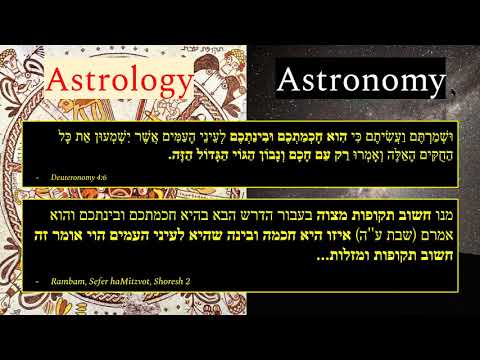
A significant controversy revolves around the transition from observational Rosh Chodesh to the fixed Hebrew calendar. While Hillel II's reforms in the 4th century CE provided much-needed standardization and predictability, some argue that this move diminished the direct connection to lunar observation that was central to earlier practice. Another debate concerns the extent to which early Jewish cosmology was influenced by or independently developed concepts like the zodiac, with some scholars positing a mnemonic function for biblical narratives, while others emphasize external influences from Babylonian astronomy and Hellenistic astronomy. The role of astrology within Jewish tradition also sparks debate, with some authorities condemning it and others finding ways to integrate astrological concepts within a Jewish framework, as seen in the works of Abraham ibn Ezra.
🔮 Future Outlook & Predictions
The future of Jewish astronomy likely lies in further interdisciplinary research, bridging the gap between the history of science, religious studies, and contemporary astrophysics. Scholars will continue to analyze historical texts and artifacts, potentially uncovering new insights into ancient astronomical practices and knowledge transmission. There's also potential for developing educational resources that highlight the scientific heritage within Judaism, fostering a greater appreciation for the historical interplay between faith and celestial observation. As technology advances, digital humanities approaches, including computational linguistics and data visualization, will offer new ways to study and present Jewish astronomical traditions. The ongoing exploration of exoplanets and the universe's origins may also inspire new theological and philosophical reflections within Jewish thought, drawing parallels to
💡 Practical Applications
The practical applications of Jewish astronomy are primarily centered around the Jewish calendar. This includes the precise timing of holidays, such as Passover and Yom Kippur, as well as daily prayer times and Shabbat observance. The calculation of Rosh Chodesh (the new month) and the determination of leap years are crucial for maintaining the calendar's accuracy. Historically, these calculations were essential for agricultural planning and religious festivals. The development of astronomical instruments, like those by Gersonides, also served practical purposes in observation and measurement. Even today, understanding the principles of the Hebrew calendar remains important for religious continuity and cultural identity.
Key Facts
- Category
- science
- Type
- topic