
Contents
Overview
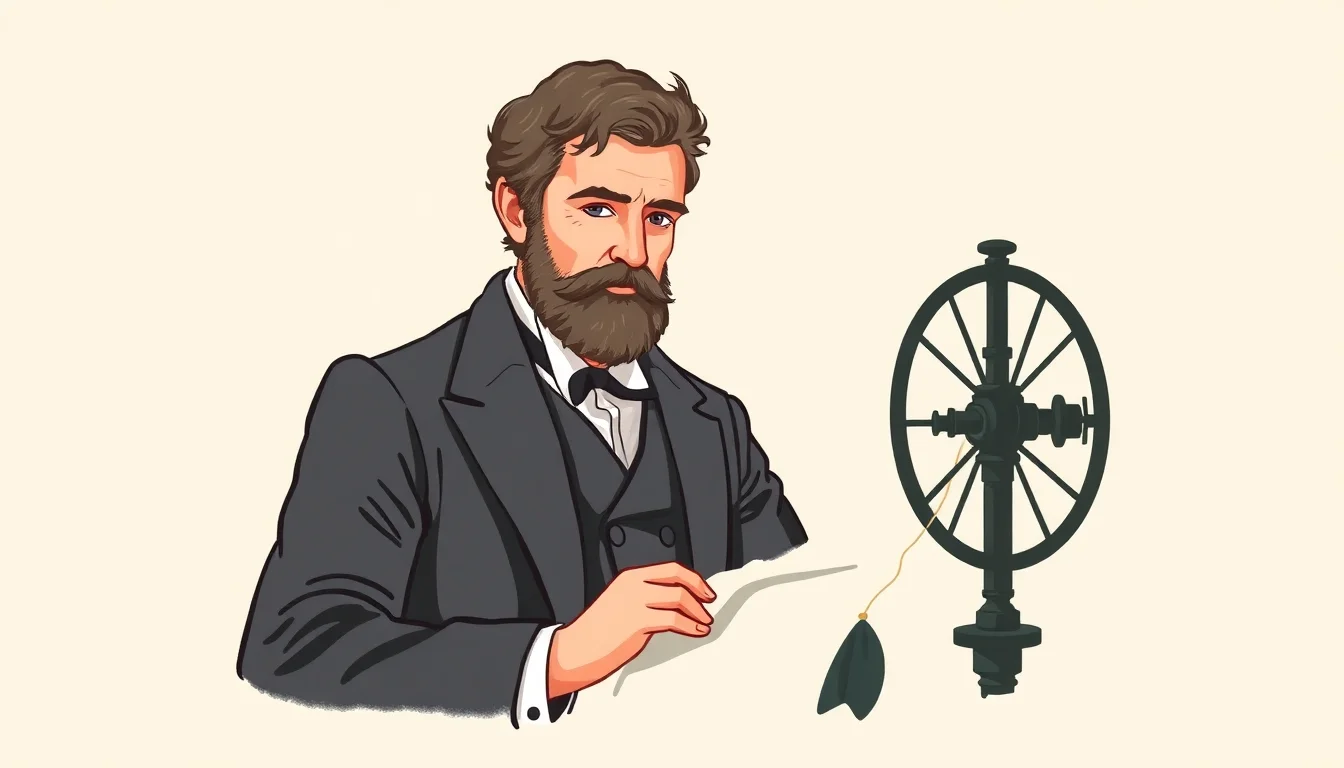
James Hargreaves (c. 1720 – 22 April 1778) was an English weaver, carpenter, and inventor best known for creating the spinning jenny around 1764. This multi-spindle spinning frame dramatically increased the efficiency of yarn production, a critical bottleneck in the textile industry. While not the sole architect of textile mechanization, Hargreaves' invention was a foundational element, alongside Richard Arkwright's water frame and Samuel Crompton's spinning mule, that propelled the Industrial Revolution in Britain. His innovation, though initially met with resistance from hand-spinners fearing job displacement, fundamentally altered the scale and speed of textile manufacturing, paving the way for factory systems and mass production. The spinning jenny's impact resonated globally, influencing textile production for centuries and underscoring the power of incremental innovation in driving societal change.
🎵 Origins & History
James Hargreaves, born around 1720 in Lancashire, England, emerged from a region already steeped in textile traditions. While precise details of his early life are scarce, his background as a weaver and carpenter provided him with the practical knowledge and mechanical aptitude necessary for invention. The prevailing method of spinning yarn involved a single spindle, a laborious process that limited the output of cloth. Hargreaves, driven by the need for greater efficiency, began experimenting with ways to spin multiple threads simultaneously. His breakthrough, the spinning jenny, is widely believed to have been developed around 1764, though the exact date remains a subject of historical debate. The invention arose organically from the demands of the burgeoning textile industry, a precursor to the more systematic innovations that would define the later stages of the Industrial Revolution.
⚙️ How It Works
The spinning jenny, in its most common form, allowed a single worker to operate multiple spindles at once. Unlike earlier spinning wheels that spun and twisted fibers in separate motions, Hargreaves' design featured a set of spindles mounted on a carriage that could be moved back and forth. The spinner would draw out the fibers and then slide the carriage away, twisting the yarn. By using multiple spindles, the jenny could produce significantly more yarn in the same amount of time. Early versions had perhaps eight spindles, but later models, like those patented by others, could accommodate dozens. This multi-spindle mechanism was a crucial departure from single-spindle devices, directly addressing the bottleneck in yarn supply that hindered the weaving process, as documented by economic historians studying the textile industry.
📊 Key Facts & Numbers
The spinning jenny's impact can be quantified by its dramatic increase in productivity. A single jenny could produce yarn up to eight times faster than a traditional spinning wheel. By 1787, an estimated 20,000 spinning jennies were in operation across Britain, producing a substantial portion of the nation's cotton yarn. This surge in yarn production fueled the growth of the weaving sector, with the output of cotton cloth increasing by an estimated 15-fold between 1760 and 1780. The economic implications were profound, contributing to an estimated 10% annual growth rate in the British textile industry during the late 18th century. The jenny's widespread adoption underscores its immediate and significant contribution to the mechanization of industry.
👥 Key People & Organizations
While James Hargreaves is the central figure, his invention did not exist in a vacuum. He worked within the context of Lancashire's skilled artisan community. Key figures who built upon his work include Richard Arkwright, whose water frame (patented 1769) utilized water power for a stronger, coarser yarn, and Samuel Crompton, who ingeniously combined the best features of the jenny and the water frame to create the spinning mule (patented 1779). The Society of Arts recognized Hargreaves' contribution by awarding him a prize in 1766, though this was after the invention had already begun to spread. His contemporaries, the Peel family of industrialists, were early adopters and manufacturers of textile machinery, further embedding the jenny into the industrial landscape.
🌍 Cultural Impact & Influence
The spinning jenny's cultural resonance lies in its role as a catalyst for the Industrial Revolution. It was one of the earliest and most impactful machines to mechanize a manual craft, fundamentally altering the social and economic fabric of Britain. The increased availability of yarn led to a boom in weaving and the subsequent rise of the factory system, drawing populations from rural areas to burgeoning industrial towns. This shift created new social classes and new forms of labor, as seen in the rise of mill towns like Manchester. The jenny also became a symbol of technological progress, albeit one that generated significant social upheaval and resistance from displaced hand-spinners, a theme explored in historical literature and social history studies.
⚡ Current State & Latest Developments
While the spinning jenny itself is a historical artifact, its legacy continues to inform modern textile manufacturing. The principles of multi-spindle spinning and automated yarn production are fundamental to today's highly sophisticated textile machinery. Contemporary textile production relies on advanced automated systems that dwarf the output of Hargreaves' original jenny, with global yarn production exceeding billions of kilograms annually. Innovations in materials science and digital manufacturing continue to push the boundaries of textile creation, building upon the foundational mechanization that Hargreaves helped initiate. The ongoing evolution of the textile industry is a direct descendant of the innovations of the late 18th century.
🤔 Controversies & Debates
The most significant controversy surrounding James Hargreaves and the spinning jenny involved the widespread theft of his invention. Hargreaves, perhaps not fully grasping the patent system or fearing reprisal, did not patent his machine until 1770, five years after its widespread adoption. This delay allowed numerous individuals and workshops, particularly in Lancashire, to replicate and profit from his design without compensation. When he did attempt to enforce his patent, he faced significant opposition from unlicensed manufacturers. Furthermore, the introduction of the jenny led to violent protests from hand-spinners who saw it as a direct threat to their livelihoods, with some accounts detailing the destruction of jennies and workshops, reflecting the deep social tensions of the era.
🔮 Future Outlook & Predictions
The future of textile manufacturing, while vastly different from Hargreaves' era, continues to be shaped by the pursuit of efficiency and automation he championed. We can anticipate further integration of artificial intelligence and robotics in yarn production, leading to even greater precision and speed. The development of sustainable and biodegradable materials will also play a crucial role, potentially altering the types of fibers processed and the machinery required. While the direct lineage of the spinning jenny may be obscured by centuries of technological advancement, the drive to produce more, faster, and more efficiently—the very impulse behind Hargreaves' invention—will undoubtedly continue to propel the industry forward, potentially leading to entirely new methods of fiber manipulation and textile creation.
💡 Practical Applications
The primary practical application of James Hargreaves' spinning jenny was to dramatically increase the speed and volume of yarn production for the textile industry. Before the jenny, spinning was a slow, manual process performed by individual spinners, often in their homes. Hargreaves' invention allowed a single operator to spin multiple threads simultaneously, significantly boosting output and reducing the cost of yarn. This directly supported the burgeoning weaving industry, enabling the mass production of textiles that became a hallmark of the Industrial Revolution. The jenny's efficiency also facilitated the transition from cottage industries to the factory system, as larger machines and centralized power sources became more viable.
Key Facts
- Category
- technology
- Type
- person